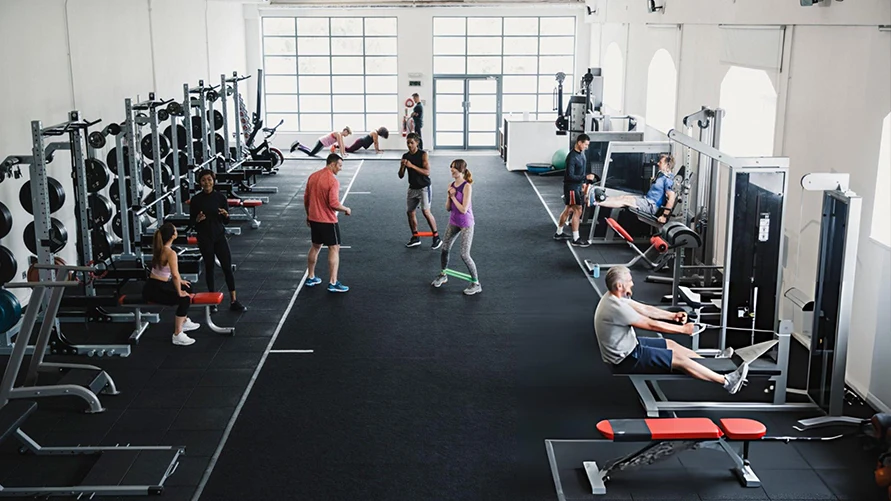
Should your gym be open 24/7? The right answer depends on verified member demand, your ability to manage safety during unstaffed hours, and whether the added operating costs will be covered by stable revenue, not just “more traffic.”
If you are considering opening your gym 24/7, you are probably feeling a mix of pressure and curiosity. Pressure because members keep asking for more flexibility, and no nearby gym offers those hours. And curiosity, because on paper, staying open around the clock sounds like more value, more usage, and more revenue.
But going 24/7 is not automatically a growth move. For some gyms, it strengthens retention and stabilizes cash flow. For others, it improves member experience and sharpens the gym’s value proposition. But despite the positives, a 24/7-accessible gym also brings higher operating costs, plus more risk and stress.
So, if you’re planning to make your gym 24/7 operational, this guide will cover what this model shift requires, what you should consider, and how to decide if this is the right time.

1. 24/7 access as a business move (what really changes)
Going 24/7 is not just about longer hours; it fundamentally changes how your gym operates, positions itself, and manages risk. Many gyms fail because they treat it as a simple scheduling tweak rather than a full business shift.
1.1 A strategic shift, not just more hours
When you move to a 24-hour gym model, you are not just opening the doors for longer. You’re changing how your business operates when staff are absent, how members interact with the space, and how risk is managed. Your gym shifts from a staff-led environment to a system-led one, at least part of the day.
And this strategic 24/7 gym access affects your overall business operations:
- Increasing continuous usage of equipment, HVAC, and utilities.
- Expanding your legal and insurance exposure.
- Shifting your brand proposition from coaching and classes to autonomy and convenience.
This is a strategic business move, not a small operational tweak. Without aligning costs, safety systems, and member expectations, extended hours can reduce profitability instead of boosting it.
1.2 Who 24/7 gym access actually serves
Not every member benefits from overnight access. Your 24/7 strategy will only succeed if it targets the right segments.
High-value overnight users:
- Night shift workers, healthcare professionals.
- Busy parents or professionals with irregular schedules.
- Solo lifters who want quiet, low-traffic sessions.
- Members who value flexibility more than coaching or group classes.
Low-value segments:
- Gyms that rely heavily on instructor-led classes or a social community model.
- Members who primarily attend group sessions.
Knowing who will actually use the gym is critical. If fewer than 20-30% of members train outside staffed hours, 24/7 access may not justify the cost and business model shift.
2. Business considerations before you decide
Before committing to 24/7 access, gym owners need to validate demand, understand costs, and anticipate the safety and liability implications. This is what makes a difference between a profitable 24/7 gym and a failed experiment.
2.1 Validate demand based on data, not assumptions
Interest does not always equal usage. Don’t rely on assumptions. Even if people sound excited, collect real behavioral data before extending hours:
- Track early-morning and late-night check-in trends.
- Measure how often members wait outside before opening or linger after closing.
- Survey members on whether extended access affects their retention or willingness to pay extra.
A temporary extended-hours pilot, like 5 a.m. to midnight, is the best way to test demand without committing to full 24/7 gym operations.
2.2 Understand real costs
Going 24/7 does not usually fail because of one massive expense. It fails because of many small costs that add up over time. Sometimes, gym owners miscalculate the operational costs and end up struggling with the cost of flexible hours. But here is what ongoing operating costs look like:
- Electricity and HVAC bills increase dramatically.
- Cleaning schedules must be more frequent and distributed.
- Equipment experiences accelerate wear.
Upfront (capital) costs often include:
- Access control systems (QR, keycards, biometrics)
- CCTV and remote monitoring
- Emergency communication tools
A realistic 24/7 gym profitability calculation should include these ongoing operational pressures, not just projected membership numbers.
2.3 Safety and liability risks
24/7 gyms are likely to be profitable. But in business, profitability comes with risk, even legal ones. During unstaffed hours, the gym has to be prepared for medical emergencies, equipment misuse, unauthorized entry, and interpersonal incidents. From a legal standpoint, liability does not disappear just because staff are not present.
In some cases, injuries at 24-hour gyms may be scrutinized more closely.
Beyond compliance, there is the issue of perceived safety. Members won’t use overnight access if they don’t feel secure, regardless of how advanced your systems are. Clear communication about safety measures, visible surveillance, good lighting, and well-defined rules all contribute to trust.
3. Operational challenges no one tells you about
Running a 24/7 gym creates operational complexity that most guides underplay. Staffing, security, cleaning, and maintenance all require new systems and planning.
3.1 Staffing models
Very few gyms can afford to staff the floor 24 hours a day, and most don’t need to. Here are the staffing models you can choose from:
| Model | Pros | Cons |
| Fully staffed | Maximum supervision | Very high labor cost |
| Fully unstaffed | Lowest cost | High reliance on technology |
| Hybrid | Balanced | Requires robust systems and clear protocols |
The most common and sustainable approach is a hybrid model: staffed during core hours, unstaffed overnight. Moreover, staff management software can streamline gym operations, allowing you to implement and monitor staff remotely. This keeps labor costs under control while still offering extended access.
3.2 Security and access control
A 24/7 gym is only as strong as its access control system.
Members should only be able to enter if their membership is activated and authorized for that time window. Entry and exit should be logged automatically. Unauthorized access, tailgating, and expired members need to be blocked without manual intervention.
This is where gym access control systems earn their keep. When integrated properly with membership software, they reduce risk, prevent revenue leakage, and remove the need for constant oversight.
3.3 Cleaning and maintenance
One overlooked challenge of running a 24-hour gym is hygiene.
When there is no clear closing time, gym cleaning has to be scheduled around members rather than after them. Maintenance windows shrink, and small issues can linger longer than they should.
Members tend to notice cleanliness more during quiet hours, when there’s nothing else competing for their attention. A poorly maintained gym at 2 a.m. does more damage to your reputation than one at peak time.
4. Legal, compliance, & insurance
Expanding to 24/7 requires reviewing legal obligations and insurance policies. Most gyms fail because they overlook local regulations or assume standard coverage is sufficient.
4.1 Insurance requirements
Standard liability insurance may not be sufficient if you’re running a 24/7 gym. You may need:
- Enhanced liability for unattended hours.
- Business interruption coverage.
- Equipment breakdown protection.
- Cybersecurity/data protection for access systems.
4.2 Legal compliance
Legal obligations don’t pause overnight. In the US, local fire safety approvals, emergency procedures, and liability documentation often need updating when access hours change. In the UK, GDPR compliance for surveillance, lone exerciser risk assessment, and health and safety obligations still apply even when staff are not present.
Legal compliance for gyms is paramount to keep running smoothly. These legal requirements may not look very glamorous, but overlooking them is one of the most common reasons gyms run into trouble after going 24/7.
5. Technology that makes 24/7 profitable
Technology or gym management software is not a gimmick. It is the backbone of a successful 24/7 operation. Done right, it reduces risk, improves member experience, and protects revenue.
5.1 Access control and membership retention
Technology alone doesn’t make a gym modern; integration does.
Access control systems should sync directly with your gym management software, ensuring real-time updates to member status. The role of gym access in member retention and secure experience can’t be denied. This prevents expired members from entering the high-security zones and reduces revenue leakage.
The best systems support multiple access methods while keeping reporting centralized. Remember, automation is not about replacing staff; it is about removing friction and human error.
5.2 Remote monitoring and incident response
Remote monitoring closes the supervision gap. Cameras with motion alerts, zone-based panic buttons, and escalation workflows allow gyms to respond quickly without staffing overnight.
Members don’t expect constant supervision, but they do expect preparedness.
6. Member experience and community impact
24/7 access changes member experience. But a great and safe experience depends on managing perceived safety, expectations, and community culture.
6.1 Perceived safety
Members are more likely to use overnight access when they know the gym premises are secure. For that, you have to make sure:
- Lighting is adequate.
- Cameras are visible.
- Safety instructions and procedures are clear.
Perception drives behavior. Actual safety alone is not enough. Make your members feel safe and secure from unauthorized entries or strange incidents.
6.2 Community and culture shift
Staff-free hours shift community dynamics. But professional 24/7 gyms:
- Encourage member self-governance.
- Use digital channels for communication.
- Promote etiquette and accountability.
Remember, community does not vanish; it simply evolves into a more independent but still connected culture. Read more on how to create an effective fitness culture at your gym.
7. How to decide if your gym should go 24/7
Before committing, you need a structured decision framework to weigh demand, costs, safety, and compliance. Here is a checklist to evaluate the readiness:
- Member demand is validated with data.
- Projected revenue outweighs added operating costs.
- Security and access control systems are robust.
- Insurance and compliance are updated.
- Members feel safe during off-hours.
If several items are missing, consider alternatives to 24/7 gym access.
- Extend hours from 5 a.m. to 11 p.m.
- Premium tier for 24/7 access.
- Limited overnight access on weekends.
- Pilot testing periods.
This reduces risk while gathering data on member uptake.
8. What 24/7 gym success really looks like
Done correctly, a 24/7 gym is not just about opening doors; it is about running a business that is resilient, trusted, and designed for autonomy.
A strategically operated 24/7 gym access expands your market, improves retention, and modernizes your brand. When done poorly, it introduces silent costs, legal exposure, and member dissatisfaction.
Remember, what makes a difference here is not ambition, it is clarity and preparation.
Lastly, if you’re considering 24/7 access, your first investment should be gym security, not extended hours.
Modern access control, real-time monitoring, and automated membership validation protect your business, your members, and your revenue, especially during unstaffed hours.
So, before you go 24/7, make sure your gym is secure enough to support it.
Upgrading your security systems today can be the difference between confident growth and costly mistakes tomorrow.