



A high-converting Pilates studio website clearly explains your classes, builds trust through instructor expertise and real client experiences, and makes it easy for visitors to book within a few clicks. But beyond functionality, branding and visual identity play a huge role in guiding visitors through the website. People often choose a studio based on how it feels: calm, welcoming, professional, or premium.
The best Pilates studio websites combine clear information, thoughtful design, authentic visuals, and simple booking tools. When these elements work together, visitors can quickly understand the studio, connect with the brand, and confidently schedule their first class.
This guide explains how to create a Pilates studio website that attracts visitors, communicates your brand identity, and converts interest into bookings.
What makes a Pilates studio website high-converting?
A high-converting website focuses on user intent and removes friction from the decision-making process. Visitors should be able to understand what your studio offers and how to join within seconds. Four elements usually determine whether a Pilates studio website converts well:
- Clarity
Visitors should immediately know what type of Pilates classes you offer and who they are for.
- Trust
Instructor credentials, studio photos, testimonials, and client success stories help people feel confident about booking.
- Convenience
The website should make it easy to view schedules, choose a class, and complete bookings.
- Local relevance
Clear location details, maps, and local search optimization help nearby potential clients discover the studio.
When these elements are aligned, the website naturally guides visitors from curiosity to bookings.
Step 1: Start with the brand experience, not just the website layout
Before thinking about design or technology, the first step is defining what the website should achieve. Many studios treat their websites like online brochures, but high-performing websites function more like client acquisition systems. A strong Pilates studio website design should guide visitors:
| Questions visitors have | What your website should provide |
| What type of Pilates do you offer? | Clear class descriptions |
| Is this studio suitable for me? | Instructor credentials and beginner guidance |
| How much does it cost? | Transparent pricing or packages |
| When are the classes? | Live class schedules |
| How do I join? | Easy booking and payment options |
When the goal is clear, every page can be designed to move visitors toward booking their first class.
Step 2: Design a Pilates website that reflects your studio’s branding
Branding is especially important for Pilates studios because the industry is closely tied to wellness, mindfulness, and lifestyle. The visual identity of your website often shapes the emotional impression visitors form about your studio.
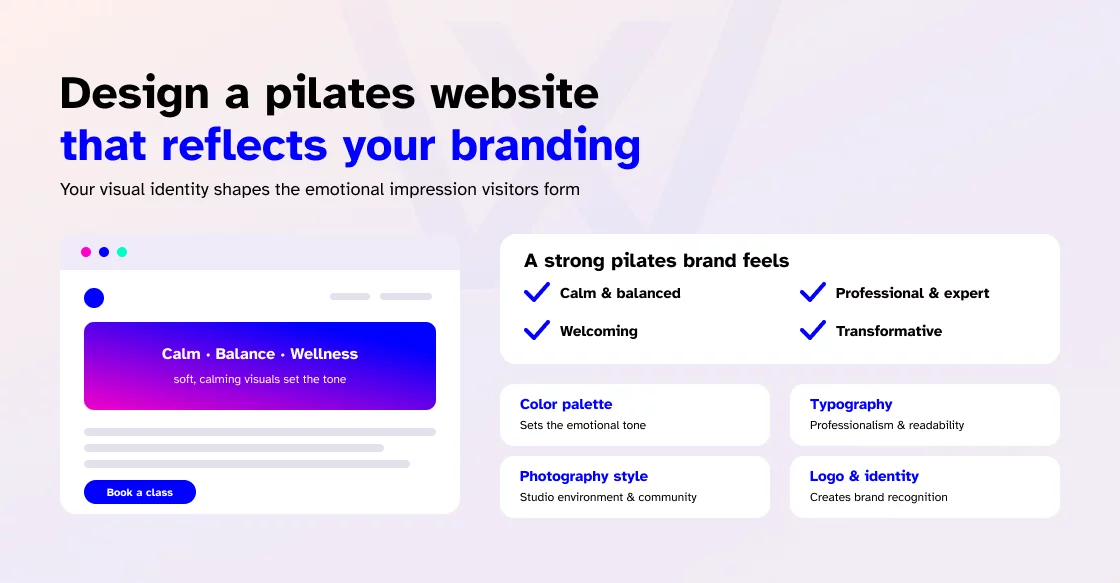
A strong Pilates brand usually reflects:
- Calm and balance.
- Professionalism and expertise.
- A welcoming environment.
- A sense of wellness and transformation.
Here are the core branding elements to define:
| Branding element | Significance |
| Color palette | Sets the emotional tone of the website |
| Typography | Communicates professionalism and readability |
| Photography style | Shows the studio environment and community |
| Logo and visual identity | Creates brand recognition |
Many successful Pilates websites use soft, calming color palettes, such as neutral tones, sage green, beige, or muted pastels. These colors reinforce the feelings of relaxation and mindfulness associated with Pilates. Consistent branding across all pages helps visitors recognize and remember your studio.
Step 3: Choose a platform that supports both website and studio operations
The technology behind your website determines how easily you can manage schedules, payments, and updates. Pilates studios generally choose one of the following approaches.
| Platform type | Advantages | Limitations |
| Website builders | Easy to design and launch | May require additional booking tools |
| CMS platforms | Highly customizable | Require plugins and maintenance |
| Fitness management platforms | Integrates scheduling and payments | Requires choosing the right provider |
Many studios now prefer integrated systems because they simplify day-to-day operations. Pilates studio management software like Wellyx combines class scheduling, payments, memberships, and website integrations into one system. This means studio owners can handle bookings, client records, and payments without switching between multiple tools.
When the website and studio operations are connected, the client experience becomes smoother and more reliable.
Step 4: The essential pages every Pilates studio website should include
A well-organized structure ensures visitors can quickly find the information they need. Most high-performing Pilates studio websites include a small set of essential pages.
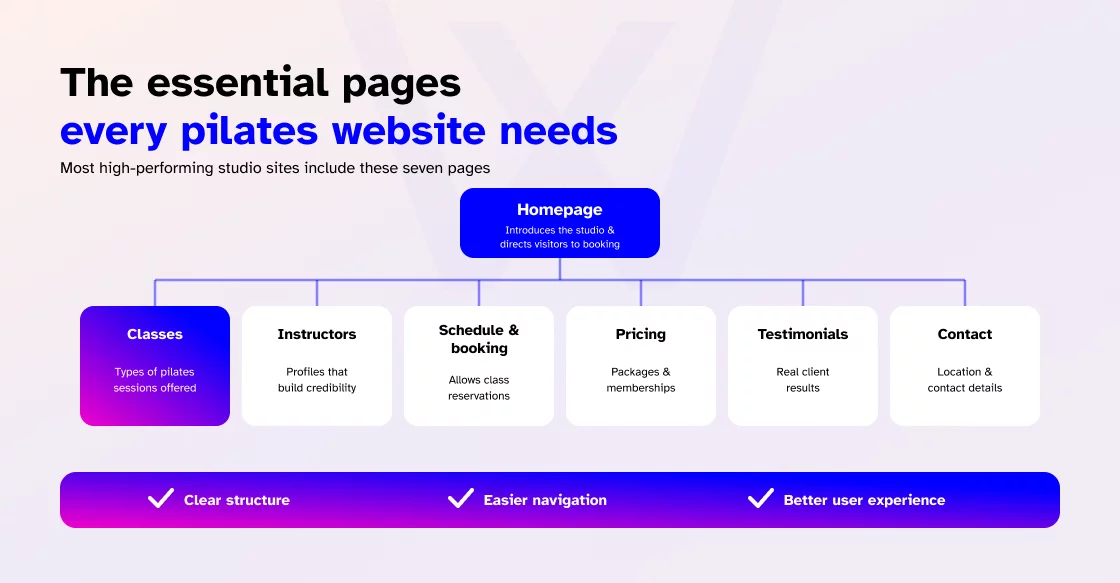
| Page | Purpose |
| Homepage | Introduces the studio and directs visitors toward booking |
| Classes page | Explains the types of Pilates sessions offered |
| Instructor profiles | Builds credibility |
| Schedule and booking page | Allows class reservations |
| Pricing page | Displays packages and memberships |
| Testimonials | Shows real client results |
| Contact page | Provides location and communication details |
A clear structure makes the website easier to navigate and improves the overall user experience.
Step 5: How to structure a Pilates studio homepage that converts
The homepage shapes the visitor’s first impression of your studio. For Pilates businesses, this page should feel calm, professional, and inviting. Here are the elements a high-converting homepage layout should have:
| Section | Purpose |
| Clear headline | Explains what your studio offers |
| Studio imagery or video | Shows the environment and class atmosphere |
| Overview of classes | Helps visitors explore options |
| Instructor highlights | Builds trust |
| Testimonials | Adds social proof |
| Booking call-to-action | Encourages scheduling |
Step 6: Show the studio experience with images, videos, and media
Images are often the first thing visitors notice on a Pilates website. Authentic photography helps communicate the atmosphere of your studio more effectively than text.
Here are the types of images every Pilates website should include:
| Image Type | Purpose |
| Studio interior photos | Show equipment and environment |
| Instructor portraits | Introduce the team |
| Class action shots | Demonstrate how sessions work |
| Community images | Show the welcoming studio culture |
Whenever possible, avoid generic stock photos. Real images of your studio and instructors create a stronger connection with visitors. Professional photography can significantly increase perceived quality and credibility.
The role of imagery and multimedia
Visual storytelling is one of the most powerful elements of Pilates websites. Instead of relying heavily on text, use multimedia to communicate the studio experience.
Examples include:
- High-quality photos of the studio space.
- Images of instructors guiding clients.
- Short videos showing reformer classes.
- Lifestyle photography reflecting the studio community.
Authentic images help visitors imagine themselves in the studio, which significantly improves engagement.
Step 7: Make booking classes simple and visible
Convenience is one of the most important drivers of website conversions. If booking a class feels complicated, visitors may leave before completing the process.
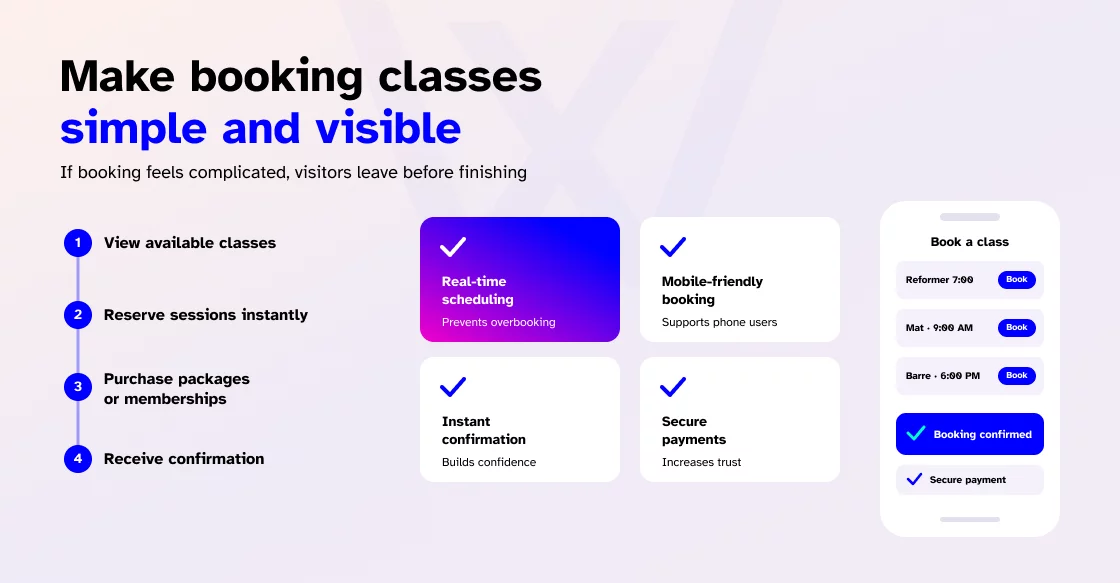
A good booking system allows clients to:
- View available classes.
- Reserve sessions instantly.
- Purchase packages or memberships.
- Receive booking confirmations.
Here are the features that improve booking conversions:
| Feature | Why it matters |
| Real-time scheduling | Prevents overbooking |
| Mobile-friendly booking | Supports phone users |
| Instant confirmation | Builds confidence |
| Secure payments | Increases trust |
Many Pilates studios use integrated platforms like Wellyx to manage scheduling and payments directly from the website. This allows clients to browse classes, book sessions, and complete payments through a seamless experience.
Step 8: Connect your website with payments, POS, and retail sales
Many Pilates studios sell retail products such as:
- grip socks
- Pilates accessories
- wellness products
- branded merchandise
Managing these products separately from bookings can create operational challenges.
Modern studio platforms increasingly integrate e-commerce, POS systems, and scheduling tools.
For example, Wellyx includes a built-in e-commerce store and inventory management system. This allows studios to sell retail products through their website while keeping inventory, payments, and bookings synchronized in one place.
Clients can purchase products, book classes, and manage memberships through the same platform.
Step 9: Build authority with instructor profiles and client results
Pilates is a highly instructor-driven practice. Visitors often choose studios based on the qualifications and personality of instructors. Instructor profiles should include:
| Element | Purpose |
| Certifications | Shows professional training |
| Experience | Demonstrates expertise |
| Specializations | Highlights unique skills |
| Personal philosophy | Builds connection |
Friendly introductions and professional photos help humanize the instructor and strengthen trust.
Step 10: Optimize your website for local search
Most Pilates studios depend on local clients, so local search optimization is essential. People often search for classes using location-based phrases such as:
- Pilates studio near me
- Reformer Pilates in [city]
- Beginner Pilates classes nearby
Including these phrases naturally in website content helps search engines understand the studio’s geographic relevance.
Here is a quick local SEO checklist:
| Element | Example |
| Page titles | Pilates Studio in [City] |
| Contact page | Address and map |
| Class pages | Local references |
| Blog content | Wellness topics for local audiences |
These signals help search engines connect your studio with nearby potential clients.
Common Pilates studio website mistakes that affect conversions
Even well-designed Pilates studio websites can struggle if certain issues create friction for visitors. Some of the most common problems include:
- Complicated booking systems: Visitors may leave if they cannot easily reserve a class.
- Hidden pricing information: Lack of transparency can make potential clients hesitant.
- Outdated class schedules: Incorrect schedules can reduce trust in the studio.
- Slow loading pages: Long loading times often lead to higher bounce rates.
- Generic stock images: Authentic photos of your studio and instructors create stronger connections with visitors.
Addressing these issues helps ensure that the website remains clear, trustworthy, and easy to use.
Final thoughts
Creating a high-converting Pilates studio website requires thoughtful planning, clear communication, and convenient booking tools. The most successful websites guide visitors through a simple journey: discovering the studio, understanding the classes, building trust with instructors, and booking their first session.
When combined with integrated scheduling, payments, and retail capabilities provided by platforms such as Wellyx, the website becomes more than a marketing tool. It becomes the operational center of the studio’s digital presence.
By focusing on clarity, trust, convenience, and local visibility, Pilates studio owners can build websites that represent the studio well and turn more online visitors into active clients.