



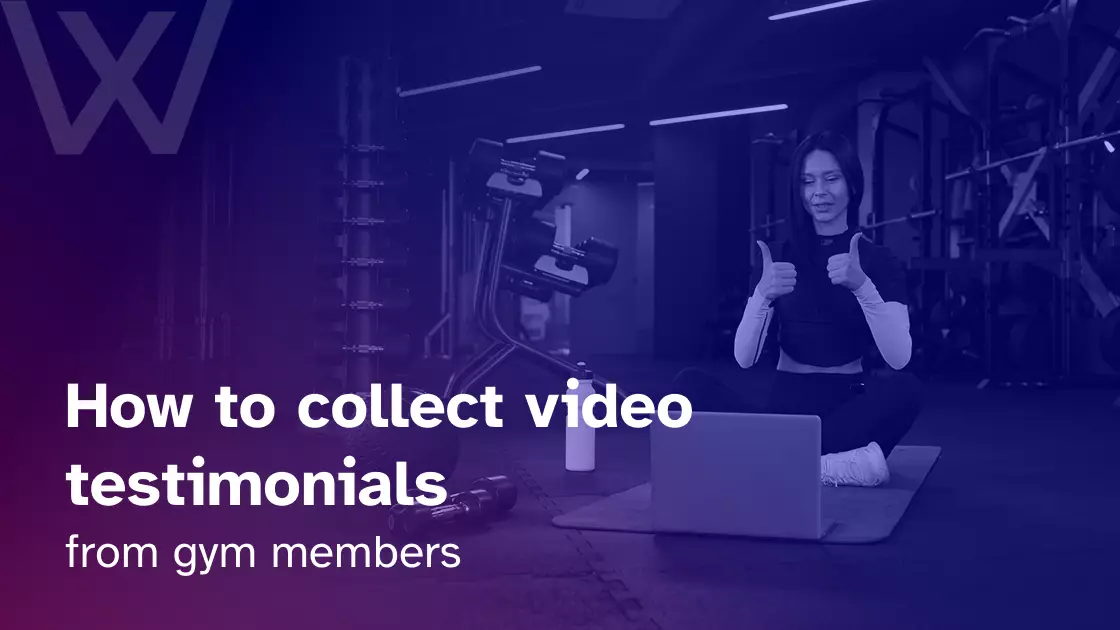
To collect video testimonials from gym members, identify willing members, ask after meaningful training experiences, provide two or three simple questions, and record a 30–60 second video. Get written permission before publishing, keep the story authentic, and share it where prospective members can see it.
You don’t necessarily need professional equipment or dramatic transformation stories. A member explaining how they overcame gym anxiety, developed a workout routine, or found a supportive trainer can offer valuable insight to someone considering joining.
Why video testimonials are important for gym marketing
Video testimonials allow prospective members to hear about your gym from people who already train there. They can learn about your coaching, classes, and atmosphere through real experiences rather than promotional descriptions.
This is particularly helpful for beginners who worry about feeling out of place. Hearing another member explain how their first class went may answer questions that equipment photos or membership descriptions cannot.
Testimonials also reflect the relationships behind building a fitness community. A member who feels comfortable asking trainers for help may have a story worth sharing, even without a dramatic physical transformation. The important part is relevance. Someone considering personal training may appreciate a coaching experience, while a prospective group fitness member may want to hear about class atmosphere.
How to collect video testimonials from gym members in 8 steps
The most practical approach is to collect testimonials through everyday member interactions rather than organizing occasional marketing campaigns. Your trainers already hear feedback about progress, classes, and coaching. The following steps help turn suitable conversations into voluntary, usable recordings.
Step 1: Identify members with meaningful experiences
Start with members who have expressed satisfaction, reached personal milestones, or developed consistent training habits. Their experiences can provide natural starting points for testimonials.
Look beyond members with impressive physical results. Someone who became comfortable lifting weights, completed a beginner program, or finally established a regular routine may connect with people considering membership.
Potential participants include members who have:
- Completed their first training program.
- Reached a personal fitness or strength milestone.
- Shared positive feedback about coaching.
- Developed consistent attendance habits.
- Renewed their membership after a positive experience.
Trainers can identify suitable opportunities through conversations, while membership and attendance information can provide additional context. However, frequent attendance does not automatically mean someone is satisfied or willing to participate.
These observations can also support your gym member retention strategies, helping staff recognize achievements and understand individual experiences.
Step 2: Capture the starting point during onboarding
One easily missed opportunity is documenting a member’s experience before they begin making progress. Most gyms think about testimonials after someone achieves a result, when their original concerns and expectations may be harder to recall.
During onboarding, offer interested members an optional 15–20-second video check-in. Ask what brought them to the gym and what they hope to achieve. Store the recording privately with their informed permission. If they later choose to share their experience, you can revisit those original answers.
| Member journey | What to capture | Why it’s useful |
| Day 1 | Goals, concerns, expectations | Preserves their starting perspective |
| During membership | Voluntary progress updates | Documents meaningful changes |
| Later milestone | Current experience and reflections | Connects the beginning with their progress |
This approach is not limited to weight loss. A member who initially felt intimidated may later describe enjoying classes or training independently.
Owner tip: Keep onboarding recordings optional and separate from promotional consent. A member agreeing to document their goals privately has not necessarily agreed to appear in an advertisement later.
Step 3: Ask at the right moment
A good time to request a testimonial is shortly after a member shares positive feedback or reaches a personal milestone. It could follow a progress review, a completed program, an encouraging training session, or an unsolicited compliment.
Suppose someone tells their trainer they’re finally comfortable using the free weights. The trainer could ask whether they’d be interested in sharing that experience with other beginners.
Keep the invitation casual and specific:
“Hey, you’ve mentioned how much more confident you feel with your workouts lately. Would you be comfortable sharing a short video about that? It could really help someone who’s nervous about getting started.”
Explain that recording is optional and won’t take much time. Let the member choose whether to record immediately or another day. Avoid approaching people during difficult workouts, in crowded areas, or when they’re clearly rushing. The invitation should feel like recognition of their experience, not another obligation.
Step 4: Give members questions instead of scripts
Good testimonial questions help members explain what brought them to the gym, what training has been like, and what has changed. They should not tell members what to praise.
Use this simple interview structure:
| Part | Question | Purpose |
| Before | What made you decide to join? | Establishes their starting point |
| Experience | What has training here been like? | Describes coaching and atmosphere |
| Change | What difference have you noticed? | Explains their personal progress |
Ask questions individually and allow natural follow-ups. If someone says the trainers are helpful, ask them to describe a particular occasion when that support mattered.
Avoid questions such as “How amazing are our trainers?” or “Would you recommend us to everyone?” They encourage predictable praise rather than meaningful experiences.
Owner tip: Give members the questions before recording, but don’t write their answers. A genuine response with a few pauses is more useful than a rehearsed promotional statement.
Step 5: Choose a convenient recording method
Members should be able to participate without downloading unnecessary apps or navigating complicated submission processes. Choose the recording approach based on their availability and comfort.
| Method | Best for | What to consider |
| Smartphone interview | Quick conversations after training | Find a quiet area |
| Self-recorded video | Busy members | Send clear instructions |
| Trainer-led interview | Members comfortable with their coach | Keep questions neutral |
| Browser-based recording link | Remote submissions | Minimize sign-ups and steps |
| Scheduled interview | Longer member stories | Arrange a convenient time |
A smartphone is sufficient for most short testimonials. For remote submissions, use a secure upload method or a recording platform that works directly from the member’s phone browser.
Let members preview or restart their recording if possible. If someone becomes uncomfortable, offer to stop or switch to written feedback.
Owner tip: Test the submission process yourself. Open the recording link on a phone, complete the steps, and confirm that the file arrives correctly before sending it to members.
Step 6: Record clear video without expensive equipment
Clear audio matters more than sophisticated camera equipment. A beautifully framed testimonial is difficult to use if gym music or equipment noise makes the member’s voice hard to understand.
Choose a quiet space away from speakers, machines, and busy workout areas. Position the phone at eye level and make sure light falls on the member’s face rather than coming from behind them.
Before recording, complete these checks:
- Audio: Record a 10-second test and listen through headphones.
- Lighting: Face the member toward a window or soft light source.
- Stability: Use a tripod or stable phone support.
- Background: Keep other members out of the frame unless they consent.
- Orientation: Record vertically for Reels and Shorts, or horizontally when appropriate for your website.
- Comfort: Allow breaks, repeated answers, and natural conversation.
If speech sounds distant, move the recording device closer or use a compatible clip-on microphone. A microphone can help, but it won’t automatically eliminate loud background noise. Record several minutes if needed and extract a focused 30–60-second testimonial afterward.
Owner tip: Don’t record every interview against an empty branded wall. An appropriate, uncluttered gym background can help viewers understand the environment, provided everyone visible has consented.
Step 7: Get written consent and verify claims
Written permission should be part of the collection process, not an afterthought. Members need to understand how their recordings may be used before the videos appear publicly.
A testimonial release should cover:
- Permission to record and use the video.
- Approved websites, social channels, and advertising uses.
- Whether the member’s name or identifying details may appear.
- Editing and reuse permissions.
- Any agreed limitations on publication.
- Whether the member can withdraw permission later, and how to ask.
- How long you may use the video (for example, a set term or until withdrawn).
- For members under 18, a signature from a parent or guardian.
If you’re comparing Day-1 footage with later progress, verify the dates and results. Avoid misleading changes in lighting, posing, or editing that exaggerate the difference.
The FTC’s guidance on endorsements and testimonials requires advertising endorsements to be truthful and not misleading. Exceptional results should not be presented as outcomes everyone can expect.
If you’re comparing Day-1 footage with later progress, verify the dates and results. Avoid misleading changes in lighting, posing, or editing that exaggerate the difference.
Don’t tie any incentive to a positive review or testimonial, whether openly or by implication. For example, a discount that only goes to members who say good things is a problem. The FTC’s Consumer Review Rule bars incentives conditioned on a particular sentiment, either expressly or implicitly. Disclose any material connection, such as a free membership month given for participating.
Owner tip: Keep the signed release alongside the original recording. Confirm that the permission covers each intended use, especially paid advertising.
Step 8: Edit, organize, and approve the videos
Once the recording is complete, remove unnecessary pauses and repetitive sections while preserving the member’s original meaning.
Add accurate captions and check that any fitness results mentioned are represented correctly. Don’t combine separate answers in ways that change what someone said. Maintain a simple record of each video’s status:
| Status | What staff should confirm |
| Received | Original file stored securely |
| Consent obtained | Intended uses approved |
| Edited | Captions and statements checked |
| Approved | Final version cleared for publishing |
| Published | Location and publication date recorded |
Share the final edit with the member for review when practical. Thank them and let them know where their testimonial appears.
Owner tip: Save the original recording. You may want shorter clips later, and having the original makes it easier to preserve context during editing.
Best video testimonial questions to ask gym members
The strongest questions uncover specific moments instead of broad compliments. Choose questions that fit the member’s experience rather than using the same interview for everyone.
- What made you join this gym? Reveals their original motivation.
- What concerned you before starting? Identifies worries other prospects may share.
- How was your first experience with the trainers? Explains onboarding and coaching.
- What do you enjoy most about training here? Highlights meaningful experiences.
- What has changed since you joined? Encourages personal progress stories.
- When did you first notice a difference? Helps uncover a specific moment.
- What would you tell someone considering joining? Offers advice from a member’s perspective.
For a short recording, use three questions rather than all seven. Ask follow-ups when a member mentions something worth exploring.
Don’t wait only for dramatic transformation stories. Small experiences, such as becoming comfortable in a class or maintaining a routine after work, can answer concerns that prospective members actually have.
Gym video testimonial request templates
A personal request is more appropriate than sending every member the same formal marketing message. Adapt these templates to the member’s experience and your relationship with them.
| After positive feedback “Hi [Name], I appreciated what you said about today’s session. Would you be open to sharing those thoughts in a quick video? We can record it here or send you a link to do it later, whichever is easier.” |
| After a fitness milestone “Hey [Name], congratulations on reaching [milestone]! It’s been great seeing your progress. Would you feel comfortable sharing a short video about your experience? We’d love to hear your story, and it might help someone considering joining. No pressure at all.” |
| A friendly follow-up “Hi [Name], just following up on the video we discussed. If you’re still interested, here’s the recording link: [Link]. No pressure, and thanks again for considering it!” |
| For long-term members “Hey [Name], you’ve been part of [Gym Name] for [period], and we’d love to hear what keeps you coming back. Would you be interested in recording a short video about your experience? We can send over a couple of questions.”Send a reminder only when someone has expressed interest. If they don’t respond, leave the request there rather than repeatedly following up. |
Common mistakes gym owners should avoid
Most problems come from the way testimonials are collected, not from the recording equipment. Members may provide useful feedback but become uncomfortable when asked to repeat it for promotional purposes.
| Mistake | Better approach |
| Waiting only for major transformations | Capture everyday progress |
| Asking members to memorize praise | Provide open-ended questions |
| Recording in noisy workout areas | Test audio in a quieter space |
| Making participation feel mandatory | Offer alternatives and allow members to decline |
| Publishing without proper permission | Obtain written consent |
| Overediting the story | Preserve the member’s meaning |
Another overlooked issue is asking for testimonials during difficult moments in the member relationship. If someone has an unresolved complaint, deal with their concern rather than trying to collect promotional feedback. A testimonial is most useful when it reflects an experience the member freely chooses to share.
Where should gyms publish video testimonials?
Place testimonials where prospective members are already evaluating your facility, trainers, or membership options. Different stories can address different concerns.
| Channel | Suitable testimonial |
| Gym homepage | General member experience |
| Membership page | Long-term member perspective |
| Personal training page | Trainer support and coaching |
| Group fitness page | Beginner class experience |
| Instagram Reels | Short member stories |
| YouTube | Longer interviews |
| Email campaigns | Stories relevant to prospective members |
Connect testimonials with your local visibility
Local SEO helps nearby prospects find your gym, and an optimized Google Business Profile gives them your details and member reviews. Video testimonials add what those can’t: a look at what members actually experience.
For videos uploaded directly to your Business Profile, follow Google’s official requirements: videos must be no longer than 30 seconds, no larger than 75 MB, and at least 720p. Keep independent Google review requests separate from your own promotional testimonial collection.
Turn one recording into useful social content
A longer interview may contain several relevant moments. You could publish one clip about the member’s first class and another explaining what helped them maintain a routine. These can support your existing gym social media post ideas without requiring additional interviews.
Choose clips according to the audience and channel. For instance, a beginner’s experience fits a class introduction, while a coaching story may work better on a personal training page.
Your broader gym marketing strategy should guide where these stories appear and how they support prospective members’ decisions.
Make testimonial collection part of everyday gym operations
Collecting testimonials regularly does not mean asking every member. It means recognizing suitable opportunities and having a clear process when someone agrees to participate.
Give coaches responsibility for identifying meaningful experiences. Reception or marketing staff can coordinate invitations, consent, recording, and publication.
A basic tracker can include the member’s name, invitation status, recording date, consent status, and publication location. Avoid storing unnecessary sensitive information.
An all in one gym management software like Wellyx can support this process by bringing together membership records, attendance, scheduling, CRM, and member communication tools. Staff can use relevant information to coordinate follow-ups while managing recording and publishing through appropriate separate tools.
The aim is not to automate every interaction. It’s to help staff recognize genuine member experiences and handle requests without losing track of permissions or recordings.
Frequently asked questions
1. How long should a gym video testimonial be?
Aim for 30–60 seconds for short website videos and social content. Longer interviews can work when the member has a detailed experience to share. Choose the length based on the story and where the video will appear.
2. Can members record testimonials on their phones?
Yes. Smartphones can produce clear testimonials with reasonable lighting, stable framing, and understandable audio. Members can record at your gym or privately and submit their videos through a secure method.
3. Should gyms offer incentives for testimonials?
Incentives are not necessary. If offered, they must not depend on positive feedback, and applicable disclosure requirements should be followed. Keep promotional testimonial incentives separate from independent review-platform requests.
4. How often should gyms collect new testimonials?
Collect them when members voluntarily share meaningful experiences or reach milestones they want to discuss. Review your existing videos periodically to make sure they remain accurate, relevant, and appropriately authorized.
5. What makes a good gym video testimonial?
A useful testimonial describes a genuine experience with enough detail to help someone understand your gym. Clear audio, natural answers, and specific examples of coaching, atmosphere, or progress matter more than elaborate production.
Final words
Your members don’t need extraordinary results to have experiences worth sharing. Some will talk about reaching major goals, while others may simply explain how training became a comfortable part of their week.
A thoughtful testimonial process makes space for both. When gym owners recognize those moments, ask respectfully, and let members speak naturally, the finished videos offer something useful: an honest account of what being part of the gym is actually like.