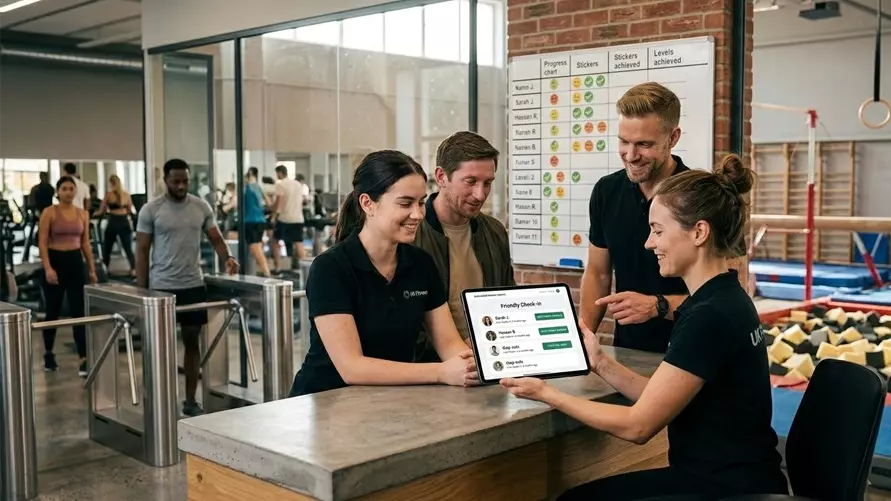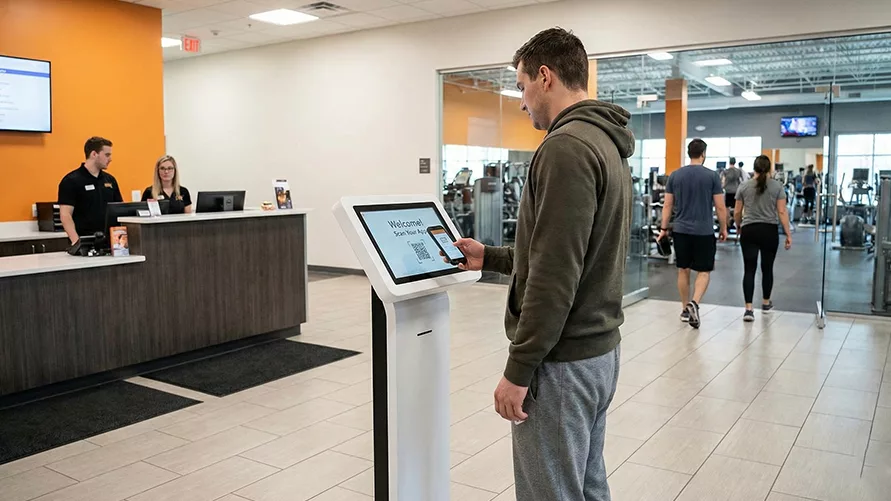
Most gym management software advice tells owners to “match software to budget.” Blackfuse Fitness founder Michael Walker found that thinking nearly cost him his business. Running separate apps for memberships, point of sale, and access control created a silent revenue leak; expired members still had physical access because no system automatically revoked it. Switching to Wellyx, an integrated gym management platform, closed that gap by tying membership status directly to access control in real time. The result: less manual admin, stronger revenue protection, and an operational foundation scalable enough to support a new franchise location every 12–18 months.
When business infrastructure fails, the pressure to reopen fast and cheaply is immense. The temptation to compromise on quality for speed or affordability can become overwhelming. But as this case shows, resilience in business doesn’t come from recovering quickly; it comes from rebuilding intentionally.
In 2019, Michael launched a fitness facility in Jamaica that grew quickly in popularity. But within two years, the structural integrity of the building was called into question. Rather than take shortcuts or ignore the issue, he made a high-cost, low-visibility decision: to shut it down.
I decided it was in the best interest of everyone, especially the safety of the members, to close.
That one move reshaped the entire business. Over the next two years, he would be rejected from seven properties, restructure his operations, invest in all-in-one software, and re-emerge under a new brand with a broader mission.
From physical fitness to strategic resilience
Michael’s story starts long before Wellyx or any software. At 15, exercise was already changing him, not just physically, but mentally.
It wasn’t just the results. It improved how I showed up in school, how I thought, and how I felt. I knew I wanted to be part of that space long-term.
After supporting his brother in launching a successful electronics business, he applied what he had learned to his own gym venture. His first attempt, Creators Fitness Center, was launched in partnership with two others in 2019.
Community uptake was strong. The model worked. But the infrastructure didn’t.
Located on the second floor of an aging mall, the facility came under scrutiny when a neighboring tenant reported signs of deterioration. Despite structural engineers suggesting the gym’s location over reinforced beams posed no risk, the situation escalated. He chose to close.
I decided it was in the best interest of everyone, especially the safety of members. So we shut it down.
What followed was two years of searching, not for a bargain, but for a space that met the standard he had set.
Why operational integrity beats speed
The decision to pause wasn’t easy. It meant lost revenue, a disengaged team, and constant inquiries from loyal members. But it also protected the brand.
People were calling every day, asking when we’d reopen. But I couldn’t go back into something that didn’t feel right. It had to be safe. It had to be solid.
From 2020 to 2022, he scouted malls, negotiated leases, and presented a fully-funded business plan, only to be turned down repeatedly. In one instance, seven proposals to the same landlord were ignored, despite vacant units and community demand.
Eventually, he made a decision: to self-fund a new location in partnership with his brother’s growing electronics business. By converting a basement space in a jointly owned commercial property, he avoided old issues like structural strain and tenant complaints, all while gaining more room and full control over quality.
If I wanted to protect my members, my business, and my vision, I had to carry it myself.
Reframing cost as a strategic risk
The reopening coincided with a broader rethink of operational systems, especially software. Before, the gym ran on multiple unintegrated apps: one for memberships, another for sales, and another for access control. Staff were overburdened, clients experienced delays, and the business lacked real-time oversight.
Instead of continuing to layer systems, he switched to an all-in-one gym management software, Wellyx, which integrated scheduling, payments, member access, and even offered a branded mobile app.
I was blown away when I realized that I could actually get a mobile app for members and the widget that pretty much acts like a website… That was something that I wanted as well.
Yes, the upfront price was higher than the piecemeal tools. He chose it anyway.
So don’t, don’t be so caught up with the costs, but rather the value that you get from the product or service.
The value showed up in fewer manual steps, steadier days at the desk, and a single view of what was happening in the business. Time saved, consistency gained, and a member experience that didn’t depend on patchwork, those were the returns he was getting for his money
Designing for scale with fewer moving parts
Today, Black Fuse is more than a gym. It’s becoming a brand with three pillars:
Fitness. Apparel. Nutrition. (Yes, that spells FAN – intentional.)
His wife, a nutritionist, runs custom meal planning, prep, and delivery. Branded gymwear is in development. Group classes, corporate wellness programs, and remote fitness sessions are already rolling out.
He doesn’t just want to grow fast; he wants to grow with integrity.
The plan? Open a new franchise every 12–18 months across Jamaica. One opened in 2024. The next is underway.
And he’s crystal clear on the growth model:
It’s not about flashy shortcuts. It’s about standards. People will show up for consistency, not gimmicks.
The takeaway?
Growth Requires a Clear Operational Philosophy. At its core, this case is not about fitness. It’s about clarity of vision and consistency of execution.
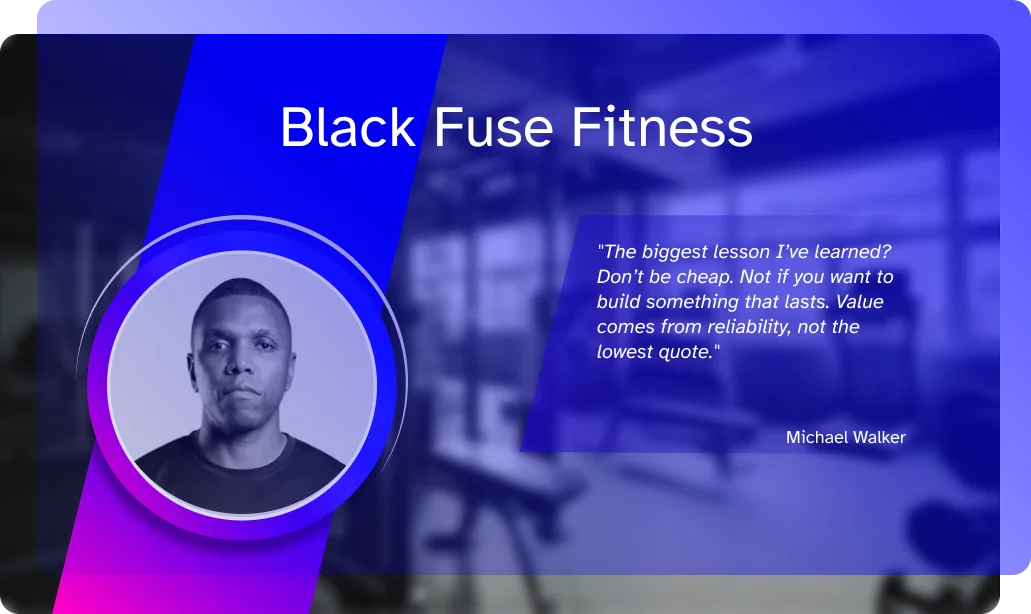
The biggest lesson I’ve learned? Don’t be cheap. Not if you want to build something that lasts. Value comes from reliability, not the lowest quote.
This mindset applies to:
- Physical environments (choosing long-term safety over short-term savings)
- Technology infrastructure (paying more for integration to reduce manual errors)
- Customer relationships (building trust through consistent service)
The result? A growing customer base that didn’t disappear during the two-year closure, and still calls to ask when the next location is opening.
Final thought
Leaders often talk about values in branding and culture. But operational integrity is where those values are tested. When systems crack, partnerships falter, and budgets stretch, shortcuts become tempting.
But shortcuts have long tails.
This entrepreneur’s path offers a compelling reminder: when you rebuild slowly, carefully, and with standards in place, you don’t just survive, you create something people want to return to. Again and again.