



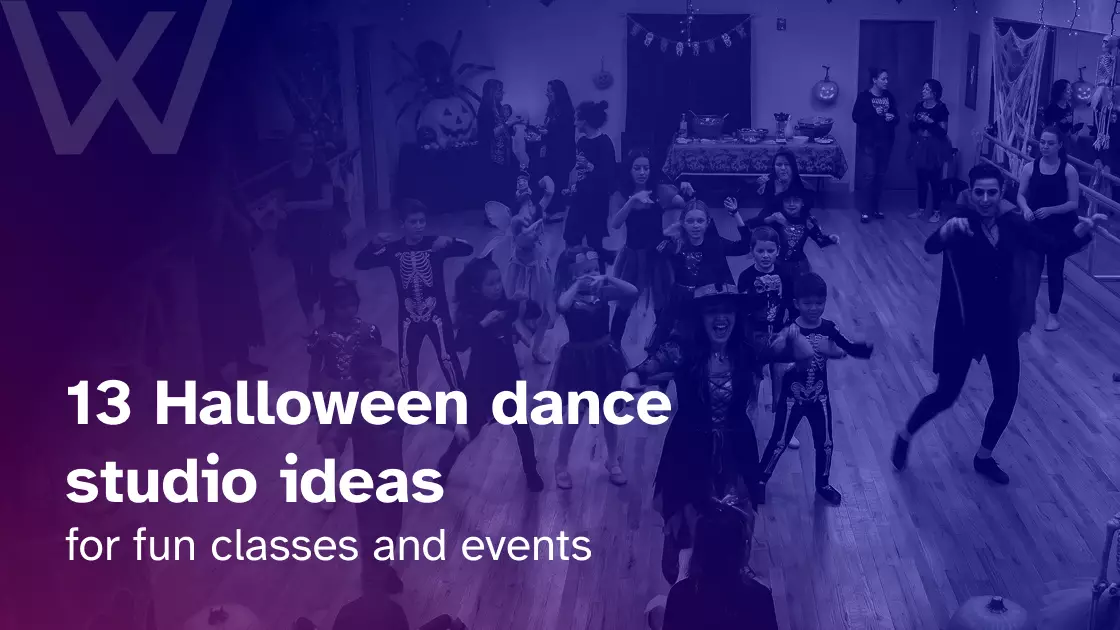
Halloween week brings tiny pumpkins to ballet class, zombie steps to the teen studio, and parents gathering to watch a new routine. One child is excited about a costume; another is worried about getting the steps right. Instructors still have a class to teach, even when the music gets spooky.
Halloween also offers an opportunity to welcome new faces. According to the National Retail Federation’s 2026 Halloween survey, 74% of surveyed U.S. consumers plan to celebrate Halloween, while 50% plan to dress in costume. For dance studios, that seasonal interest creates opportunities to organize themed classes, invite local families, and introduce prospective students to dance.
Beyond the celebrations, movement matters. The CDC recommends that children ages 6–17 get at least 60 minutes of moderate-to-vigorous physical activity daily. Depending on the intensity, dance activities can contribute to that goal while encouraging coordination, creativity, and confidence.
The best Halloween dance studio ideas focus on enjoyable activities rather than expensive decorations. From Monster Mash games and Thriller workshops to costume parties and community events, these 13 ideas offer practical ways to celebrate Halloween without overwhelming instructors or disrupting regular classes.
Which Halloween dance studio ideas suit your students?
Choose by age, dance style, space, and preparation capacity.
| Students or audience | Suitable ideas | Preparation |
| Preschoolers | Monster Mash; Halloween games | Low |
| Toddlers with caregivers | Parent-and-Me pumpkin class | Low–medium |
| Ballet, lyrical, and tap students | Spooky storytelling and rhythm class | Medium |
| Teens and performance teams | Thriller workshop; flash mob; choreography challenge | Medium–high |
| Adults | Zombie workout; partner dance night | Low–medium |
| Families and new visitors | Showcase; open house; charity dance-a-thon | Medium–high |
| Mixed-age social groups | Glow-in-the-dark party | Medium |
Preparation estimates are relative. A simple party at an established studio may be easier to arrange than a workshop that needs extra teaching staff.
13 Halloween dance studio ideas to try this October
Halloween dance studio ideas work best when they match students’ ages, abilities, and interests. These 13 activities range from spooky choreography workshops to playful movement games for young dancers.
1. Host a thriller-inspired dance workshop
A Thriller workshop suits teens, adults, and hip-hop groups. Teach zombie walks, shoulder accents, and arm gestures in two eight-count phrases. Practice slowly, then add music and a formation change.
Offer easier steps for beginners and an advanced ending for experienced dancers. Finish with a short performance. Record a Reel only with consent and appropriate music rights; costumes must allow safe movement. If the workshop includes guests, advertise the skill level and duration clearly so first-timers know what to expect.
2. Run a monster mash dance-off for little dancers
For ages 3–6, turn monster characters into movement prompts: stomp, float like a ghost, flap bat wings, and take zombie steps. Let students choose the sequence.
Divide students into small groups and let each group perform a short monster-inspired routine. Celebrate creative movements and teamwork without eliminating participants. Finish with an optional costume parade.
The CDC advises that children ages 3–5 stay active throughout the day. These playful exercises can be one enjoyable part of that active play. Keep music and decorations gentle for children who dislike frightening themes. A quiet corner with coloring sheets can offer a break without making anyone feel excluded.
3. Plan a parent-and-me pumpkin dance class
Invite toddlers and caregivers for pumpkin marches, scarf dancing, and follow-the-leader games. Adults wave scarves high and low; children copy the tempo, then take turns leading.
End with an optional costume runway on a marked stretch of floor.
Allow children to watch first, avoid small detachable props, and manage class capacity. This also welcomes new families. Keep the activity familiar enough that caregivers can participate without memorizing choreography, and explain where children can safely move.
4. Teach a spooky ballet or storytelling dance class
Build a ghostly ballroom story with soft port de bras, controlled turns, and changes in tempo to develop expression.
Tap instructors can take a similar storytelling approach using The Addams Family theme. Students can combine heel-toe steps, finger snaps, and rhythmic changes to bring different characters to life.
Groups can tell short Halloween stories through movement, developing musicality and character. To assess the work, ask classmates what character or emotion they recognized, rather than ranking performances.
5. Organize a zombie dance workout
For adults and older beginners, structure a zombie workout around a warm-up, monster marches, side steps, arm patterns, recovery breaks, and a cool-down.
Offer lower-impact variations. The CDC recommends 150 minutes of moderate-intensity aerobic activity a week for adults, plus strengthening activities on two days. Depending on its intensity, a dance fitness class may contribute toward the aerobic goal; it doesn’t replace all recommended activity. Consider a low-cost guest place for someone curious about adult dance, but make any offer terms clear in advance.
6. Play Halloween dance games and scavenger hunts
Rotate these Halloween dance games through regular lessons:
- Monster freeze dance: Pause “Ghostbusters” or another suitable song; dancers hold a spooky balance
- Musical pumpkins: Travel between floor markers and change direction when the beat changes
- Broomstick limbo: Use a soft, lightweight prop held safely at an achievable height, never a rigid broom in a crowded space
- Mummy wrap relay: Decorate a costume stand or cardboard figure with white streamers instead of tightly wrapping a child
- Scavenger hunt: At each station, perform four marching steps and a three-count balance before moving on
You can also use lightweight pumpkin props for a simple balance activity at the barre. Keep the exercises inclusive, and avoid eliminating children for making mistakes.
These movement games give children opportunities to practice rhythm, coordination, balance, and listening while staying active. The intensity will depend on the activity and how it is taught. If you run relays, use clear boundaries and slow walking rather than racing across a slippery studio floor.
7. Host a glow-in-the-dark Halloween dance party
Create a mini-disco with colorful lights, fluorescent accessories, and a Halloween playlist. Mix guided choreography with freestyle dancing. Offer cider or popcorn in a separate area, considering allergies.
For a shadow-flashlight activity, dance against one wall while keeping the rest of the room lit. Never shine lights into faces.
Keep walkways clear and the photo booth away from the dance floor. An easy finish is a final group routine followed by a photo opportunity for those who want one.
8. Organize a haunted dance showcase
Let classes present ghostly ballet, zombie hip-hop, witch-inspired jazz, or ballroom routines. Adapt familiar choreography to reduce rehearsal demands.
Arrange performances around age groups and costume changes; designate a waiting area and group coordinator.
A separate craft-and-photo corner can offer paper-bag ghosts and mini-pumpkin decorating. Obtain photo consent. For a smoother event, print the performance order for families and appoint one instructor to manage transitions.
9. Perform a Halloween costume flash mob
A Halloween flash mob gives confident teen dancers an opportunity to perform for a wider community audience. Choose an approved venue and rehearse spacing and formations.
For example, two groups enter from opposite sides, synchronize, and finish in one pose.
Before the performance, confirm venue permission, music requirements, and safe audience space. If an off-site event is difficult to arrange, perform the routine during your studio’s Halloween open house instead. Performers should know exactly where to wait and where to exit once the routine ends.
10. Plan a dance with the ghouls partner night
Give ballroom, swing, or salsa a Halloween theme, with a beginner lesson followed by social dancing and optional paired costumes.
Welcome solo guests through optional partner rotation or individual footwork.
Keep steps accessible and share the regular beginner-class schedule afterwards. A brief instructor demonstration before the first song helps guests settle in without feeling as though everyone else already knows the routine.
11. Welcome families to a haunted studio open house
Turn your spooky makeover into an open house, with cobwebs and glowing pumpkins away from walkways and short beginner demonstrations.
Guide visitors from check-in to demonstrations, movement games, and class information. Add a photo booth and supervised craft station.
Offer age-appropriate trial registration and display pricing and eligibility clearly. Make sure staff can answer common questions about class length, footwear, and whether a parent stays during a child’s lesson.
12. Launch a Halloween choreography and costume challenge
Give groups a creative brief: character, formation change, and repeated movement. Add improvisation cards prompting “slow zombie” or “startled by a ghost.”
Celebrate storytelling and teamwork in short presentations or a costume runway.
For optional online sharing, obtain consent, especially for minors. Avoid popularity-based judging. Prompt cards also give less confident students an idea to start with, while experienced dancers can vary timing or levels.
13. Organize a Halloween charity dance-a-thon
For a charity dance-a-thon, choose a local cause, explain donations, and schedule short sessions with breaks.
Offer beginner, hip-hop, and group routines. Families and local businesses can support the cause through donations, provided the studio clearly explains how contributions will be collected and used..
Explain costs and donation handling, arrange supervision, and include accessible options. Do not promise fundraising results. A short thank-you note afterwards can tell participants what was collected and where it went.
How to plan a successful Halloween dance studio event
Choose one or two activities your instructors can run well. Confirm who handles check-in and who remains with students while caregivers talk to staff. A short run-through of the room layout can prevent confusion on the day.
| Planning task | What to decide |
| Audience and format | Ages, ability levels, class or event type |
| Budget | Props, staff time, refreshments, materials |
| Registration | Capacity, price, deadline, guest details |
| Promotion | Parent emails, studio notices, local channels |
| Safety | Footwear, props, lighting, access, allergies, consent |
| Follow-up | Reminders, trial options, feedback |
When extra workshops overlap with regular classes, dance studio scheduling software can make bookings, room capacity, and instructor assignments easier to coordinate.
Promote early and check music permissions. The Texas Music Office explains that purchases or consumer subscriptions do not automatically grant public-performance rights. Requirements vary by use.
How can Halloween events help dance studios welcome new students?
Open houses introduce families to regular classes. With permission, collect contact details and suggest suitable trials. A parent asking about preschool ballet needs a different follow-up from an adult interested in a hip-hop workout.
Follow up with relevant schedules, and track guests, trials, enrollments, and costs.
Dance school software can organize attendance, payments, and parent messages while instructors welcome dancers. Do not assume every guest will enroll.
FAQs
What are some easy Halloween dance class ideas for kids?
Try Monster Mash movement games, skeleton freeze dance, musical pumpkins, movement charades, or a costume parade. Choose activities that use familiar dance skills, keep instructions short, and let children participate even if they do not want to wear a costume.
How do you organize a Halloween dance party at a studio?
Pick a suitable theme, confirm staff and room capacity, select music, and choose a few dance activities. Set registration and costume guidelines in advance. Keep refreshments, crafts, and photo areas separate from the main dance floor.
What are the best songs for a Halloween dance class?
“Thriller,” “Monster Mash,” “Ghostbusters,” and “Purple People Eater” are recognizable options. The Addams Family theme can work for tap rhythms and character movement. Choose appropriate versions for each age group and check applicable public-performance and recording permissions.
What costumes are safe to wear during dance classes?
Use lightweight, flexible outfits that preserve vision and movement. Avoid trailing capes, sharp props, restrictive masks, and unsuitable shoes. Themed colors or small accessories are fine alternatives; costumes should always be optional, particularly for younger dancers.
How can dance studios attract new students during Halloween?
Offer beginner workshops, bring-a-friend activities, family open houses, and clearly described trial classes. Make registration simple and follow up with relevant schedules afterwards. Judge the event by actual inquiries and bookings rather than social media views alone.
Make Halloween memorable for your dance students
Some of the best Halloween moments happen between planned activities: a shy student joining a group routine, a parent trying the steps, or a class laughing through a monster-inspired warm-up. Those moments matter just as much as the decorations.
Choose one or two Halloween dance studio ideas that suit your students, instructors, and available space. Keep choreography achievable, costumes safe, and schedules manageable. After the event, ask families what they enjoyed and what could improve next year.
A thoughtful Halloween celebration brings students together, encourages creativity, and leaves families with happy memories long after October ends.