
In this episode, Gideon talks with Sensei Robert Hargreaves of Parkland Shotokan Karate in Spruce Grove, Alberta, the seventh-dan instructor who taught for a decade on borrowed school-gym floors before opening a permanent dojo, and who runs the whole thing as a nonprofit staffed entirely by volunteers so the art comes first and the customer-service argument never starts.
July 7, 2026
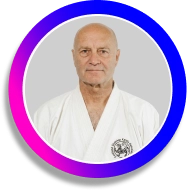
Sensei Robert Hargreaves
Founder of Parkland Shotokan Karate, a nonprofit dojo in Spruce Grove, Alberta. He started training in the UK as a teenager after Bruce Lee lit up his generation, resumed the practice after moving to Canada, and has now studied under the same sensei for more than thirty years, holding a seventh dan.
Parkland Shotokan Karate is an independent dojo in Spruce Grove, Alberta, built by an instructor who spent ten years teaching in other people’s buildings before deciding it was time to have his own. Robert Hargreaves came to karate as a teenager in the UK, pulled in by the Bruce Lee wave that landed on his generation in the early seventies. He trained through his teens, moved to Canada, stepped away, and came back to the practice for good in his thirties. For more than thirty years he has trained under the same sensei, earning his seventh dan while running a parallel career as a management consultant in Alberta’s oil and gas industry. PSKA opened ten years ago on rented school-gym floors a couple of nights a week. From there it moved into a community center for three years, and this February it opened its own permanent dojo after a two-month buildout. (Per the association, PSKA is a registered nonprofit. Instructors and board are 100% volunteer, and every dollar goes back into the operation.) Hargreaves runs the dojo the way his own sensei runs his, with close to sixty years in the art. Patience first, curriculum second, and no shortcuts for anyone who wants to grade before they’re ready.
This is an episode about why the dojo isn’t really a business. Robert Hargreaves didn’t spend a decade teaching karate in school gyms and community halls because he was building toward a franchise. He spent it building toward the opposite: a place where a seventh-dan instructor and a board of fellow volunteers could teach the art the way it’s meant to be taught, without being answerable to customer complaints about how hard the grading is. When Parkland Shotokan Karate opened its permanent home in Spruce Grove, Alberta this February, the milestone wasn’t the buildout. It was doing it without turning the dojo into a commercial concern.
Karate found Hargreaves as a teenager in the UK, in the wake of Bruce Lee. He trained through his teens, moved to Canada, took a break, and returned to the practice for good in his thirties. Over the next three decades he built a management consulting career in Alberta’s oil and gas industry alongside a training life that ran multiple nights a week under the same sensei, a teacher who himself has close to sixty years in the art. Hargreaves earned his seventh dan along the way, but at a certain level, he says, the ranks stop mattering. What matters is what you can hand over: the substance behind the technique, the layers of the onion behind the art. That’s the standard he brought to PSKA when it opened ten years ago. As he puts it,
“work actually gets in the way of my karate,”
not the other way around.
The path to a permanent home was slow on purpose. PSKA moved from school gyms into a large community center for three years while the board saved. The hardest part, Hargreaves says, was assembling the financial resources. When they had enough, they signed a lease, spent December and January on a buildout they’re openly proud of, and opened classes in February. The permanent location changed the operating model overnight. PSKA now runs five nights a week, segmented by age and belt level: seven-to-twelve beginners, seven-to-twelve intermediates, teenage and adult beginners and intermediates, a mixed-age advanced group, a women’s-only Wednesday class, and a Saturday open house where prospective students can walk in and try the art. The instructors used to teach wide, diverse groups. Now they teach tighter cohorts. It’s more nights on the schedule, and it’s easier on everybody.
The choice that shapes the rest of the business is that PSKA is a registered nonprofit. There are no honorariums and no wages. Every instructor and board member is a volunteer, and every dollar members pay goes back into the operation. Hargreaves is candid about why. In truly commercial dojos, he says, there’s constant pressure from students and parents on the standards, this belt is taking too long, this grading was too hard, and the curriculum bends to hold onto revenue. He doesn’t want that argument. If a student isn’t ready to grade, they aren’t ready. Some come back from a failed grading harder and sharper than before, and those are the ones who’ve learned something the art was built to teach: how to sit with adversity and come back for more. It’s the wax-on-wax-off lesson, and the volunteer structure is what protects it. What Hargreaves tells the student in a hurry is what his sensei tells him: there’s no rush, “just practice a little bit more.”
For ten years the business side ran on spreadsheets and email lists, with Square added three years ago for invoicing. The move into the permanent dojo was the moment to modernize. Hargreaves approached the software search the way a management consultant would: a functional specification, a Google search for the top gym management software in Canada, a shortlist, and a like-for-like comparison across five vendors on features and cost. Wellyx didn’t come up in most top-five lists. It came up on the functional spec. What he needed was one portal: multiple membership types, online sign-up with card capture, auto-debit payments, in-app communication, email and SMS marketing, and reporting deep enough to show the board month-over-month collections and statistics. Wellyx scored highest across the matrix. Implementation ran through four or five one-hour sessions with the onboarding team, easier than he’d expected, and PSKA went live on June the first.
What Hargreaves values now is the same thing that took him ten years to earn: a system that quietly does what it’s supposed to do so the instructors can focus on the floor. Members carry the dojo on their phone. They check the schedule, register for gradings, buy products, and sign up as new members without waiting for a reception desk. The board reads the numbers without stitching together spreadsheets. Next on the list are the marketing, automation, and template features PSKA has never used before, the next layer of the onion, in the spirit of what Hargreaves teaches his students. On the marketing question, his rule is the one that carried the dojo through ten years of rented floors and got it to its own front door: start with what you’ve got.

Meet Max from Goji Yoga. Focused on providing a grounding, and minimalistic experience, he chose Wellyx for its impressive depth and ability to keep his customers fully immersed.
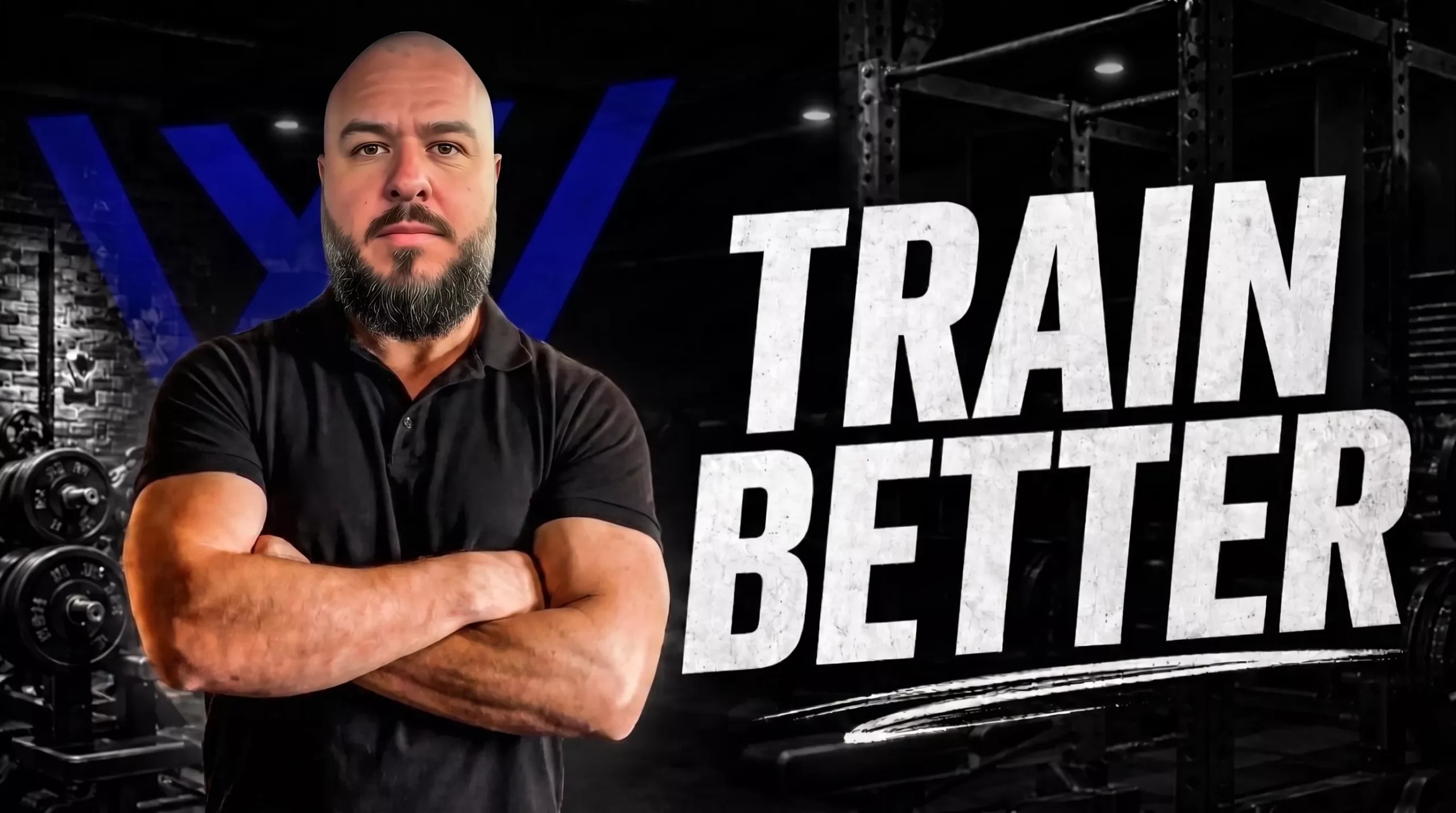
Meet Phil from Train Better. Dedicated to helping children secure collegiate scholarships and ease the financial burden on their families. He chose Wellyx for its involved and user-friendly approach, backed by 24/7 customer service.

Meet Danielle from Grit to Greatness Performance Center. In Colorado, she and her husband built a cohesive team and chose Wellyx because of 24/7 multi-channel support, ensuring smooth and reliable operations.

Meet Vladimir Cartev from Cartev Fit Zone. With dedication and discipline, he built a focused training space and chose Wellyx to support his growing vision and streamline daily operations.

Meet Zack Camilleri, founder of Prestige Fitness in Malta. From handling VAT requirements to streamlining operations, Wellyx provided the tools he could not find in any other software.

Meet Kash Mehrotra from Meridian Fitness. Managing multiple software systems was slowing growth, but with Wellyx he found one complete platform that simplified operations and improved efficiency.

Meet Michael Walker from BlackFuse Fitness. Driven to help people reach their best physical selves, he built more than a gym and chose Wellyx to keep operations smooth and reliable.

Meet Anant Naidu from King Swing. Focused on growth and efficiency, he implemented Wellyx to automate operations and build a strong foundation for long term success.
We built Wellyx to take the admin off gym owners’ plates. This series is how we get to know the people we built it for. Behind every account is someone who took a real risk, solved problems no one warned them about, and built something their community shows up for. The founder’s floor steps out from behind the software to put those owners in front of the camera, in their own words, with no script. Real gym, real results.
We use cookies to provide you with the best experience on our website. By continuing to use our site, you agree to our use of cookies.