

Someone watches your yoga reel, checks your profile, and keeps scrolling. The next day, they see another yoga advertisement, but nothing excites them enough to book a session. That’s where creative advertising makes a difference.
Fresh yoga studio advertising ideas include first-yoga-class POV reels, instructor-led videos, neighborhood-specific ads, local creator partnerships, referral campaigns, and outcome-based messaging. The strongest concepts show people what attending your studio feels like, then connect that feeling to a specific class or offer.
A nice yoga pose tells viewers very little. A beginner’s first visit, an instructor answering a common question, or a familiar landmark tells them much more.
These yoga advertisement ideas each come with sample messaging, creative direction, placement, and booking strategy. For the wider picture, including SEO and retention, you need fuller yoga marketing ideas to grow your studio.
Outcome-based advertising: Give people a reason to choose your class
People choose what they can easily relate to. Consider these two ads, pointing to the same evening yoga class:
| Class-based ad | Outcome-based ad |
| Evening Vinyasa Flow.Tuesdays and Thursdays at 6 PM. | An hour away from your screen. Leave work behind and settle into our evening Vinyasa class. |
Both describe the class. The second ties the class to a familiar moment.
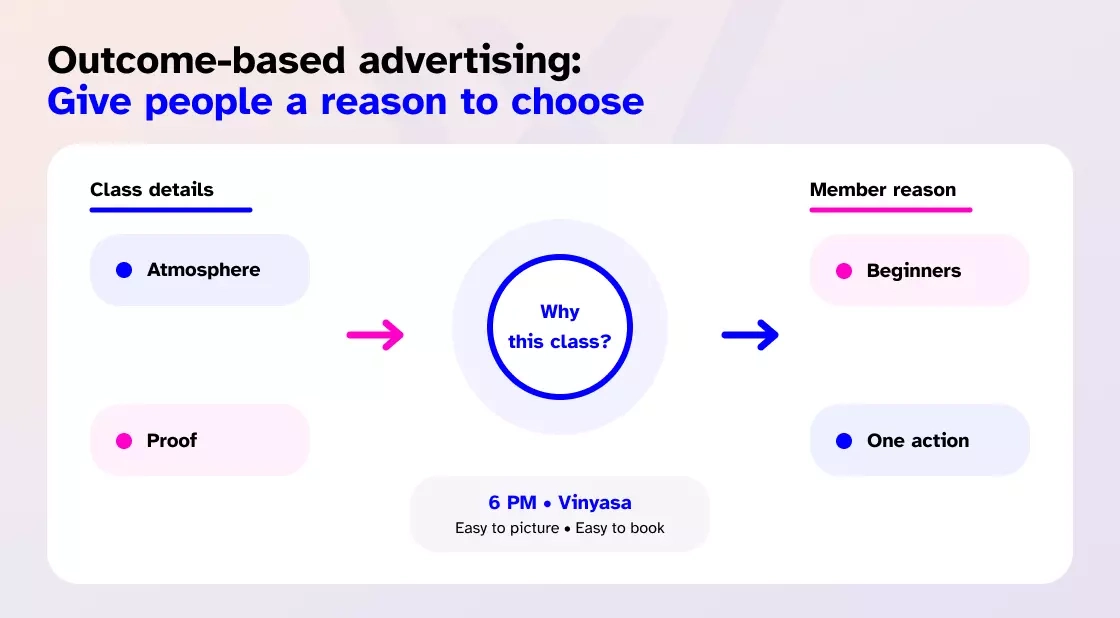
Carry that into your yoga advertising: Show the atmosphere, explain what beginners can expect, and make the experience easy to picture. Keep class details accurate and avoid promising health outcomes.
A strong yoga class advertisement has five parts:
- An outcome headline
- Class and who it’s for
- Day, time, location, and price
- One piece of proof (a real photo, instructor, or member)
- A single booking button
10 fresh yoga studio advertising ideas for 2026
These ten creative campaigns put outcome-based advertising into practice:
1. Film a first-class POV reel
Many beginners have watched dozens of yoga videos without knowing what happens inside a studio. Show them with a 20-second, first-person reel of arriving for class.
| Timing | Creative direction |
| 0–3 seconds | Studio entrance. Text: “POV: Your first yoga class” |
| 4–8 seconds | Reception, props, and a friendly greeting. |
| 9–14 seconds | Instructor preparing mats and explaining a beginner-friendly movement. |
| 15–20 seconds | Class atmosphere and a clear booking invitation |
Use authentic clips and natural audio. Run it as an Instagram and Facebook Reels ad linking to your beginner-class page, with schedule, price, and what to bring.
Film in 9:16 vertical with captions, and keep key text away from the top and bottom edges, where the app interface sits. Meta’s Reels ad requirements also call for full-screen vertical video free of third-party copyrighted music.
2. Turn one class into three ads
One class appeals to different audience segments for different reasons. Film one session and test three hooks:
| Creative | Hook | Opening footage |
| A: The routine | Your workday ends here. | Laptop closing, studio entrance, mat unfolding. |
| B: The beginner | You don’t need to know the poses. | Instructor explaining a movement. |
| C: The location | Evening yoga, minutes from [landmark]. | Familiar street and studio exterior. |
Send all three to the same booking page, with comparable settings in Meta Ads Manager. Identify the best-performing ad based on bookings, not views or likes.
3. Let instructors answer beginners’ questions
Your instructors show something a graphic can’t: how they teach. Record short clips answering real questions:
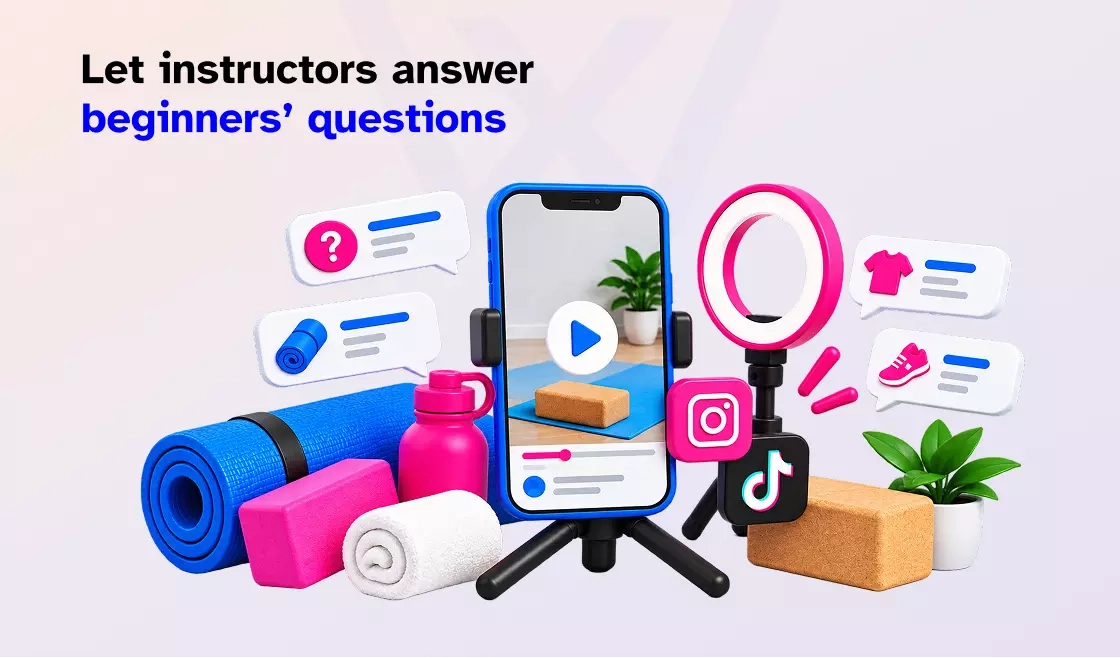
- What happens if you can’t touch your toes?
- Do you need your own mat?
- What should you wear to your first class?
- What does beginner-friendly actually mean here?
Have the instructor demonstrate with your real props. A block supporting a beginner is more convincing than a promise. Post the clips as organic reels or TikToks, then boost the best performer as an ad for an intro class. Keep the tone conversational, as if speaking to someone at reception.
4. Create a reel-to-real-life neighborhood campaign
Your next member may already pass your studio every morning. Film a short route from a local landmark to your door, opening with “there’s a yoga studio just around the corner from [local market].” Show the exterior and a glimpse of the class, then run it as a locally targeted Instagram ad.
Extend it with approved posters in nearby cafés, bookstores, or coworking spaces. Give each a QR code and its own tracking link so you can see which location earns bookings. Better still, ask the venue to promote a joint class evening. Keep your Google Business Profile accurate too. Google says local results depend mainly on relevance, distance, and prominence.
5. Tell a real student’s story
Ask a recent member what surprised them about their first visit. Perhaps the instructor explained modifications clearly, or the room felt welcoming. Film their answer in their own words, supported by approved clips of the class. A possible opener: “I thought I’d feel out of place at my first yoga class…” Use it only if it reflects their actual experience.
Get written permission, then run the video on Instagram or Facebook with the matching intro offer. Never invent testimonials or use actors as members.
6. Turn a local creator’s experience into a TikTok Spark ad
A neighborhood creator can introduce your studio to people who have never heard of it. Invite a wellness creator, running-club organizer, or local lifestyle voice to attend a class and share an honest take, such as “I tried a beginner yoga class in [neighborhood]. Here’s what it was like.”
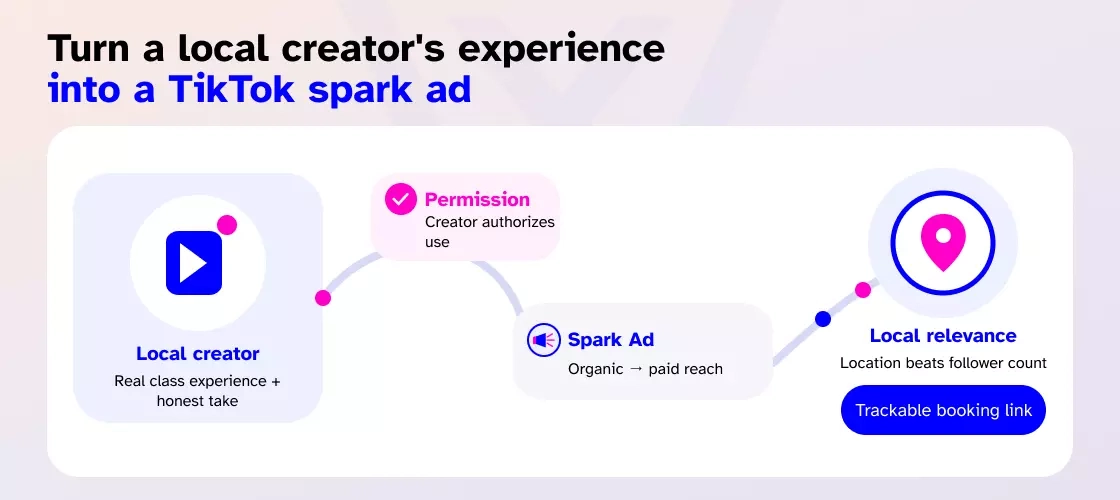
With their authorization, you can promote their post as a Spark Ad, which lets brands advertise using organic posts from other creators. Give them a trackable booking link.
Any payment, free class, or other material connection must be clearly disclosed under the FTC’s influencer disclosure guidance. Local relevance matters more than follower count.
7. Build an ad around a community cause
A charity class offers something different from another membership promotion. Partner with a local shelter or neighborhood initiative your studio genuinely supports, and film the instructor introducing the event: “One community class. One local cause.”
Name the organization, explain how donations work, and send people to a dedicated registration page with event details and available places. A cafe or bookstore can help promote it through its own channels. Afterward, share a recap with approved footage and verified donation figures.
8. Make a bring-a-friend offer feel shared
A first class can feel less unfamiliar when you go with someone. “Two mats. One new experience.”
Film two people arriving together, unrolling mats, and joining a beginner-friendly class. Offer a guest pass or paired intro package if your studio supports one, and promote it through member emails, Instagram Stories, and a local Meta campaign.
The booking page should explain who qualifies, what’s included, and whether a referral reward applies. Give members unique links or codes to track participation. It lets members invite a friend without giving a sales pitch.
9. Let people hear the studio before they see it
Most yoga ads rely on visuals. Audio offers another way to introduce your studio to potential members. A short instructor recording can support your efforts to get more yoga students, particularly through local podcasts and short-form videos. Record a short instructor message over natural room sounds and original audio or music cleared for commercial advertising. A possible 15-second script:
“Your day has been busy enough. There’s a mat waiting when you’re ready. Discover evening yoga at [studio name].”
Test it on a relevant local podcast or digital audio placement, and reuse it under an Instagram reel of the entrance, mats, and instructor welcoming attendees. Don’t assume music available for organic reels is licensed for paid campaigns. Lead to a real class with clear booking details.
10. Create a three-part ad story for people who haven’t booked
Someone may watch your video, visit the booking page, and leave without reserving. Where consent and platform policies allow, retargeting can reconnect you with eligible visitors who haven’t booked.
Build a three-part campaign: first, a POV reel introducing your studio; next, an instructor answering a beginner’s question; finally, a reminder such as “Your next Saturday could start here,” showing the actual class and its intro offer. Exclude existing bookers where permitted.
Avoid messaging that suggests you know someone’s medical condition or personal circumstances. Google restricts personalized ads around health-related sensitive interests. Make the follow-up useful, with class availability or offer terms, rather than repeating the same video.
Where and how to run these yoga advertisements
The idea sets the message. The channel decides how people meet it.
| Channel | Campaign focus |
| Instagram and Facebook | POV reels, member stories, beginner classes, local promotions |
| Google Search ads | Searches for available classes in a specific location |
| TikTok | Creator-led content and authentic studio experiences |
| YouTube Shorts | Instructor introductions, class previews, studio tours |
| Google Business Profile | Free local discovery, photos, and booking link |
| Intro-offer reminders and post-class follow-ups | |
| Local print | Neighborhood posters, QR codes, community events |
Google Ads for yoga studios
For yoga studio PPC, build one focused Search campaign around a specific class or offer. Target searches like “beginner yoga near me” or “yoga classes in [city].”
- Check location settings. Google’s default, “Presence or Interest,” also reaches people outside your area who’ve shown interest in it. Google suggests considering presence targeting when you only want people in specific locations.
- Prune searches. Use the search terms report to add negative keywords, such as teacher training or online yoga videos, if you don’t offer them.
- Match the landing page. Send visitors to the matching booking page, not the homepage.
Google Business Profile
Google Business Profile is a free way to strengthen your studio’s local visibility. Verify the profile, keep hours current (including holidays), choose accurate categories, add real photos, link your booking page, and reply to every review.
Paid social and email
For Meta campaigns, use a small local audience and an objective you can measure, such as bookings or leads. Change one creative element at a time. For email, keep the sequence useful: booking confirmation, a reminder with arrival directions, and a relevant post-class follow-up. Confirmations and class reminders are service messages; send promotional follow-ups only with appropriate marketing permission and an unsubscribe option.
Give every ad a useful intro offer
A compelling ad still needs a practical next step.
| Offer | Suitable campaign |
| Free first class | Beginner-focused reel |
| Paid intro packages | Outcome-based class campaign |
| Guest pass | Bring-a-friend promotion |
| Workshop registration | Community partnership or charity event |
Show real prices, conditions, availability, and expiry dates. Keep bookings simple enough to finish on a phone. Connected yoga studio software can keep class availability, bookings, and follow-up communication in one place once advertising brings visitors in.
Measure bookings, not just attention
A reel or Instagram post may generate interest, but what happens after someone inquires matters just as much. A lead management system helps organize inquiries, responses, and follow-ups. An advertisement may attract thousands of views without generating meaningful bookings. Track three outcomes: trial bookings, class attendance, and membership conversions.
For paid campaigns, divide advertising spending by attributed bookings to calculate cost per booking. Compare that figure with attendance and membership sales. Unique booking links, referral codes, and conversion tracking help identify which advertisements generate meaningful results.
Wrap up
In 2026, a yoga studio can post a reel in minutes. Giving someone a reason to remember it takes care. The strongest campaigns show details people cannot get from a class schedule: the instructor’s welcome, the pace of a session, the walk from a familiar corner, or the relief of knowing beginners belong.
A short video may spark interest. A local ad can turn that interest into local awareness. A clear introductory offer and easy booking page give it somewhere to go. Bookings, attendance, and new memberships tell you which ideas deserve another run.
Your studio does not need to look like every other yoga account. Its experience is the material. Advertising works when the promise on screen matches the room people enter.
Frequently asked questions
1. What are the most effective yoga studio advertising ideas for 2026?
First-class POV reels, instructor-led videos, local creator partnerships, neighborhood campaigns, referral offers, and Google Search Ads. The right mix depends on your audience, classes, and budget.
2. Should yoga studios advertise on Instagram or Google?
Instagram introduces the studio through visual experiences. Google Search Ads reach people who are actively looking for local classes. Both work when the creative, audience, offer, and landing page match.
3. How much should a yoga studio spend on advertising?
There’s no specific amount. Set a test budget based on available funds, class capacity, and membership economics. Cost per attended trial and per paying member says more than clicks.
4. What should a yoga class advertisement include?
A clear outcome, the class type, location, schedule, price or intro offer, and a booking link. Use real studio imagery and avoid unsupported health claims.
5. Are Google Ads worth it for yoga studios?
Yes, they are worth it because they reach people already searching. However, results depend on keywords, location settings, landing-page match, and conversion tracking.