



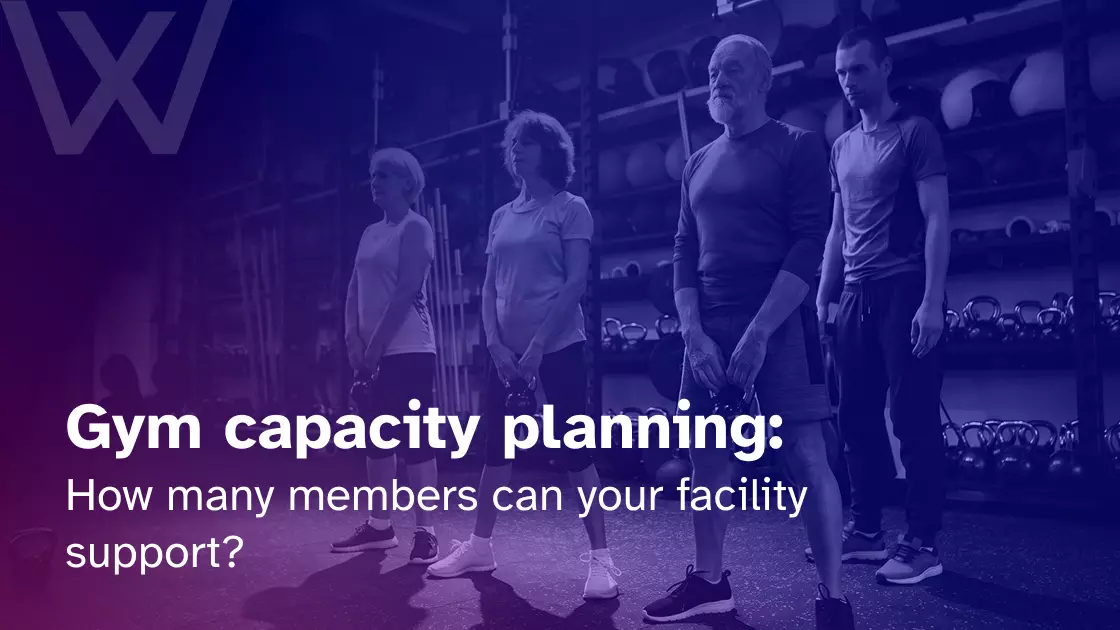
Most gym owners have had this exact experience without naming it. The floor is calm all morning, plenty of open equipment, no line anywhere. Then 6 p.m. hits, and for one hour the same building feels like a different, worse business, the same square footage suddenly can’t hold everyone comfortably. It’s tempting to read that as evidence the gym has outgrown its space. But that conclusion should come only after checking whether the problem is facility-wide or concentrated in one peak window.
It’s outgrown one hour of its week, and treating that one hour as a full-facility problem leads owners toward the wrong fix: an expensive expansion that leaves the other 21 hours exactly as empty as before and does nothing for the hour that actually drove the complaint. This guide is about finding that hour precisely, understanding what it’s actually costing you, and fixing it without assuming the whole building is the problem.
Why your total capacity number is the wrong number
Most owners calculate gym capacity from total square footage or total memberships sold. Both describe an average across the week. Neither describes what a member actually experiences when they walk in.
A facility can sit at 40 percent utilization across a full week and still be genuinely too crowded to use comfortably for the 90 minutes that matter most. Averages hide exactly the thing that drives complaints and cancellations: the specific window where the floor feels packed, the squat rack has a line, and the parking lot is full. That’s also why gym revenue per square foot can be useful as a financial measure, but it doesn’t tell you when capacity actually becomes a member-experience problem.
The same 8,000 square foot gym can feel spacious on a Tuesday at 11 a.m., plenty of open equipment, no wait for anything, and feel like a different, worse facility every weekday at 6 p.m., same square footage, same equipment, same staff.
Stop asking, ‘How much space do we have?’ Start asking, ‘What does our worst hour actually look like, and how often does it happen?’. That single question reframes capacity planning around the moment members actually judge you by.
Before fixing that window, it’s worth understanding exactly what crowding does to the people standing in it.
What happens when a gym gets too crowded
Crowding isn’t just a comfort issue. It has a direct, documented link to why members cancel.
The Health & Fitness Association discusses crowding through a value equation drawn from Blue Ocean Strategy: value equals utility minus price. When crowding makes a membership less usable while the price stays the same, its perceived value can fall. Club consultant John Salmon’s research names the tipping point directly: a “breach” is the point where the number of bodies per square foot causes the perception of overcrowding to hit what he calls a fever pitch, producing dissatisfied members who cancel. His research also found breaches cluster predictably, at “pinch points” in a facility and during the same traditionally high-traffic windows, early mornings and evenings, at nearly every club.
A member who joined for the equipment and the atmosphere doesn’t experience your gym as an average. They experience it as whatever it was the three times a week they actually showed up, usually the same time of day, usually your busiest.
Crowding at your peak window isn’t a side issue to your retention numbers. For the members who mostly visit during that window, it may be the single biggest driver of whether they stay.
Knowing crowding matters is one thing. Knowing exactly when and where it happens is a separate, more concrete problem.
Finding your actual peak window
Most owners think they know their busiest hour. Most are wrong about at least part of it until they actually check.
“Busy” often gets remembered from the day it felt worst, not the day it statistically was worst. A single chaotic Monday sticks in memory longer than a quietly, consistently packed Wednesday.
In one club studied by John Salmon, the real problem wasn’t simply the overall peak-hour breaches clustered at specific pinch points, meaning the same total headcount at different times created different amounts of felt crowding depending on where in the facility people gathered.
Pull check-in data broken out by hour across a full week, not just “our busy days.” Identify the single window with the highest simultaneous headcount relative to your space, not just the highest total visits. That window, not your total member count, is your real planning constraint.
A headcount number is a start. A more useful signal sits even closer to what members actually feel.
The equipment queue as your real crowding measurement
“It felt busy” isn’t a number you can plan around. A queue is.
The total headcount in a building doesn’t distinguish between a gym where everyone’s spread across a large floor and a gym where the same number of people are all waiting for the same three squat racks. The second one is the actual crowding problem, and it’s specific enough to fix directly.
Two gyms with identical peak-hour headcounts can have completely different member experiences if one has a five-minute wait for the leg press and the other doesn’t, even though their total capacity numbers look the same on paper.
Track wait time or queue length for your highest-demand equipment and your highest-demand class formats specifically, not just total facility headcount. That’s the number that more directly reflects the frustration members experience, and it’s the number that tells you exactly what to fix.
Once you know where the real bottleneck sits, the instinct is usually to build more space around it. That instinct is often wrong.
Why adding square footage usually doesn’t fix this
The default response to crowding is expansion. Expansion is expensive and often misses the actual constraint.
Legal occupancy minimums are far more permissive than what actually feels comfortable, which is exactly why “we’re not over capacity” and “members are complaining about crowding” can both be true at once. NFPA 101, the national fire code standard referenced across most municipal building codes, calculates occupant load for exercise rooms with fixed equipment at 50 square feet per person, and as little as 15 square feet per person for rooms without equipment. That’s a legal ceiling for safe egress, not a target for how a gym should actually feel. Real facility design guidance may use different space allowances depending on the activity and layout. Any comparison with code-based occupant-load factors should therefore use the same room classification and measurement basis.
A gym operating well within its legal occupancy limit can still be experiencing real, member-driving-away crowding, because “legally allowed” and “comfortable to use” are two entirely different thresholds, and most owners have only ever checked the first one.
More total square footage only helps if it’s added in the specific zone or format where the queue actually forms. A larger cardio floor does nothing for a squat rack line. Before approving any expansion, confirm it’s aimed at the actual pinch point, not just the facility’s total footprint.
If expansion isn’t the default fix, the real lever is usually demand, not space.
Redistributing demand instead of expanding space
The same total demand crammed into one window creates a bottleneck. Spread across more of the day, it doesn’t.
Peak-hour crowding is often a scheduling and incentive problem wearing a space problem’s clothes. The floor isn’t necessarily too small for your membership base. It may simply be too small for the portion of that membership base trying to use it at the same moment.
A studio-format class that only runs at 6 p.m. concentrates everyone who wants that format into one 60-minute window. Adding an earlier or later session doesn’t require a single additional square foot, it just gives the same demand somewhere else to go.
Redesign the schedule around your actual peak window rather than your ideal one. Consider off-peak incentives, a second session of your highest-demand format, or a soft cap on your single busiest class specifically rather than a blanket capacity limit across the whole facility. Real-time crowding visibility can also help redistribute demand by letting members see how busy the gym is before they leave home.
Comparison table
| Crowding signal | What it actually indicates | The fix |
| High total weekly headcount, low peak headcount | Not a real crowding problem; membership base is healthy and spread out | No action needed |
| High peak-hour headcount, low queue times | Busy but functioning, worth monitoring | Watch trend, no urgent fix |
| Consistent equipment queue at one station | A specific pinch point, not a facility-wide space shortage | Add or relocate that equipment specifically, not the whole floor |
| Consistent queue across most of the floor during one window | A genuine peak-hour demand problem | Redistribute demand: new session times, off-peak incentives, soft caps |
| Complaints concentrated in member reviews about “always crowded” | Member perception suggests meaningful crowding and potential retention risk | Treat as urgent, address the specific window driving it |
Where this fits into your operations
None of this works from memory or a quarterly gut check. Finding a real peak window, and confirming whether it’s actually improving after a schedule change, requires check-in data broken out by hour, not a spreadsheet someone updates once a season.
Wellyx’s attendance tracking keeps check-in data connected to your class schedule. That makes it easier to identify your busiest window and compare the results after making a scheduling change. This doesn’t replace the judgment call of what to do about crowding. It just means you’re working from your real numbers instead of guessing which hour feels worst.
Self-audit: do you actually know your worst hour
- Can you name your single worst 60 to 90 minute window of the week without checking a report?
- Have you ever measured wait time for a specific piece of equipment directly, rather than estimating it?
- Would a brand-new member notice the crowding at your peak window before you would?
- Do you know whether your peak window is a single facility-wide problem or a specific pinch point?
- Has your peak window’s crowding actually improved over the last quarter, or just moved to a different hour?
If more than one of these gave you pause, the crowding you’re managing is probably being managed by instinct, not by a number you can actually track and improve.
Owner action checklist
- Pull check-in data by hour across a full week, not just your assumed busy days
- Identify your single worst window by simultaneous headcount, not total daily visits
- Track queue time for your highest-demand equipment or class format specifically
- Before approving any expansion, confirm it targets the actual pinch point, not just total square footage
- Test one demand-redistribution fix (a new session time, an off-peak incentive, a soft cap) before committing to a space change
- Recheck your peak window a month after any fix to confirm it actually moved, not just shifted to a different hour
Frequently asked questions
What counts as an overcrowded gym?
There’s no single universal number; it depends on format and member expectations. A more useful signal than headcount alone is queue time for equipment or classes and member complaints clustering around a specific window; both indicate crowding has crossed from busy into genuinely frustrating.
How many square feet per member is standard for a gym?
Occupancy limits vary by room type, building code, and local jurisdiction. For operational planning, gyms should distinguish between legal occupancy limits and the space members need to exercise comfortably.
Does adding more equipment fix crowding?
Only if it’s added at the actual pinch point. Equipment added to an underused zone does nothing for a queue that forms at a different station entirely. Identify exactly where the wait time occurs, by tracking queue length or booking data for that specific piece of equipment, before spending money on anything.
Should peak-hour classes be capped lower than off-peak ones?
Often, yes, if your peak window is where most complaints and queues concentrate. A lower cap on your single busiest session, paired with an added session elsewhere, usually redistributes demand better than capping every class equally regardless of when it runs.
How often should peak-hour data be reviewed?
Monthly is a reasonable baseline, and always again after any schedule change meant to address crowding specifically. A fix that isn’t rechecked can just shift the same crowding to a different hour, or a different pinch point on the floor, without anyone actually noticing it moved.
Solving the hour that actually matters
Total square footage tells you almost nothing about whether your gym feels crowded. Your worst 60 to 90 minutes tells you everything. Most owners already have the data to find that window; they’ve just never pulled it broken out by hour. Once you know where the real pinch point is, the fix is usually a schedule change or a demand shift, not a construction project.
If you want to see how Wellyx connects attendance data with your class schedule, you can book a demo.