



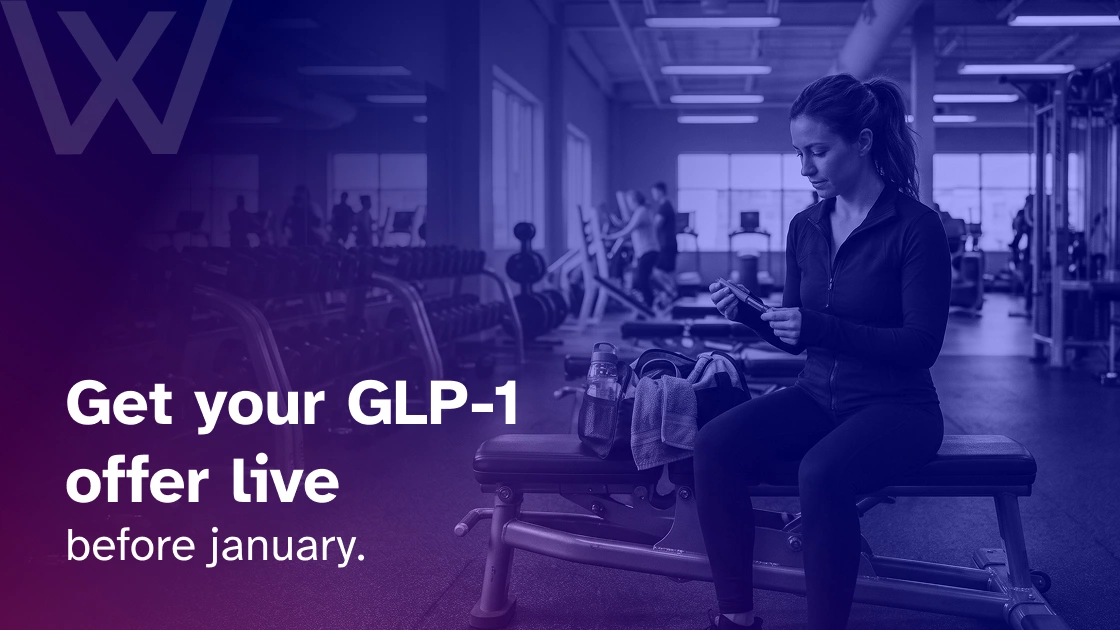
It’s the first week of December, and a member lingers at the front desk. She asks, quietly, whether the studio does anything for people on a weight-loss injection. The front desk has nothing to offer her: no partner to refer her to, no price, and no idea what staff may say about the medication.
That is a wasted opportunity, and the rest of the industry is already taking it. Pairing GLP-1 medication with structured training has become one of the biggest shifts in US fitness over the last two years. By March 2026, 17 fitness operators had a GLP-1 program, according to Inspire360 research reported by Athletech News. Life Time prescribes in the club, while Planet Fitness and Crunch refer members to telehealth partners.
The member at your desk will likely start the medication anyway. She just won’t do it with you. She’ll lose muscle with no coach, or train at the club that already has an answer.
By January, that question arrives daily. Many studios plan to do something for GLP-1 clients and stop at the idea, with no partner, price, page or script.
A GLP-1 studio offer closes that gap. The medical partner handles prescribing and clinical questions. The studio handles training, accountability and billing, through the membership system it already runs. This guide sets out the December timeline and every piece of the setup.
What is a GLP-1 studio offer?
A GLP-1 studio offer is a defined program that combines medical oversight of the GLP-1 injection with coached training from your trainers. Neither half is new. The combination is what members pay for.
The offer also has a price and a start date. It gives members on GLP-1 medication a structured way to train, while a licensed partner owns everything clinical. These drugs mimic a gut hormone that slows digestion and reduces appetite, so users eat less and lose weight. But there is a catch. Some of that loss is muscle, not only fat. Resistance training is the main lever a studio controls to protect it.
Demand is visible. A 2026 William Blair survey of 300 GLP-1 users, reported by Athletech News, found gym memberships rose three percentage points to 35% after starting the medication. Also, 72% said they were working out more often, up from 60% in the 2024 survey. That is a small sample of medication users, not your local market. It still shows who is likely to walk in.
The arrangement also deals with a key problem in GLP-1 prescribing: the loss of muscle mass. The prescriber manages the medication, and your coaches run the strength work that protects muscle while the weight comes off.
Consider a hypothetical member who has lost 25 pounds in four months and now feels weak on stairs. A GLP-1 fitness program is built for her. Split the responsibilities clearly:
- Studio coaching: GLP-1 weight loss coaching, strength sessions and check-ins.
- Studio admin: progress tracking and billing.
- Medical partner: eligibility, prescribing, lab work, side-effect and dosing questions.
- Nobody at the studio: diagnosing, adjusting doses, advising on switching or stopping medication.
Why December setup beats a January scramble
December setup beats a January scramble. Every part of the offer needs a signature, a test or a trained person. None of that moves quickly once leads are arriving. A partner agreement usually needs a round of edits. A landing page needs a test sign-up on a real phone. Staff need practice before the first caller, not after.
This day-by-day plan assumes a launch in the last week of December and a consult calendar open from January 2.
| Dates | Task | Done when |
| December 1 to 3 | Shortlist two partners, request draft agreements | Two written proposals in hand. |
| December 4 to 8 | Sign agreement, confirm referral flow and who bills what | One-page referral process written. |
| December 9 to 12 | Build landing page, intro package, membership type, promo code | A test purchase completes on a phone. |
| December 13 to 16 | Train staff (three hours), load scripts | Every front-desk and trainer role-play passed. |
| December 17 to 19 | Soft launch to current members and past leads | First consults booked. |
| December 20 to 23 | Load and test the marketing sequence | Test lead receives all three messages. |
| December 26 to 31 | Public launch, hold consult blocks for January 2 to 10 | Consult slots visible online. |
Dates slip around holidays, so protect the staff-training block first.
For the training itself, a common starting point is two to three full-body strength sessions a week. Use moderate loads, two to three sets, and machines, dumbbells and cables that new lifters learn quickly. Keep it simple. The partner clinician and coach then adjust volume around nausea, fatigue and low appetite.
How to evaluate and document a medical partner
To choose a medical partner, check who is licensed to do what, how referrals and pricing work, who carries liability and how you exit. Then put every answer in a signed agreement. A studio that skips this ends up answering clinical questions at the front desk. That is not the studio’s job.
This checklist works for any provider you are considering.
| Check | What to document | Red flag |
| Licensing | Licensed clinicians and the states they cover | Coverage unclear for your state. |
| Scope | Who prescribes, orders labs, answers side-effect questions | Studio staff expected to explain the medication. |
| Pricing | What the member pays the partner and the studio, listed separately | Bundled price that hides medication or lab costs. |
| Referral flow | How a consult becomes a patient, and how the partner confirms clearance back to you | No written clearance step. |
| Liability | Each side’s insurance and indemnity | Studio carries clinical risk. |
| Branding | Who owns the name, page and ad claims; partner reviews claims | Partner can change terms or branding freely. |
| Data | What member information is shared, with written consent | Health details stored in studio records. |
| Exit | Notice, transition of active members | No exit terms. |
This is a planning checklist, not legal advice, so have your own attorney review the agreement, including state rules on health-related partnerships.
Building the landing page and intro package
The landing page has one job: get a visitor to book a consultation. The intro package behind it should make booking easy and the price unmistakable.
Put these on the page:
- Who it’s for: Members on or considering GLP-1 medication who want to build strength.
- What’s included: Consult, assessment, personalized plan, two coached sessions.
- What’s not included: Medication, prescriptions and lab work, handled by the partner and priced there.
- One button: “Book a consult,” opening a calendar.
- Plain claims: Say the program supports muscle retention. Never promise weight outcomes.
The intro package starts with a 20-minute consult. An assessment follows: a readiness questionnaire, baseline strength on three simple lifts, a sit-to-stand test and waist measurement. Then comes a personalized plan, with two or three sessions a week.
Track progress monthly on load lifted, measurements and energy, not scale weight alone. Members losing weight quickly can still be losing strength. A strength log shows it.
Setting up membership types and access rules
Set up the offer as its own membership type, so billing, bookings, door entry and CRM records all follow one status. Strength training for GLP-1 clients works best as a named program with fixed inclusions, not a discount on a standard plan.
Work through these settings:
- Membership: Name it, list included sessions and set the price. Allow a freeze of up to four weeks for illness or travel.
- Billing: Retry failed cards twice over five days. Send a card-update message before restricting anything.
- Access: Open the door for booked sessions and staffed open-gym hours. Apply a grace period, such as three days, before blocking entry after a failed payment.
- CRM record: Tag “GLP-1 program,” record lead source and referral date, and store a consent flag. Keep medical details in the partner’s system.
- Integration test: Buy the program on a phone. Fail the payment on purpose. Then confirm the booking, message and door status all change as set.
Front-desk and after-hours scripts that book consults
GLP-1 personal training stays inside a clear scope. The scripts keep trainers there: acknowledge the question, then route to a booked consult instead of a clinical answer. Staff never say whether a dose is right. They never say whether to train on a given day.
Front desk, in person: Acknowledge the question. Say the coaches build strength programs around how the member feels. Explain that medication questions go to the member’s prescriber or the clinical partner. Then offer a 20-minute consult with two choices, such as Thursday at 6 p.m. or Saturday at 10 a.m.
Phone, medical question: Say plainly that you can’t advise on the medication and won’t guess. Explain that the partner’s clinicians can answer. Then book a consult with a coach who will connect the caller.
After-hours text reply: Thank the member by [First name] and say the team replies from 8 a.m. Include the link to book a free consult. Add that questions about medication go to the prescriber.
Role-play each script until the booking offer comes out in the first 30 seconds. Aim to end every contact with a time slot, not a brochure.
Creating the December-to-January marketing sequence
To market a GLP-1 program at a gym, split people by where they are in the journey. Send each group a short, triggered message, not one announcement to everyone. Four segments cover most of it: landing-page leads who haven’t booked, booked consults, consults that didn’t join, and members who stopped attending.
| Trigger | Audience | Channel | Goal |
| Lead submits the form | Landing-page leads | Email plus SMS | Confirm and push the consult link. |
| Day 2, no booking | Same leads | SMS | Offer two consult times. |
| Day 5, no booking | Same leads | Intro package details and promo code. | |
| Consult booked | Booked leads | Prep: what to wear, what to bring. | |
| Consult attended, not joined | Consults | Plan summary, code expiry date. | |
| Join date | New members | In-app | Book first three sessions. |
Get SMS consent before texting, and have your attorney confirm the rules for your state. These gaps are starting points, so adjust them to your response data.
Gym programs for GLP-1 users also need a new-year message to existing members, since many already know someone who qualifies.
Pricing tiers and promo-code limits that protect revenue
Price the offer in tiers with fixed inclusions, state exactly what the studio fee covers, and limit promo codes so they work only for new members during launch. Clarity matters beyond revenue. The FTC’s 2025 action against telemedicine firm NextMed cited monthly prices of typically $138 or $188. Those prices did not disclose the cost of the drug, lab work or consultation. Never advertise a GLP-1 fitness program price without saying what it excludes.
These tiers are illustrative, not benchmarks.
| Tier | Includes | Price |
| Intro package | Consult, assessment, plan, two sessions | $149 one-time. |
| Core | Two small-group strength sessions a week, app check-ins | $199/month. |
| Plus | Core plus four personal training sessions a month | $349/month. |
Illustrative month: 20 Core × $199 + 10 Plus × $349 = $3,980 + $3,490 = $7,470 per month, before partner fees.
Promo code limits:
- New members only.
- One redemption per member.
- Maximum 25 total redemptions.
- Valid on the intro package only.
- Expires January 15.
- Staff cannot override at the front desk.
Staff training duration and content
Plan three hours per person. Spend two hours on content and one on script role-play, finished by December 16. Follow with a 15-minute weekly huddle through January.
Cover these topics:
- GLP-1 basics: What the medication does, in plain words.
- Common side effects: Nausea, fatigue, dizziness, low appetite, and how coaches adjust sessions.
- Strength priorities: Why muscle retention matters during weight loss.
- The boundary: Staff coach movement. Everything about medication goes to the prescriber or partner.
- Referral steps: How a consult becomes a partner referral and a signed clearance.
Ask your medical partner’s clinician to lead the first hour. For certification, check whether your trainers’ certifying bodies offer continuing-education courses on weight management or medication. Treat them as a bonus for coaches, not a substitute for the studio’s own boundary training. A front-desk team member needs the script and boundary, not a certificate.
Test understanding with a three-question quiz. What can a coach say about dosing? Nothing. What do you do when a member reports dizziness? Stop, sit, refer. Who owns the clearance? Everyone should know.
Metrics and reports to watch after launch
The metrics that matter follow the funnel from page visit to retained member. Each one maps to a fix. Pull them weekly from your booking, CRM and billing reports. Review strength-progress data monthly.
Visit-to-lead rate = Leads ÷ Landing-page visits.
Consult-to-member rate = New members ÷ Consults attended.
Cost per new member = Ad spend ÷ New members.
Day-90 retention = Members still active at day 90 ÷ Members who started.
Illustrative funnel: 40 leads, 24 consults booked (60%), 18 attended (75%), 9 joined (50%). With $600 in ad spend, $600 ÷ 9 = $66.67 per new member.
If many booked consults don’t attend, fix reminders. If attended consults don’t join, fix the plan summary and price clarity. Also watch promo redemptions and failed-payment recovery, plus strength progress on three lifts for strength training for GLP-1 clients.
For context, the Health & Fitness Association’s 2025 benchmarking report, based on 2024 data from 175 US fitness companies, put median member retention at 66.4%. That is an all-member national figure, not a GLP-1 benchmark. Use it as a reference line and set your own target.
Where Wellyx fits
Most of this is about people: a partner, a boundary, a trained front desk. Software helps by turning the checklist into one trackable launch instead of five tools.
Wellyx’s automation center runs more than 50 triggers across SMS, email, WhatsApp, push and in-app messages. Studios can build the three-message sequence above so it starts when a lead arrives or a trial is booked. Wellyx combines marketing automation with real member data, so each message reflects what the person did.
Custom contact lists segment by membership type and class attendance, and the page builder creates landing pages and lead-capture pop-ups. Promo codes support new-members-only use, one redemption per member and maximum redemptions. They also carry expiry dates and staff permission limits, with redemption and revenue reports per code.
For gym programs for GLP-1 users, the access control system ties door entry to membership and payment status, with a grace period you set. Access control comes with Exceed ($119 per month). Its hardware is a one-time purchase with no recurring fees. Failed card payments retry on your schedule. None of this replaces your partner agreement or your boundaries.
How to keep the offer running past January
Keep the offer running by replacing the launch push with triggered check-ins that follow each member’s attendance. The program then lives on a schedule, not a promotion. The January rush fills the room, and weeks three to eight are where members drift.
Build these re-engagement triggers:
- No visit in 14 days: A personal text from the coach with two session times.
- Day 30: A progress check on strength numbers and energy.
- Day 90: A progress review and a conversation about moving to the next tier.
- Pause request: A freeze, then an automatic reminder on the return date.
- Medication change or stop: A check-in and an offer to move to a maintenance tier.
Members who stop medication still need strength work, and a maintenance tier keeps them. Refresh your landing page in February with member progress (with consent). Reopen intro-package slots monthly. Retire the launch promo code on its expiry date. Review the funnel numbers every month and trim any step that no longer converts.
A December launch sets the year up right
A GLP-1 studio offer is a partner, a program, a price, a trained team and a marketing sequence. December gives you time to build all five and test them. Sign the partner agreement in the first week, build the page and membership by mid-month, train staff, then soft launch before the holiday.
The offer pays off when partner setup becomes numbers you can track: leads, consults, members and retained members. Count first. Then improve.
Want to launch your GLP-1 offer from one system? Book a Wellyx demo. Test a phone sign-up, a limited promo code, a failed payment and a door entry in your gym management software before January.
FAQs
How do gyms support clients on GLP-1 medications?
Gyms support them with structured strength training, regular check-ins and progress tracking, while a licensed medical partner handles all medication questions. Coaches adjust sessions for nausea, fatigue and low appetite. Staff never advise on doses or stopping medication. Their job is to build muscle, keep people attending and refer clinical questions onward.
What should a studio include in a GLP-1 fitness program?
Include a consult, an assessment with baseline strength numbers, a personalized plan, two to three strength sessions a week and monthly progress reviews. Add a clear statement of what the studio price excludes, such as medication and labs. Write the partner referral and clearance steps into the program from day one.
Which metrics should a studio track after launching a GLP-1 offer?
Track visit-to-lead rate, consult-to-member rate, cost per new member and day-90 retention. Add promo-code redemptions, failed-payment recovery and strength progress on three lifts. In an illustrative funnel, 9 members from 18 attended consults is a 50% consult-to-member rate. Your own numbers matter more than any benchmark.
How do you keep a GLP-1 offer running after the January rush?
Replace the launch campaign with triggered check-ins. Send a text after 14 days without a visit. Hold progress reviews at day 30 and day 90. Offer a maintenance tier to members who change or stop medication. Reopen intro-package slots monthly and review funnel numbers each month so the offer keeps earning its place.
Can personal trainers work with GLP-1 clients?
Yes, within their scope. Trainers can design strength programs, adjust sessions around how clients feel and track progress. They cannot advise on dosing, diagnose side effects or suggest changing medication. A written boundary, referral steps and a medical partner for clinical questions keep coaches on the right side of that line.