




Some parents start planning for summer before summer fully arrives. After more than a decade in the field, I know the look because I have seen it at the front desk often enough. One hand on the phone, one eye on the school calendar, trying to work out childcare, vacation weeks, family visits, screen time, and a child who has already said, “I don’t want to be bored all summer.”
Such parents are not just looking for a place to drop their child for a few hours. They are looking for something safe, active, organized, and worth the fee.
That is why summer dance camps can do more for a studio than fill a slow week.
When handled well, they bring new families through the door, keep current students connected, give teachers room to be creative, and build a gentle bridge into fall enrollment. And the difference is rarely the prettiest flyer. It is whether the camp feels clear to parents, exciting to children, and manageable for the studio.
What makes summer dance camps successful?
A strong summer dance camp has three things working simultaneously: parents trusting the plan, children enjoying the experience, and staff running the day without scrambling.
That may seem simple, but it is exactly where many dance studio camps fall apart.
I have seen beautiful camp ideas struggle because the operational pieces were weak. Parents could not tell what the child would do each day. Teachers did not have allergy notes. Payments were still pending on Monday morning. The Friday showcase silently turned into a mini-recital, and by pickup time, everyone looked worn out.
I have also seen very simple kids’ dance camps fill because the goal was clear:
- Three hours each morning.
- A friendly theme.
- Dance, snack, craft, and choreography.
- Parents attend on Friday.
- Clear instructions before the first day.
Nothing overdone or overpromised. Everything was just organized, warm, and easy to trust. That is the standard I suggest all dance studio owners aim for.
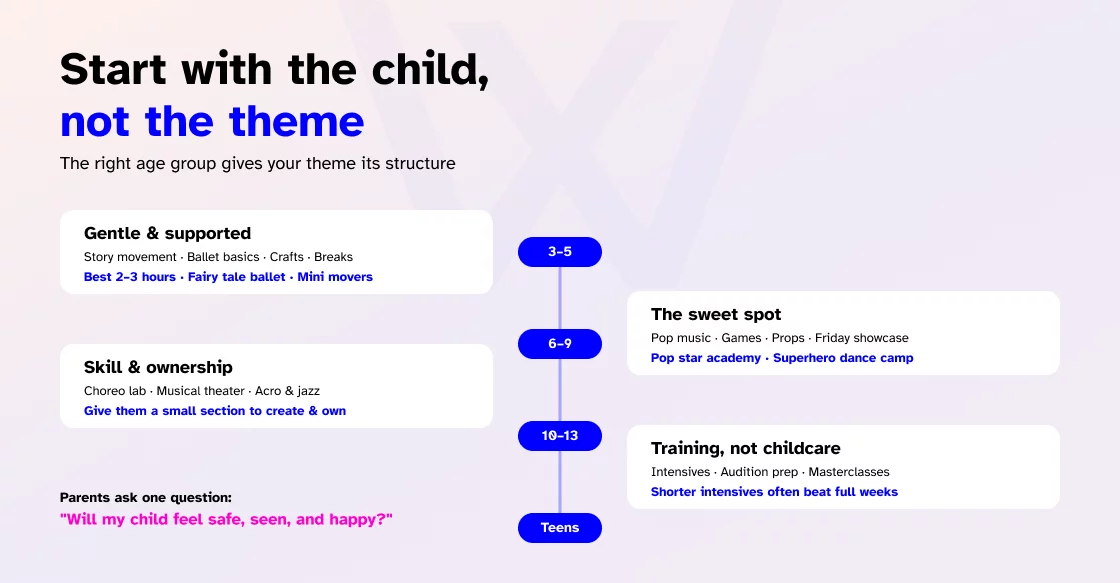
1. Start with the child, not the theme
The biggest mistake I see in summer dance camp planning is choosing the theme before choosing the child.
A princess ballet camp might be lovely for a four-year-old and completely wrong for a 10-year-old. A choreography lab can be brilliant for tweens and too much for beginners. The theme matters, but building it around the right age group gives you structure.
Ages 3–5
For preschool dancers, think gentle rhythm, short routines, imagination, and lots of support.
They need:
- Story-based movement.
- Ballet basics.
- Simple crafts.
- Bathroom support.
- Name tags.
- More breaks.
- Predictable transitions.
- Teachers who can redirect kindly.
Ages 3–5 usually do best with shorter camps, often around 2–3 hours. A full day can work in some studios, but only with the right staffing, quiet time, and parents’ expectations.
Good themes for this age group include Storybook Adventures, Mini Movers, Fairy Tale Ballet, and Princess Ballet Camp.
The parents’ main concern is not, “Will my child learn advanced dance technique?” It is rather, “Will my child feel safe, seen, and happy?” And by planning your themes around this age group, you can actually ensure the safety and joy the child deserves.
Ages 6–9
This is often the strongest age group for summer dance camps. Children are old enough to follow instructions but still young enough to enjoy props, games, and big themes.
They usually respond well to:
- Pop music.
- Jazz and hip-hop.
- Team games.
- Props.
- Simple choreography.
- Confidence-building activities.
- A short Friday showcase.
Strong themes include: Pop Star Academy, Superhero Dance Camp, Dance Around the World, Friendship and Confidence Camp, and Summer Dance Party Week.
According to my experience, this group needs movement and belonging in equal measure. They want to dance, but they also want to make a friend, wear the wristband, help with the prop, and feel part of the group.
Ages 10–13
Tweens are wonderfully honest. If a camp feels too young, they know it in the first 10 minutes. For this age group, build around skill, style, and ownership.
Good options include:
- Musical theater week.
- Acro and jazz camp.
- Hip-hop performance camp.
- Choreo lab.
- Mini recital camp.
- Technique and performance week.
They can handle formations, performance notes, short creative tasks, and more structured choreography. Try giving them a small section to create or clean. It gives them ownership without turning the room loose.
Teens
Teen camps should feel less like childcare and more like training. Since this age group is a little trickier to handle, better formats include:
- Summer intensives.
- Audition prep.
- Choreography labs.
- Performance workshops.
- Flexibility and conditioning sessions.
- Leadership helper roles.
- Skill-based masterclasses.
Teens are often juggling jobs, travel, exams, or other summer commitments, so a shorter intensive may work better than a full week.
Reliable teen dancers can also support younger camps as junior helpers, especially during crafts, arrival, cleanup, and transitions. But just be careful. They are helpers, not unpaid teachers. Give them clear jobs and keep an adult responsible for the room.
2. Dance camp themes that actually work
Good dance camp themes are not mere decorations. They help you choose the music, movement, crafts, props, parents’ messaging, and final showcase.
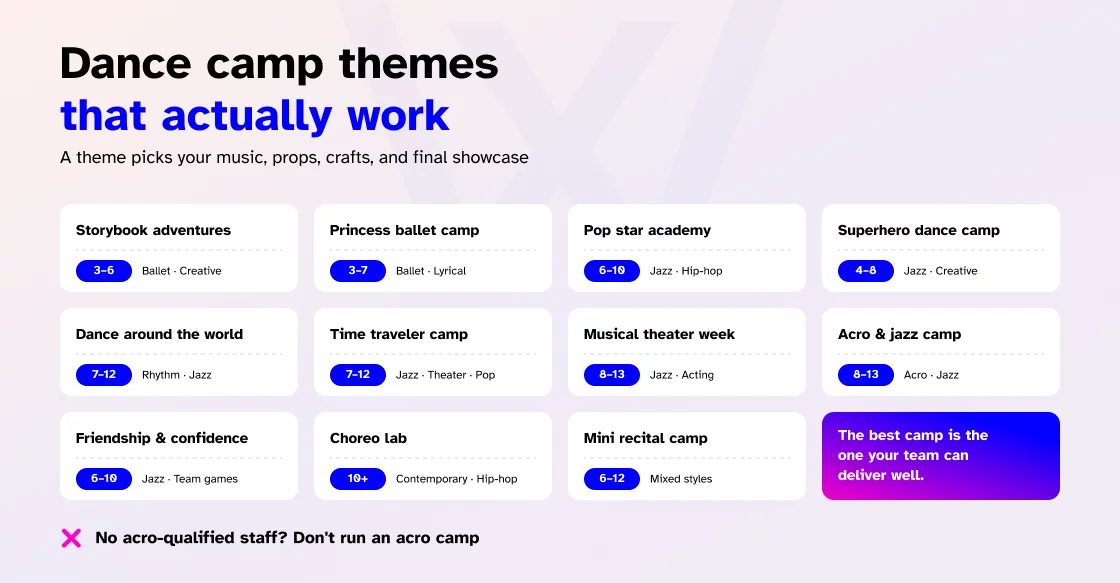
Here are some good and practical dance camp ideas.
| Theme | Best fit | Styles that work | Add-on activity | End moment |
| Storybook Adventures | Ages 3–6 | Ballet, creative movement | Story craft, scarf dance | Parents peek-in |
| Princess Ballet Camp | Ages 3–7 | Ballet, lyrical basics | Crown or wand craft | Short ballet dance |
| Pop Star Academy | Ages 6–10 | Jazz, hip-hop | Mic props, poster craft | Pop routine |
| Superhero Dance Camp | Ages 4–8 | Jazz, creative movement | Cape pose game | Team performance |
| Dance Around the World | Ages 7–12 | Rhythm, jazz, movement exploration | Passport craft | Group showcase |
| Time Traveler Dance Camp | Ages 7–12 | Jazz, musical theater, pop | Decade-themed props | Mixed-style routine |
| Musical Theater Week | Ages 8–13 | Jazz, acting, character work | Script snippet | Song-and-dance piece |
| Acro and Jazz Camp | Ages 8–13 | Acro, jazz | Stretching and safety drills | Skills showcase |
| Friendship and Confidence Camp | Ages 6–10 | Jazz, creative movement | Compliment cards, team games | Group dance |
| Choreo Lab | Ages 10+ | Contemporary, jazz, hip-hop | Music mapping | Student-created piece |
| Mini Recital Camp | Ages 6–12 | Mixed styles | Prop prep | 10-minute showcase |
But not every theme belongs in every studio. If you do not have acro-qualified staff, do not run an acro camp. If your strongest base is preschool, do not build the whole summer around teen intensives. If your parents want a half-day structure, do not overbuild a full-day program just because another studio does it.
The best camp is the one your team can deliver well.
3. Balance dance with creative breaks
Creative breaks are not filler. They are part of how children stay engaged.
A younger dancer may not remember every ballet position, but they will remember making the wand they used in the final dance. An older dancer may enjoy a choreography journal after a long movement block. Those small pauses keep the day from feeling rushed.
Some useful creative breaks include:
- Crafts tied to the theme.
- Prop-making for the final routine.
- Stretching and body awareness.
- Dance science for older children.
- Snack and water breaks.
- Team games.
- Quiet drawing or journaling.
- Friendship activities.
- Photo moments, with parents’ permission.
The key is purpose. A craft should support the camp. A game should help the group bond. A quiet block should help children reset. A tired child does not dance better because you pushed through. They dance better when the day has a rhythm.
4. Build a daily schedule that parents can picture
Parents are more likely to book when they can picture the day. Just mentioning ‘a fun week of dance’ is too vague. A clear schedule feels safer.
Sample half-day camp schedule
| Time | Activity |
| 9:00 AM | Arrival and check-in |
| 9:15 AM | Warm-up and movement game |
| 9:45 AM | Technique or theme class |
| 10:30 AM | Snack and water break |
| 10:50 AM | Craft, prop, or dance science activity |
| 11:20 AM | Choreography practice |
| 11:50 AM | Cooldown, recap, and pickup |
This structure helps your staff, too. Everyone knows when the room shifts, when snack happens, when choreography starts, and when pickup begins.
For full-day camps, add lunch procedures, quiet time, afternoon rotations, staff breaks, cleaning, and behavior support. Full-day camps can work beautifully, but they require more planning than a half-day camp.
Summer should feel light to families. It should not feel loose to the studio.
5. Make parent trust part of the offer
Parents do not only look at the theme. They look for signs that you have thought through the day. Your camp page or confirmation email should answer the questions parents may not bother asking.
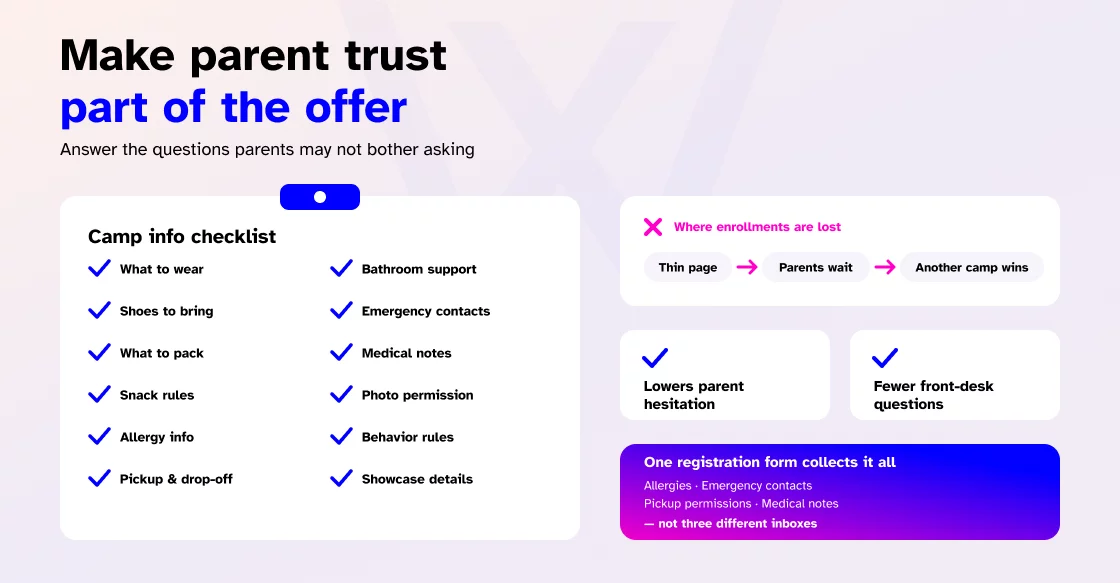
Include:
- What to wear.
- What shoes to bring?
- What to pack.
- Snack rules.
- Allergy information.
- Pickup and drop-off process.
- Bathroom support for younger children.
- Emergency contacts.
- Medical notes.
- Photo and video permission.
- Behavior expectations.
- Final showcase details.
This is where many studios lose enrollments. Parents become interested, but the page feels thin, so they wait. Then another camp gets booked. Remember, clear information does two things at once. It lowers parents’ hesitation, and it reduces front-desk questions.
If you use online class registration, make sure your form collects the details teachers need before day one. Allergy notes, emergency contacts, pickup permissions, and medical information should not live in three different inboxes.
6. Plan the Friday showcase before Monday
A final showcase can be one of the sweetest parts of a summer dance camp. It can also become too much if the owner treats it like recital week. Keep it short.
For most camps, 10–15 minutes is enough. Invite parents for the last part of the final day. Use simple props made during camp. Let children wear normal dancewear, a camp T-shirt, or one easy accessory.
You can add:
- Certificates.
- A simple photo corner.
- Camp awards.
- A short group bow.
- A thank-you message to parents.
- A fall class recommendation.
The awards should stay gentle, like: kind teammate, creative mover, brave performer, great listener. Children remember being noticed. The showcase should make parents proud. It should not send your staff home with glitter in their hair and regret in their eyes.
Afterward, send a short recap email. Mention what the group worked on, share the next suitable class, and thank families for trusting the studio. This can be easily done with Wellyx dance studio management software that automates emails and keeps parent communication organized.
7. Sell out summer dance camps earlier without sounding pushy
Summer dance camps fill up earlier when parents understand the offer early enough to plan around it. You do not need loud marketing. You need steady timing, clear details, and honest urgency.
January to February
Start building the camp plan. Choose:
- Dates
- Age groups
- Themes
- Teachers
- Room use
- Prices
- Capacity
- Registration rules
Create the camp page before parents start locking in summer childcare.
February to March
Open registration. Promote to current families first. They already trust you, and many are looking for ways to keep their children connected during the break.
Then reach out to:
- Former students.
- Trial class leads.
- Waitlisted families.
- Siblings.
- Friends of current dancers.
Use early-bird deadlines, but keep the language honest. “Early registration closes Friday” is enough. Parents do not need manufactured panic.
Spring into summer
Share small previews that help families picture the camp.
Post:
- Teacher introductions.
- Theme previews.
- Sample schedules.
- What-to-bring reminders.
- Prop or craft previews.
- Last year’s camp photos, with permission.
- Countdown posts.
- Remaining spot updates.
Limited spots should be real. If your room, staff, and age group can safely handle 16 children, say 16. Do not stretch to 22 because the waitlist looks tempting. Sibling discounts and friend referral perks can help, but do not let discounts become the main story. The value is the experience.
A good waitlist management process also matters. When a family cancels, you should be able to offer the spot quickly without digging through old emails or half-finished spreadsheets.
8. Price the camp like a real program
Do not price a summer dance camp as if it is a casual extra. It uses real resources.
Build your price around:
- Lead teacher wages.
- Assistant or junior staff pay.
- Admin time.
- Studio space.
- Craft supplies.
- Snacks, if provided.
- Props or simple costume pieces.
- Cleaning.
- Payment processing.
- Marketing.
- Profit margin.
Then look at your local market, but do not let the cheapest option set your value. A trained teacher, a small group, a safe pickup process, organized communication, and a meaningful Friday showcase all matter. Parents can feel the difference between a planned camp and a room full of children being kept busy.
Early-bird pricing can reward quick decisions. Deposits can protect cash flow. Sibling discounts can help families. Payment plans may suit higher-priced intensives. The point is not to make camp expensive for the sake of it. The point is to stop treating summer as if it should be cheap because it is seasonal.
9. Use dance studio software to hold the pieces together
Software will not fix a weak camp plan. But when your process is clear, good dance studio software can keep the admin from swallowing the week. For summer dance camps, I would want one system that supports:
- Online registration.
- Capacity limits.
- Waitlists.
- Deposits.
- Payment plans.
- Promo codes.
- Sibling discounts.
- Digital waivers.
- Emergency contact forms.
- Medical notes.
- Parents’ communication.
- Automated reminders.
- Staff scheduling.
- Attendance tracking.
- Reporting.
- Fall enrollment follow-up.
Wellyx helps dance studios manage registration, payments, communication, scheduling, and reporting in one place. That becomes useful when you are running multiple camps, several age groups, and a front desk that is already juggling regular classes.
I would also connect camps to your wider dance studio scheduling software so teachers, rooms, and class times do not overlap. Before choosing any tool, it is worth asking whether your dance class software is reducing work or simply storing the same mess in a neater place. The software matters. The process matters more.
10. Turn summer campers into fall students
A summer camp is often a family’s first easy step into your studio. Do not let that relationship end on Friday afternoon. On the final day, give parents a natural next step.
For example:
“Based on this week, your child would fit well in our beginner jazz class on Tuesdays.”
That kind of recommendation feels far more useful than a generic fall flyer. You can also send a follow-up email within a few days with:
- A thank-you note.
- A short recap of the week.
- The best-fit fall class.
- Registration dates.
- Any sibling or returning family details.
This is how summer supports dance studio enrollment without feeling like a sales push. The family has already seen your teachers, your structure, and your care. Now they just need to know where they belong next.
Final thoughts
Most dance studios do not struggle in the summer because families stop caring about dance. They struggle because summer needs a different kind of offer. Regular classes are built around steady progress. Summer camps are built around experience.
A good summer dance camp gives parents structure, gives children joy, gives staff a plan, and gives the studio a bridge into the next season.
The studios I see filling camps early are not always the ones aggressively marketing online. They are usually the clearest. They know who the camp is for, what the child will experience, how parents will be informed, how spots will be managed, and what will happen after the Friday showcase.
Start with one well-planned camp. Promote it early. Track what worked. Listen to parents. Notice where the staff felt stretched. Then improve it next summer. That is how a seasonal program becomes something families look forward to again.
FAQs about summer dance camps
What makes a summer dance camp successful?
A summer dance camp works when it is safe, organized, age-appropriate, and memorable. Strong themes, clear schedules, trained staff, parent communications, and easy registration make families more confident about booking.
What are the best summer dance camp themes?
The best themes match the age group. Storybook Adventures, Princess Ballet Camp, Pop Star Academy, Superhero Dance Camp, Dance Around the World, Musical Theater Week, Acro and Jazz Camp, Choreo Lab, and Mini Recital Camp can all work well.
When should a dance studio start promoting summer camps?
A dance studio should start planning in January or February and open registration in February or March. Parents often book summer activities early, especially when they are solving childcare gaps.
How long should a summer dance camp be?
For ages 3–5, a 2–3-hour camp usually works best. Ages 6–13 can often handle half-day camps, while full-day camps need more staffing, lunch planning, quiet time, and supervision.
How do I price a summer dance camp?
Price a summer dance camp by adding staff wages, admin time, room use, supplies, snacks, props, payment processing, marketing, and profit margin. Seasonal programs should still be priced as real programs.
How can I sell out my summer dance camp early?
You can fill camps earlier by promoting to current families first, opening registration early, using honest capacity limits, setting early-bird deadlines, reconnecting with former students, and showing parents the daily plan.
What should parents bring to a summer dance camp?
Parents should bring labeled water, approved snacks, proper dancewear, required shoes, and any medical or allergy notes. Your studio should send a clear packing list before camp starts.
How does dance studio software help with summer camps?
Dance studio software helps manage online registration, payments, waivers, waitlists, reminders, staff schedules, attendance, and fall follow-up. It works best when the studio already has a clear camp process.