
Gymnastics studios track student progress by using a structured system to measure skill mastery, attendance, behavioral development, physical readiness, and promotion eligibility. Coaches document progress regularly, evaluate students against defined criteria, and use gymnastics management software to standardize tracking, automate promotion alerts, and share progress with parents.
A proper gymnastics progress tracking system is not based on memory or time spent in class. It is criteria-based, data-backed, and aligned with safety standards. Studios that implement structured tracking improve consistency across coaches, reduce promotion disputes, and increase parent retention.

What does student progress mean in gymnastics?
Student progress in gymnastics means measuring advancement in skills, conditioning, confidence, behavior, and readiness to move to the next level. It is not just completing a checklist for the sake of it. Rather, true progress measures technical ability, preparedness for advancement, control, and consistency under supervision.
When the studio defines progress clearly, promotions become predictable and fair. And when they don’t, advancement becomes subjective. A structured gymnastics management software system helps studios define and measure progress across all relevant dimensions. A student’s progress should include:
- Skill mastery by apparatus (floor, beam, vault).
- Strength and flexibility benchmarks.
- Attendance frequency.
- Behavioral focus and coachability.
- Fear control and confidence progress.
- Promotion eligibility markers.
Without these set criteria, tracking can’t be justified or done objectively.
Teacher-centered progress tracking: How coaches can standardize evaluation
Teacher-centered progress tracking means coaches follow consistent evaluation criteria across all classes and levels. Every coach uses the same skill definitions, scoring rubrics, and promotion standards. This prevents inconsistencies between instructors.
In structured gymnastics studios, teacher-centered tracking includes formal evaluation cycles, defined prerequisites for advanced skills, and documented assessment history for each student. Gymnastics management software supports this by centralizing evaluations and ensuring all coaches follow the same framework.
Coaches should have access to:
- Digital skills trees organized by level and apparatus.
- Standardized scoring rubrics, not just pass/fail.
- Defined prerequisites, like a badge system for advanced skills.
- Historical evaluation records.
- Centralized student profiles.
When coaches rely only on memory or paper sheets, inconsistencies increase. But fully built software for gymnastics studios creates a shared standard across the entire team.
Student-centered progress tracking: Measuring individual readiness
Student-centered tracking focuses mainly on the individual athlete’s readiness rather than class averages. It shows the intrinsic motivation and consistency a student demonstrates in training. Two students may complete the same skill, but only one may demonstrate consistency and physical readiness.
Studios should track more than skill completion. They should measure whether a student can perform a skill repeatedly, safely, and with control. Well-built gymnastics studio systems allow both coaches and students to track readiness beyond checkmarks.
Here is what a student-centered tracking system should monitor:
- Skill consistency.
- Core strength benchmarks.
- Upper-body strength thresholds.
- Flexibility requirements.
- Confidence under repetition.
- Behavioral stability during complex skills.
To make that possible, great software should allow:
- Custom performance metric tracking.
- Conditioning logs with history.
- Internal readiness notes.
- Evaluation status updates.
- Promotion eligibility indicators.
- A badge system.
Advancement should be based on readiness, not time spent in class.
How gymnastics management software supports progress tracking?
Gymnastics management software supports student progress tracking by bringing centralized skill checklists, attendance updates, and conditioning benchmarks in one platform. It also standardizes evaluations and automates promotion alerts. It connects coaching decisions with measurable data.
While studios without software struggle to scale tracking beyond small enrollments, studios that use software well gain more consistency and visibility. They can maintain consistency even with multiple coaches, hundreds of students, and locations.
Key software functionalities for progress tracking include:
- Digital skill tracking by apparatus.
- Attendance logging integrated with progress reports.
- Custom performance metrics.
- Behavioral evaluation fields.
- Promotion threshold automation.
- Parent portal dashboards.
- Reporting and analytics tools.
Software should not replace coaching judgment; it should structure and document it.
Why is attendance tracking critical for student progress?
Attendance directly affects skills development speed and conditioning improvement. Students who attend classes consistently progress faster than those with irregular participation. Tracking attendance alongside skill mastery gives context for evaluation decisions.
Gymnastics studios should not treat attendance as billing data only. It should be a performance variable reviewed during evaluations. Studios should monitor:
- Monthly attendance frequency.
- Missed class patterns.
- Makeup session usage.
- Attendance-to-promotion timelines.
Gymnastics management software makes this practical by:
- Logging attendance automatically.
- Generating attendance history reports.
- Flagging inconsistent participation.
- Displaying attendance alongside skill completion.
This allows coaches to make informed advancement decisions.
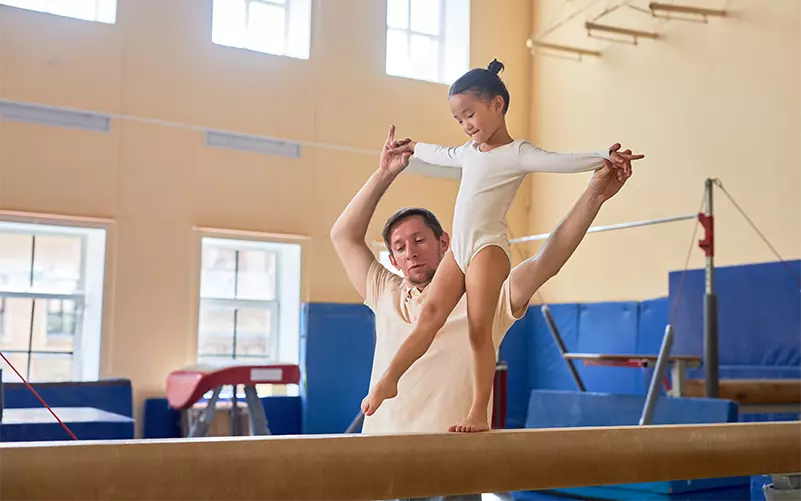
How physical readiness prevents injury during progression?
Physical readiness benchmarks ensure students are strong and flexible enough for advanced skills. Without strength thresholds, promoting a student can increase injury risk.
Progress tracking must include conditioning requirements before unlocking high-impact skills. Gymnastics management software allows studios to define and track these benchmarks.
Physical readiness metrics may include:
- Core hold duration.
- Pull-up counts.
- Shoulder flexibility range.
- Leg power benchmarks.
- Conditioning test results.
For that, gymnastics progress tracking software should allow:
- Custom metric entry.
- Historical tracking.
- Alerts when thresholds are met.
- Comparison between current performance and level requirements.
This transforms progress tracking into a safety system.
How should promotion eligibility be structured?
Promotion eligibility should be based on measurable criteria rather than time served or solely subjective opinions of instructors. Clear thresholds reduce disputes and ensure fairness. A structured promotion system may require:
- 85% or higher skill completion.
- All conditioning benchmarks met.
- Minimum attendance threshold.
- Behavioral score minimum.
- Final coach approval.
Gymnastics management software can:
- Calculate skill completion percentages.
- Track conditioning status automatically.
- Flag when eligibility criteria are met.
- Send internal alerts to coaches.
- Notify parents through the portal.
This removes guesswork and increases transparency.
Parent-centered progress tracking and communication
Parents need visibility into their child’s development. When progress is invisible, retention decreases. Clear communication improves trust and long-term enrollment.
Gymnastics studios should provide structured progress updates rather than occasional verbal feedback. Gymnastics management software supports parent-centered tracking through dashboards and automated reporting.
Parent communication should include:
- Skill completion summaries.
- Attendance reports.
- Conditioning benchmark updates.
- Promotion readiness status.
- Coach comments.
Software features that support this include:
- Parent portals.
- Automated progress summaries.
- Notification systems.
- Secure evaluation report access.
Transparency strengthens parent confidence in the program.
Using progress data for studio-level decisions
Progress tracking is not only for individual students. It also helps studio management identify trends and improve operations. Aggregated data can reveal patterns that affect retention and curriculum efficiency. Studios can analyze:
- Average time-to-promotion per level.
- Skill bottlenecks by apparatus.
- Attendance drop-off points.
- Coach evaluation consistency.
- Conditioning gaps across classes.
Gymnastics management software typically provides:
- Skill completion reports.
- Class-level analytics dashboards.
- Coach performance trackers.
- Retention forecasting insights.
- Promotion timeline tracking.
Data-driven decisions improve both student outcomes and business stability.
Manual vs software-based progress tracking
Manual systems rely on paper checklists and coach memory. Software-based systems centralize, standardize, and automate tracking.
| Manual tracking | Software-based tracking |
| Paper skill sheets | Digital skill trees |
| Memory-based evaluations | Standardized scoring rubrics |
| Promotion by time | Criteria-based advancement |
| Limited parent updates | Parent dashboards |
| No performance analytics | Reporting and trend analysis |
| Difficult multi-coach consistency | Centralized standardization |
Studios that grow beyond small enrollments benefit from structured digital systems.
Common mistakes in gymnastics progress tracking
Progress tracking is crucial for gymnastics studios to keep working in the right direction. But many studios struggle because they use half-implemented systems. Having such systems is one of the mistakes that creates more mess than simplifying the tracking process. Other common mistakes include:
- Promoting students based only on time.
- Ignoring conditioning benchmarks.
- Failing to document behavioral readiness.
- Not correlating attendance with progression.
- Using software only for billing and scheduling.
- Not sharing measurable progress with parents.
A complete system brings evaluation, conditioning, attendance, and communication in one place. Otherwise, a half-measure system tracks only surface-level progress and misses the most important indicators.
How do gymnastics coaches track student progress?
Gymnastics coaches track student progress by documenting and tracking skill mastery across apparatus, measuring conditioning benchmarks, evaluating behavioral readiness, monitoring attendance consistency, and setting defined promotion thresholds. When supported by gymnastics management software, this process becomes standardized, trackable, and transparent.
What should a gymnastics progress report include?
A gymnastics progress report should include measurable data rather than vague notes. It should clearly show advancement status and readiness for promotion, and more of the metrics to help instructors, students, and parents be updated about progress.
Generally, a complete report includes:
- Skill completion percentage by apparatus.
- Conditioning benchmark results.
- Attendance summary.
- Behavioral evaluation score.
- Confidence and readiness notes.
- Promotion eligibility status.
Clear reports reduce confusion and improve parent communication.
How often should gymnasts be evaluated?
Gymnasts should be evaluated continuously during regular classes and formally assessed at structured intervals, typically quarterly. Promotion eligibility reviews should align with curriculum benchmarks rather than calendar time alone.
Regular evaluation cycles ensure consistent standards across the studio.
Can gymnastics management software automate promotions?
Yes. Gymnastics management software can automate promotion eligibility by calculating skill completion percentages, tracking conditioning thresholds, applying attendance minimums, and triggering alerts when criteria are met. Coaches still approve advancement, but software structures the process.
Automation increases fairness and reduces administrative workload.
Final word
Gymnastics student progress tracking works when it is structured, measurable, and consistent across coaches, students, and parents. A complete system like Wellyx connects skill mastery, physical readiness, attendance patterns, behavioral development, and promotion eligibility into one unified framework.
Teacher-centered evaluation ensures fairness, student-centered tracking ensures readiness, and parent-centered visibility strengthens trust and retention. When supported by gymnastics management software, these elements become standardized, documented, and scalable.
Studios that integrate badge systems, conditioning benchmarks, and promotion thresholds into their tracking process create clarity instead of confusion. Progress then becomes visible, defensible, and aligned with both safety standards and long-term program stability.