




Every dance studio owner reaches the point where passion has to sit across the table from the numbers.
The classes may be full of energy. The recital may look beautiful. Families may love the teachers. But behind the scenes, the business still has to carry costume costs, competition fees, staff wages, scholarships, rent, repairs, marketing, and the next stage of growth. That is usually when fundraising enters the conversation.
The problem is that many studios treat fundraising like a quick fix. They run a bake sale, a raffle, or a one-week donation push, collect what they can, and move on. It may help for the moment, but it rarely builds anything lasting.
I was recently watching a video on homecoming fundraising ideas, and one thing stood out. Schools often build fundraisers around moments people already care about: Tickets, spirit products, concessions, raffles, auctions, and event-day energy. Dance studios can take that lesson even further because they already have something powerful built in.
They have performance. They have emotion. They have students who want to be seen, families who want to support them, and a local community that responds when the story feels clear.
That is why the best fundraising ideas for dance studios should not feel separate from the studio. They should feel like a natural extension of the business. A strong fundraiser can raise money, yes, but it can also introduce new families to your classes, promote dance camps, strengthen parent loyalty, create local visibility, and support long-term growth.
The real question is not,
“What fundraiser can we run?”
The better question is,
“What can this fundraiser build for the studio after the money is collected?”
After reviewing fundraising campaigns across dance studios, one pattern appears repeatedly. The studios that generate the best results rarely run the most complicated events. Instead, they choose fundraisers that align with enrollment goals, parent engagement, and long-term growth.
Why most dance studio fundraisers fail?
Before choosing the idea, studio owners need to understand why many fundraisers underperform. The problem is rarely effort. Most owners work hard. The issue is usually a lack of strategy.
They focus only on short-term cash
The most common mistake is choosing the fastest fundraiser without asking what it builds afterward.
Short-term money can help, but if the fundraiser leaves no leads, no stronger relationships, no community attention, and no repeatable system, it stays a cash patch.
A stronger fundraiser leaves something behind: new contacts, trial class interest, social content, sponsor relationships, or parent loyalty.
They require too much staff time
A fundraiser can look profitable until the hidden labor appears.
Staff may spend hours collecting payments, sorting forms, sending reminders, answering parent questions, preparing supplies, and cleaning up. If that time is not counted, the profit looks better than it really is.
For a growing studio, staff time is not free. It is one of the most important costs to measure.
They do not create lasting value
The weakest fundraisers end when the event ends.
The strongest ones keep working. They bring in new families, create referral moments, promote upcoming programs, and make parents feel more connected to the studio community.
That is the difference between fundraising as an activity and fundraising as a growth tool.
The 3 goals every dance studio fundraiser should support
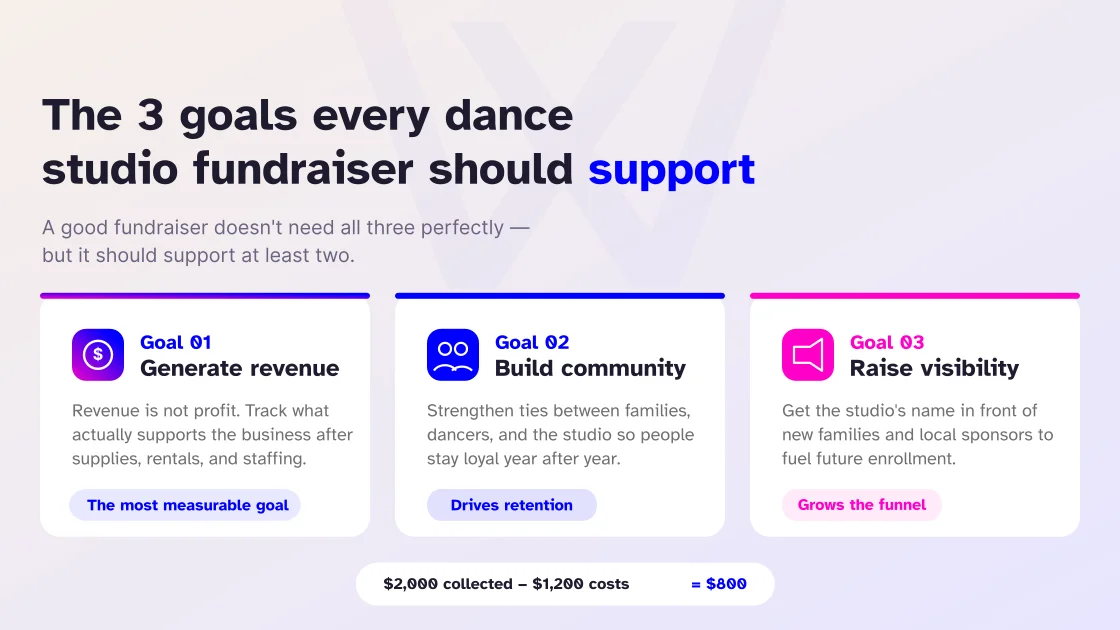
Before looking at ideas, it helps to judge every fundraiser against three business goals. A good fundraiser does not need to do all three perfectly, but it should support at least two.
Goal 1: Generate revenue
Revenue is not profit.
If a studio collects $2,000 but spends $1,200 on supplies, rentals, staffing, and promotions, the real profit is $800. That difference matters because owners need to know what actually supports the business.
Goal 2: Attract new students
This is where fundraising becomes powerful.
Harvard Business Review has noted that acquiring a new customer can cost five to 25 times more than retaining an existing one, so warm leads matter. For dance studios, that means warm leads are valuable. A child who attends a bring-your-bestie workshop is not just a ticket sale.
Goal 3: Strengthen family retention
Bain & Company has reported that even a small increase in customer retention can have a major effect on profit. In the dance studio world, this shows up in a simple way: families stay longer when they feel part of something.
A fundraiser should not drain parents. It should make them feel included.
Quick comparison of the 12 best fundraising ideas for dance studios
Use this table to match the idea to the business goal.
| Fundraising idea | Best for | Growth value |
| Bring-your-bestie workshop | New leads | High |
| Preschool pop-up clinics | Beginner enrollment | Very high |
| Summer camp golden ticket raffle | Camp promotion | High |
| Silent dance disco | Community buzz | High |
| Dad dance-off bootcamp | Parent engagement | High |
| Rent-a-dancer flash mobs | Local visibility | High |
| Community grown-up dance-off | Partnerships | High |
| Day-in-the-life content takeover | Sponsors | Medium to high |
| Virtual masterclass series | Wider reach | Medium to high |
| Limited-edition merch drop | Brand awareness | Medium |
| Costume upcycling fair | Low-cost profit | Medium |
| Theme-based family dance night | Retention | Medium |
1. Bring-your-bestie ticketed workshop
This is one of the simplest dance team fundraising ideas because it uses what the studio already has: students, space, teachers, and music.
How does it raise funds?
Current dancers buy a ticket and bring a friend who also buys a ticket. The studio can add snacks, branded water bottles, or a photo wall if the margins make sense.
How does it help the studio grow?
The guest is already warm because they came with someone they trust. That makes the workshop feel less like advertising and more like a first step into the studio.
What studio owners should know before launching it?
The follow-up matters more than the ticket sale. Owners should have a trial class offer, beginner schedule, or camp invitation ready before guests leave.
2. Preschool pop-up dance clinics
For studios that want more beginner enrollments, preschool clinics can be one of the strongest options.
How does it raise funds?
The studio runs a short paid clinic at a preschool, daycare, library, or community center. The fee can be shared with the host or used to support a parent group.
How does it help the studio grow?
The studio reaches parents before they are actively searching for dance classes. This creates early trust and a natural path into beginner programs.
What studio owners should know before launching it?
Keep the session short, playful, and organized. The goal is not an advanced technique. The goal is parent confidence and a clear next step.
3. Summer camp golden ticket raffle
This idea works because the prize already has value.

How does it raise funds?
The studio raffles one paid summer camp spot and sells tickets to current families, past families, and local parents.
How does it help the studio grow?
Even families who do not win may still ask about camp. That turns the raffle into summer camp marketing.
What studio owners should know before launching it?
Owners should check local raffle rules before selling tickets. They should also collect dancer age, parent contact details, and program interest for follow-up.
Before running raffles, auctions, or prize-based fundraising, studio owners should check local and state rules. Some areas treat raffles as regulated games of chance, especially when tickets are sold publicly.
4. Silent dance disco
A silent dance disco feels fresh, but it still fits naturally inside a dance studio.
How does it raise funds?
The studio charges admission for a wireless headphone dance party. Extras can include glow sticks, snacks, playlist battles, or a small photo station.
How does it help the studio grow?
These events create easy social content. Students post, parents share, and local families notice the studio.
What studio owners should know before launching it?
Headphone rental is the main cost. Owners should price the event carefully so novelty does not eat the profit.
5. Dad dance-off bootcamp
This is a parent-engagement fundraiser with a performance twist.
How does it raise funds?
Parents or guardians pay to join a short bootcamp and perform a simple routine at a showcase or family event. The studio can also sell voting tickets.
How does it help the studio grow?
Parents who perform become part of the studio story. That emotional connection can support retention.
What studio owners should know before launching it
Keep the tone kind. The goal is laughter and belonging, not embarrassment.
6. Rent-a-dancer flash mobs
This turns advanced dancers into a local performance asset.
How does it raise funds?
The studio offers paid flash mob packages for birthdays, proposals, business openings, school events, or community celebrations.
How does it help the studio grow?
Every performance becomes live marketing. People see the quality of the dancers instead of only reading about the studio online.
What studio owners should know before launching it?
Safety comes first. Studios need parent permission, supervision, travel rules, music approval, and clear performance boundaries.
7. Community grown-up dance-off
This takes more planning, but the reach can be strong.
How does it raise funds?
Local teachers, coaches, business owners, or parents learn short routines and compete. Revenue can come from tickets, sponsorships, and audience voting.
How does it help the studio grow?
Each participant brings their own audience. That helps the studio reach people outside its existing parent base.
What studio owners should know before launching it?
Recruit people with real community reach. The right lineup can promote the event better than ads.
8. Day-in-the-life content takeover
This is one of the more modern creative fundraising ideas for dance studios because it turns visibility into sponsorship.
How does it raise funds?
Local businesses sponsor a dancer, team, or rehearsal-day content series. Packages may include social tags, newsletter mentions, or event signage.
How does it help the studio grow?
The studio gains sponsor relationships, behind-the-scenes content, and more local awareness.
What studio owners should know before launching it?
Protect student privacy. Parent permissions and clear posting guidelines are essential.
9. Virtual masterclass series
A virtual masterclass can become repeatable revenue if it is packaged well.
How does it raise funds?
The studio sells access to an online class taught by a guest instructor, alumni dancer, or senior teacher.
How does it help the studio grow?
The event is not limited by room size. It can reach dancers outside the local area and build a wider email list.
What studio owners should know before launching it?
Audio, camera angle, and access links matter. A messy digital experience can reduce future sales.
10. Limited-edition studio merch drop
A merch drop works best when it feels like a moment, not leftover stock.
How does it raise funds?
Studios can use pre-orders for hoodies, joggers, bags, bottles, or warm-up gear. Families pay before production, which lowers inventory risk.
How does it help the studio grow?
Students become walking reminders of the brand. That visibility can last longer than the fundraiser itself.
What studio owners should know before launching it?
One strong design with a short order window usually performs better than too many options.
11. Costume upcycling fair
This idea is practical, affordable, and good for parent goodwill.
How does it raise funds?
The studio sells retired costumes, charges a table fee, or hosts a craft session where dancers customize old pieces.
How does it help the studio grow?
Families save money, old inventory gets used, and newer parents feel supported.
What studio owners should know before launching it?
Sort by size, condition, and price before the event. A clean setup feels helpful. A messy one feels like clutter.
12. Theme-based family dance night
This simple event can quietly strengthen the whole studio.
How does it raise funds?
The studio sells tickets for a glow night, 80s party, holiday dance, or parent-child social. Snacks, photos, and raffles can be added if they are easy to manage.
How does it help the studio grow?
Families who make memories inside the studio are more likely to stay, refer, and support future events.
What studio owners should know before launching it?
Do not overbuild it. The welcome, music, and atmosphere matter more than expensive decorations.
How to match the right fundraiser to your business goal
A fundraiser should be chosen by business need, not mood.
If you want new enrollments
Use bring-your-bestie workshops, preschool clinics, summer camp raffles, and community dance-offs.
If you want quick funds
Use merch drops, golden ticket raffles, costume fairs, and silent discos.
If you want local visibility
Use flash mobs, grown-up dance-offs, content takeovers, and public workshops.
If you want repeatable revenue
Use virtual masterclasses, seasonal merch drops, birthday-style packages, and preschool clinic partnerships.
How to know whether a fundraiser is worth it
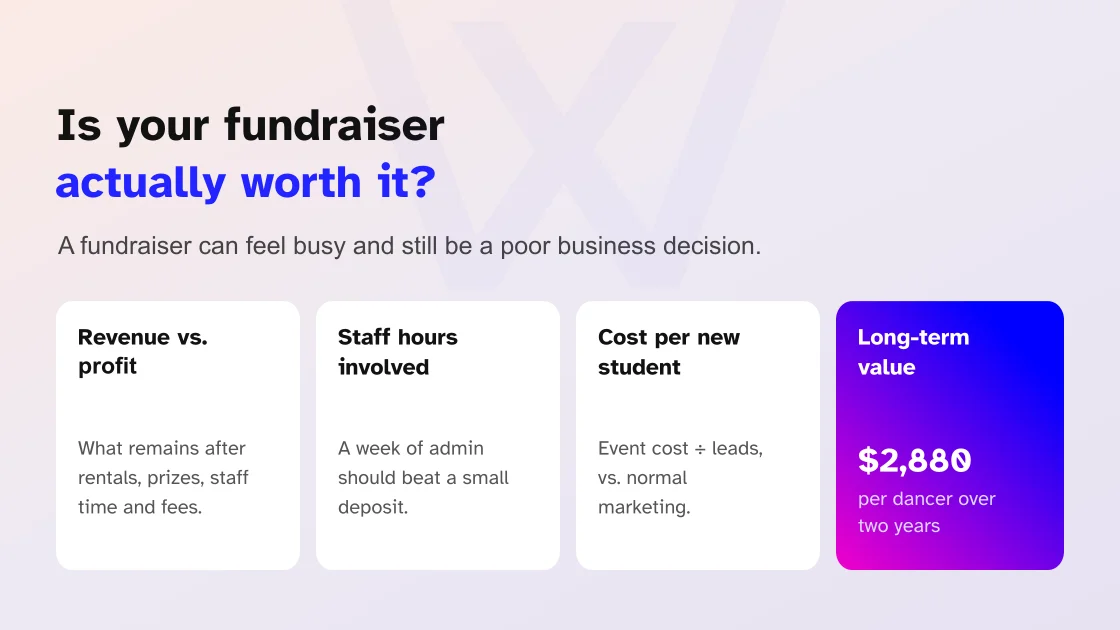
A fundraiser can feel busy and still be a poor business decision.
Revenue vs. profit
Revenue is what comes in. Profit is what remains after costs. Count rentals, supplies, prizes, staff time, payment fees, and promotion.
Staff hours involved
If a fundraiser takes a week of admin energy, it should produce more than a small deposit.
Cost per new student acquired
Divide the total event cost by qualified leads or new students. This shows whether the fundraiser beats normal dance studio marketing.
Long-term enrollment value
A new dancer can be worth far more than one ticket. If a student pays $120 a month and stays two years, that is $2,880 before expenses.
Fundraising metrics every dance studio should track
The studios that improve fundraising are usually the ones that measure it.
Track total revenue, net profit, new leads, new enrollments, parent participation rate, and return on effort. Those six numbers tell owners whether the event should be repeated, improved, or retired.
Systems matter more than fundraising ideas
The idea is usually the easy part. The system behind it decides whether the fundraiser feels smooth or painful.
A fundraiser only works if the studio can manage the details behind it. Registrations, payments, parent messages, guest lists, waivers, and follow-up offers all need to move smoothly.
That is where the right dance studio management software, like Wellyx, becomes useful, especially when a fundraiser is also meant to create new leads or promote future programs.
Why organization determines profitability?
Lost sign-up sheets, cash envelopes, missed reminders, and scattered parent messages all cost money. Not loudly, but they cost money.
How does automation reduce administrative workload?
The SBA notes that online payment services can help businesses collect customer and order information digitally, while payment processors may also involve service fees that owners need to consider. For studios, easy payments reduce friction for parents and manual admin for staff.
Managing registrations, payments, and communication efficiently
When fundraising supports real business growth, it cannot live in a pile of forms.
Dance studio management software like Wellyx can help manage event registrations, payments, parent communication, bookings, and reports in one place.
The point is not software for the sake of software. The point is protecting the work already done. If a studio collects leads at a fundraiser but never follows up, the fundraiser is only half-finished.
Frequently asked questions
What is the most profitable fundraiser for a dance studio?
The most profitable fundraiser usually has low costs, strong participation, and a clear follow-up plan.
How often should a dance studio hold fundraisers?
Two to four strong fundraisers a year usually work better than many small events that tire families out.
What fundraising ideas attract the most new students?
Bring-your-bestie workshops, preschool clinics, public dance events, and summer camp raffles are strong for new student interest.
How much profit should a fundraiser generate?
There is no universal number. Owners should measure net profit, staff hours, new leads, enrollments, and whether the fundraiser is worth repeating.
Should dance studios use online fundraising methods?
Yes. Online payments, virtual classes, digital tickets, and merch pre-orders make participation and tracking easier.
How do you motivate parents to participate?
Make the goal clear and the process easy. Parents help when they understand what the money supports.
What mistakes should studio owners avoid?
Avoid unclear goals, weak follow-up, too many events, poor tracking, low-profit ideas, and heavy staff workload.
Final thoughts
After reviewing many dance studio fundraisers, the best question is not only, “How much can this raise?”
The better question is, “What else will this build?”
The strongest fundraisers raise money, but they also bring new families closer, keep current families connected, create local visibility, and leave behind systems that can be used again.
That is how fundraising becomes part of dance studio business growth. Not a panic button. Not a side project. A planned, measured, repeatable way to support the studio’s next stage of growth.