





Many people now search online before joining a gym or yoga studio. A website often becomes the first meeting point between a health club and a potential member. If the website feels confusing or slow, visitors leave in seconds.
Studies from madeforweb show that 75% of users judge a business’s credibility based on its website design. For a fitness business, this matters even more. Members want to see class schedules, trainers, pricing, and booking options quickly.
A strong health club website does more than good. It helps people understand the value of the club. It allows easy class bookings. It also builds trust through clear information and real member stories.
Fitness businesses that invest in a good website see better results. Research from Think With Google shows that mobile-friendly websites can increase conversion rates by over 30%. For health clubs, this means more memberships and more class bookings.
Designing the perfect health club website does not require complex technology. It requires a clear structure, simple navigation, and tools that help people join or book classes easily.
Designing the perfect health club website
A successful health club website focuses on clarity, easy navigation, mobile design, and simple booking systems. When visitors can quickly understand the service and join classes, conversions increase.
The most effective fitness websites include:
- Mobile-friendly design
- Online class booking
- Clear membership pricing
- Fast loading pages
- Real member testimonials
- Strong call-to-action buttons
- Local SEO optimization
According to HubSpot, structured and easy-to-scan content increases the chances of appearing in featured snippets and AI search answers.
Step 1: Understand your health club audience before designing the website
Understanding your audience helps you design a website that answers their needs quickly. When the website speaks directly to the right people, it becomes easier to turn visitors into members.
Before designing a health club website, it helps to understand who will use it. A health club studio attracts a different audience than a strength gym. Some members want relaxation and mindfulness, while others focus on weight loss or performance training.
Understanding the audience helps decide:
- Website colors and visual style
- The type of classes highlighted
- Messaging and tone of content
- Booking features and membership plans
For example, yoga studio websites often use calm colors and peaceful imagery. Strength training gyms may focus more on equipment, coaching, and transformation stories.
According to Statista, the global fitness industry generates over $9.3 billion annually. A large part of this growth comes from online discovery. This means many members first learn about a gym through its website.
When the website reflects the needs of its audience, visitors feel understood. That connection makes them more likely to join.
Step 2: Create a clean and simple homage that explains your club in seconds
A homepage must quickly explain what the health club offers and why someone should join. Visitors usually decide within a few seconds whether they will stay or leave.
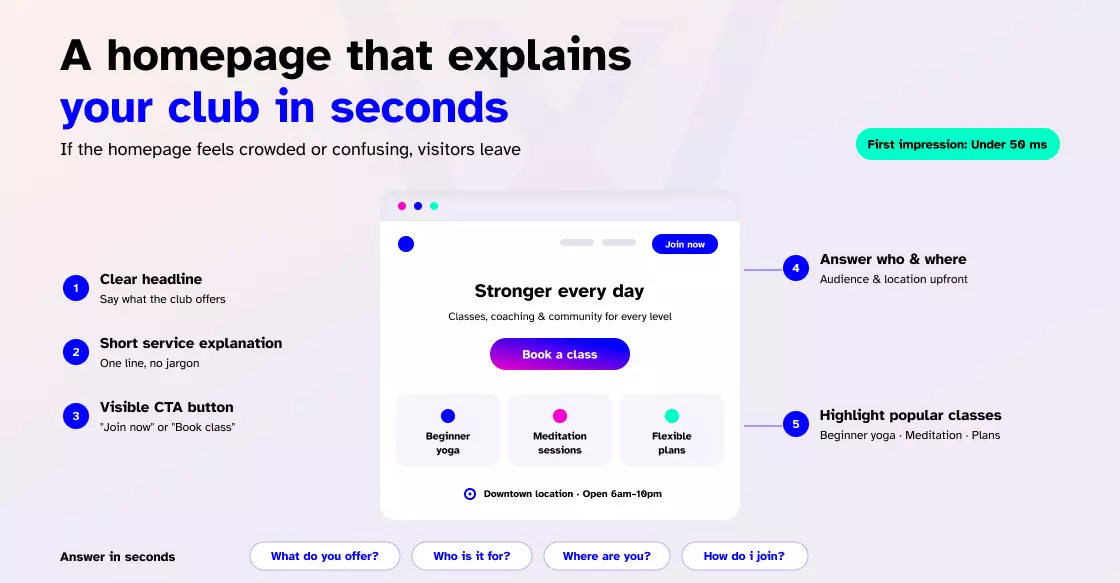
When people open a fitness website, they look for simple answers first. If the homepage feels crowded or confusing, they leave.
Research from Google UX studies shows users form a first impression of a website in less than 50 milliseconds.
A strong homepage should clearly show:
- What the health club offers
- Who the services are for
- Where the club is located
- How can someone join or book
Important homepage elements include:
- A clear headline describing the club
- Short explanation of services
- Visible “Join Now” or “Book Class” button
- Highlights of popular classes or programs
For example, a yoga studio homepage may feature:
- Beginner yoga classes
- Meditation sessions
- Flexible membership plans
When visitors quickly understand the value of a health club, they explore more pages and consider joining.
Step 3: Make class schedules and booking systems easy to use
A health club website must allow visitors to check schedules and book classes without confusion. Simple booking systems increase both user satisfaction and class attendance.
Class schedules are one of the most visited pages on fitness websites. Members check this page regularly when planning workouts.
If the schedule is confusing or difficult to book, users may give up.
A strong online booking and scheduling system should allow visitors to:
- View upcoming classes
- Check trainer availability
- Reserve spots online
- Receive instant booking confirmation
Many modern booking systems also provide helpful features such as:
- Automatic reminders through email or SMS
- Waitlists for full classes
- Easy rescheduling options
These features reduce missed classes and make the overall experience smoother for members.
Step 4: Design a mobile-first website for modern health club users
Most people search for health clubs on their smartphones. A mobile-friendly website ensures visitors can browse and book classes easily.
According to Statista, more than 60% of the global website traffic comes from mobile devices.
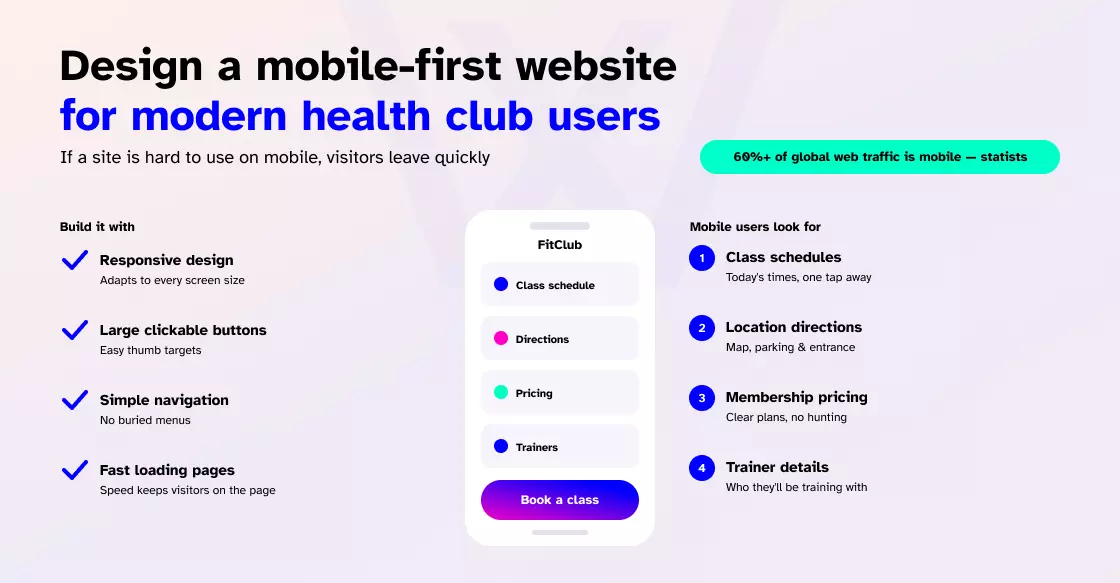
If a website is difficult to use on mobile, visitors leave quickly. A mobile-optimized health club website should include:
- Responsive design for different screen sizes
- Large clickable buttons
- Simple navigation menus
- Fast loading pages
Mobile users often look for quick information such as:
- Class schedules
- Location directions
- Membership pricing
- Trainer details
When these details appear clearly on mobile screens, visitors can take action quickly. Mobile-first design delivered in form of a handy gym mobile app improves both user experience and search rankings.
Step 5: Show real photos, videos, and member success stories
Real visual and member stories build trust and make a health club website feel authentic.
Fitness is personal. Many people feel nervous before joining a health club. Seeing real trainers and real members creates a welcoming environment.
Effective visual content may include:
- Photos of trainers and instructors
- Videos showing workouts or yoga sessions
- Before-and-after transformation stories
- Testimonials from members
According to BrightLocal, 88% of consumers trust online reviews as much as personal recommendations.
These testimonials help visitors believe the club delivers real results.
Step 6: Add clear membership plans and pricing pages
Clear pricing pages help visitors understand the cost of joining. Transparency builds trust and reduces hesitation.
Many gyms hide pricing information, but this often creates confusion. Clubs that convert best instead customize membership tier so each plan maps to a clear audience and price point.
A strong membership page should include:
- Membership options
- Monthly and yearly pricing
- Class packages
- Personal training fees
Effective pricing pages also highlight:
- Benefits of each membership plan
- Access to classes or facilities
- Discounts for long-term plans
Visitors feel more confident when they clearly understand what they will pay and what they will receive.
Step 7: Optimize the website for local SEO and search visibility
Local SEO helps nearby people find your health club when searching online.
Many users search using phrases like:
- gym near me
- yoga studio near me
- fitness classes in my city
Ranking locally is one of the most reliable ways to get more gym members without raising ad spend. If your website is optimized for local search, it appears in these results.
Important local SEO elements include:
- Google Business Profile listing
- Location-based keywords
- Contact information and maps
- Local landing pages
Step 8: Improve website speed and loading performance
A fast website keeps visitors engaged. Slow websites lose potential members quickly.
Research shows that when page load time increases from 1 second to 7 seconds, bounce rates rise by 90%.
Fitness websites should load quickly because visitors often want quick answers.
Website speed can be improved through:
- Image optimization
- Lightweight website themes
- Reliable hosting services
- Clean code structure
Fast websites also perform better in search engine rankings.
Step 9: Add strong call-to-action buttons for signups and bookings
Call-to-action buttons guide visitors toward joining or booking classes. Without clear actions, users may leave the website without taking the next step.
Common call-to-action examples include:
- Join Now
- Book a Class
- Start Free Trial
- Schedule Consultation
These buttons should appear in important locations:
- Homepage header
- Pricing page
- Trainer profile pages
Step 10: Integrate health club management and booking software
Health club management software connects the website with internal systems.
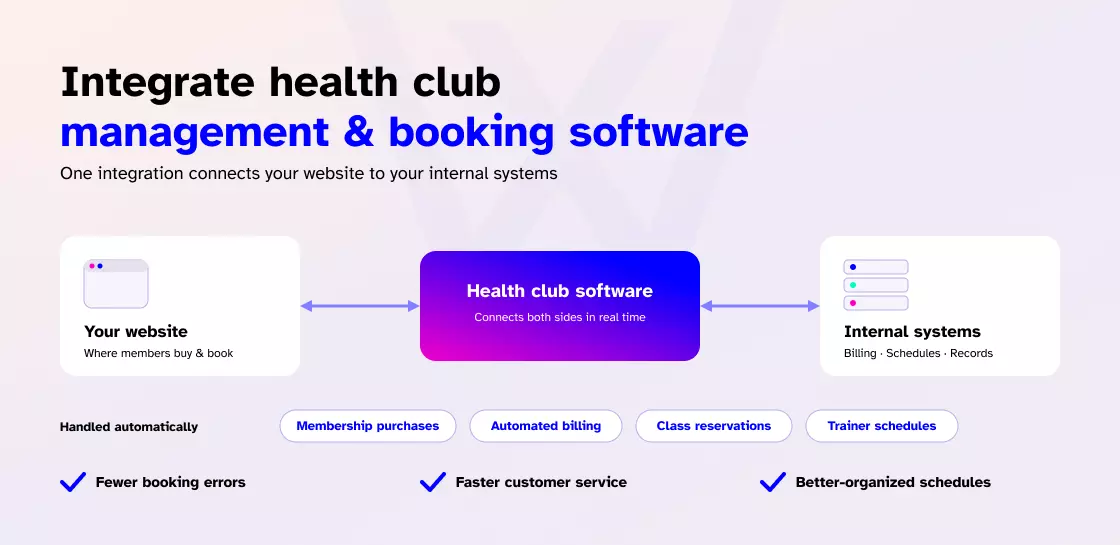
This integration allows websites to handle:
- Membership purchases
- Automated billing
- Class reservations
- Trainer schedules
Benefits of integration include:
- Fewer booking errors
- Faster customer service
- Better organization of schedules
Many modern gyms also connect their websites to fitness lead management software and gym CRM features that track potential members and automate communication.
Step 11: Track performance and continuously improve the website
Tracking website performance helps health clubs understand visitor behavior.
Analytics tools measure:
- Number of visitors
- Most viewed pages
- Booking conversions
- Traffic sources
Platforms such as Google Analytics provide useful insights.
For example, if many visitors leave the pricing page quickly, the club may need to simplify the information. Continuous improvement keeps the website effective and competitive.
Quick checklist for a high-converting gym website
A health club website performs best when it includes the following elements:
- Clear homepage message
- Easy class booking system
- Transparent membership pricing
- Trainer introductions
- Member testimonials
- Fast mobile performance
- Strong call-to-action buttons
This checklist helps website owners quickly evaluate whether their website is ready to convert visitors into members.
Common mistakes to avoid when designing a gym website
Strong fitness website design builds trust and keeps visitors engaged, while design errors quietly erode both. Avoiding common design mistakes can significantly improve user experience and conversions.
Some of the most frequent mistakes include:
- Slow loading pages
- Confusing navigation
- Hidden membership pricing
- Complicated booking systems
- Outdated design or images
A clean and modern website builds trust and keeps visitors engaged.
Final thoughts
Designing the perfect health club website requires clarity, simplicity, and helpful tools for visitors.
A strong website explains services clearly, allows easy booking, and builds trust through testimonials and transparent pricing.
When gyms and yoga studios follow these eleven steps, their websites act like digital front desks. Visitors explore classes, learn about trainers, and join memberships smoothly.
In today’s competitive fitness industry, a well-designed website is one of the most powerful tools for attracting and retaining members.
FAQs
What should a health club website include?
A health club website should include class schedules, membership plans, trainer profiles, booking systems, and contact information.
These elements help visitors understand the club quickly and decide whether to join.
Why is mobile design important for gym websites?
Mobile design allows users to browse and book classes easily using their smartphones.
Since more than 60% of web traffic comes from mobile devices, mobile optimization improves both user experience and conversions.
How much does it cost to build a gym website?
A gym website typically costs between $1,000 and $10,000, depending on design complexity and features.
Websites with advanced booking systems and integrations usually require larger budgets.
How can a health club website attract more members?
A health club website attracts members by offering clear schedules, simple booking options, real testimonials, and high-quality visuals.
These elements build trust and make visitors feel confident about joining.
What makes a fitness website convert visitors into members?
Fitness websites convert visitors when they provide simple navigation, clear pricing, strong calls to action, and fast-loading pages.
Trust signals such as testimonials and transformation stories also help increase conversions.