



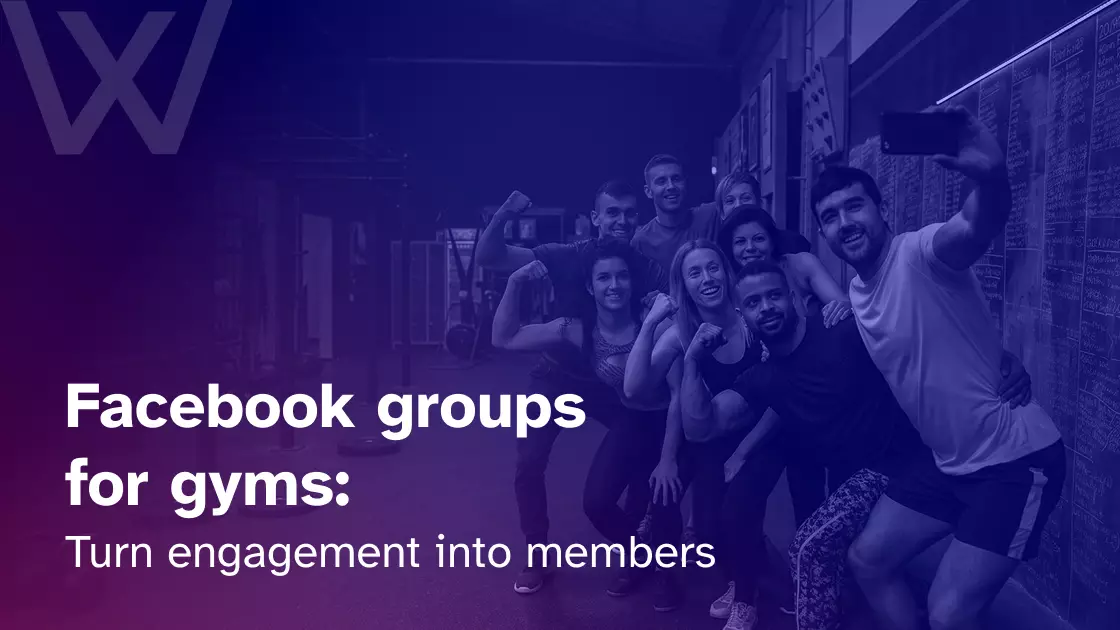
A Facebook Group can have hundreds of members, daily comments, and plenty of activity without generating a single trackable gym membership.
That does not mean the Group is failing. It usually means the gym is measuring the wrong thing.
More than 1.8 billion people use Facebook groups every month, according to Meta. But the size of your group is not what matters most. The real opportunity is in the conversations happening inside it.
A person who likes your workout post is not necessarily a lead. Someone who asks,
“Do you offer beginner classes?”
Could be much closer to becoming a customer. That distinction changes how gyms should use Facebook groups.
Instead of treating the Group as another content channel, use it to offer value, identify buying intent, build relationships, and have more qualified conversations toward a membership.
The process is simple:
Facebook Group → Engagement → Buying signal → Qualified lead → Follow-up → Trial or booking → Membership
The goal is not to sell to everyone. It is to recognize the people showing signs that they need what your gym offers.
Why posting regularly is not enough to generate gym memberships
Many gyms create a group and invite members, post workouts and fitness tips, and watch engagement numbers climb. Then comes the important question:
“How many memberships did the group actually generate?”
The answer is often unclear because engagement and revenue are not the same thing.
A member can like five workout posts without intending to join your gym. Another person might leave one comment asking about your beginner program and become a paying member later.
The first person generates more visible engagement. The second created more commercial value.
The passive-content trap
Likes and reactions tell you someone noticed your content. They do not tell you why.
Low-intent interactions include:
- Great post
- Thanks for sharing
- Likes and reactions
- Generic comments
Higher-intent interactions include:
- Do you offer beginner classes?
- How much is membership?
- What time are your evening classes?
- Do you have personal training?
- Can I try the gym first?
These questions show that someone is evaluating whether your gym can solve a problem. That is why gyms should focus on intent rather than activity.
| Interaction | Signal | Response |
| Likes a workout | Low | Continue engagement |
| Shares a goal | Medium | Start a conversation |
| Joins a challenge | Medium | Learn their goal |
| Asks about classes | High | Follow up |
| Asks about membership | High | Qualify |
| Requests a trial | Very high | Move toward booking |
Do not message everyone who likes a post. Notice when someone moves from passive engagement into a conversation that could lead somewhere.
Facebook Group vs. Facebook Ads: What roles does each play?
Facebook groups and Facebook Ads can support the same growth strategy, but they do different jobs.
Ads help gyms reach targeted audiences and test offers. Groups help gyms develop relationships and community.
| Facebook groups | Facebook Ads |
| Build relationships | Create targeted reach |
| Encourage conversations | Generate traffic |
| Develop community | Test offers |
| Nurture prospects | Acquire audiences |
| Build long-term trust | Support faster acquisition |
DataReportal reported that Facebook’s advertising tools showed a potential reach of approximately 2.28 billion users globally in January 2025. That is advertising reach, not total active users, but it demonstrates the platform’s scale.
A local gym does not need billions of people. It needs the right people in its market. For example, a gym could run an ad promoting a free 30-Day beginner challenge and invite interested people into a dedicated Facebook Group. Trainers can answer questions, members can share progress, and prospects can discuss their goals.
The journey becomes:
Ad → Group → Conversation → Intent → Lead → Trial → Membership
The ad creates attention. The Group develops the relationship. Your sales process turns interest into action.
Choose the right Facebook Group strategy for your gym
Different Group structures can support different goals.
Member community groups
A member-only group can support retention, accountability, referrals, challenges, and progress sharing.
A trainer might ask:
“What is one fitness goal you want to achieve this month?”
Members can share their goals, struggles, and progress. These conversations may not generate immediate sales, but they can strengthen the relationship between the gym and its members.
That matters for retention and referrals.
Local fitness groups
A public local group can attract people who are interested in fitness but have not chosen a gym.
The group might focus on:
- Fitness in your city
- Beginner training
- Local running
- Strength training
- Accountability
The important thing is giving people a reason to join.
If every post is an advertisement, people have little reason to stay. Answer questions, provide useful information, and participate in local conversations.
Challenge-based groups
Challenges can be especially effective for lead generation because they give people a reason to participate without immediately asking for a long-term commitment.
Examples include:
- 30-day fitness challenges
- Beginner strength challenges
- Weight-loss accountability challenges
- Mobility challenges
- Consistency challenges
The person joins because they want help with a specific problem. Your gym gets an opportunity to demonstrate its expertise and build trust.
The strongest groups solve a problem before they ask someone to buy.
Turn your Facebook group into a community people actually want to join
A group becomes easier to convert when people actually find it useful.
Many gyms make the same mistake:
- Spamming promotional links
- Ignoring new members
- Posting repetitive motivational quotes
- Hiding the gym’s location
- Making offers difficult to understand
- Giving members no reason to participate
Instead, create content that starts conversations and provides real value.
Share simple workout tips, meal ideas, beginner advice, member success stories, and common fitness mistakes. You can also run a weekly live session where a trainer answers questions about training, recovery, nutrition, or getting started.
The goal is not to sell something every day. The goal is to give people a reason to open the Group tomorrow. That makes future conversion much easier.
The Facebook group conversion funnel
The biggest mistake is assuming every group member is a lead. They are not. Someone might join because a friend invited them. Another person might join because they are actively looking for a gym.
Your job is to identify the difference.
Stage 1: Cold members
These members have shown little intent. They may read posts, join recently, or rarely comment.
Do not pitch them. Instead, create easy ways to participate.
Ask:
“What is the hardest part of staying consistent with your workouts?”
The goal is to move people from passive membership to active participation.
Stage 2: Warm engagement
Now look for people who repeatedly comment, join challenges, share goals, or ask questions.
Do not immediately sell.
Suppose someone writes:
“I always struggle to stay consistent.”
Instead of saying:
“Join our gym today.”
Ask:
“What usually gets in the way for you?”
Their answer gives you context.
Maybe they work long hours. Perhaps evening classes would help. Maybe personal training is more suitable.
The conversation tells you what solution might actually fit.
Stage 3: Sales-ready prospects
Watch for questions about:
- Membership prices
- Class schedules
- Beginner programs
- Personal training
- Trial sessions
- Availability
- Getting started
These questions show that the person is evaluating a solution.
That is when direct follow-up makes sense.
Stage 4: Conversation to conversion
Your first DM does not have to close the sale.
For example:
“You mentioned wanting help getting started with strength training. We have a beginner program that may fit what you’re looking for. Would you like me to send you the details?”
That feels more natural than an unsolicited sales pitch.
From there, the next step could be a consultation, trial, class booking, or gym visit.
The journey becomes:
Conversation → Qualification → Trial → Booking → Attendance → Membership
If someone is ready to visit your gym, make sure your team knows how to convert gym walk-ins into members rather than letting a warm prospect leave without a clear next step.
Give active Group members a reason to take the next step
Not every conversion needs to start with “Buy a membership.” Sometimes the better next step is a low-friction experience.
Your gym could offer:
- A free week for Group members
- A complimentary trial class
- A beginner assessment
- A free consultation
- A Group-only personal training offer
- An invitation to a fitness challenge
The offer should match the person’s intent.
Someone asking about beginner training may respond well to a beginner class. Someone discussing accountability may prefer a challenge.
You can also pin a clear post explaining:
- Where the gym is
- Who it is for
- What programs are available
- How to book a trial
- How to contact the team
Make the next step obvious without turning every conversation into a sales pitch.
Track Facebook Group leads before opportunities disappear
A good conversation can become a lost opportunity quickly. A trainer responds to a comment. The prospect sends a DM. The trainer gets busy. Other messages arrive.
Two days later, the conversation is buried. The problem is not necessarily lead generation.
It is follow-up.
At minimum, your gym should know:
- Who the prospect is
- What they want
- Where they came from
- What they asked
- Their level of interest
- Who owns the follow-up
- What happens next
- Whether they booked
- Whether they became a member
A spreadsheet can work for a small gym.
| Prospect | Goal | Intent | Next action | Status |
| Sarah | Strength | High | Send class options | Follow-up |
| Mike | Weight loss | Medium | Continue conversation | Nurture |
| James | Beginner fitness | Ready | Book trial | Booked |
As lead volume grows, dedicated software can make this easier.
A fitness lead-management system can help gyms capture prospects, organize pipeline stages, assign follow-ups, and track the journey from inquiry to conversion.
You can learn more about fitness lead management software and how it can help turn scattered inquiries into a more structured sales process.
The important thing is not the software itself. It is having an owner and next action for every serious prospect.
The weekly Facebook Group routine that supports membership growth
Your gym does not need to post constantly. It needs a consistent reason for people to participate.
Monday: Start a conversation
Ask about:
- Fitness goals
- Training challenges
- Motivation
- Habits
- Workout preferences
For example:
“What makes it hardest for you to stay consistent?”
The answers can reveal problems your gym can address through future content and offers.
Wednesday: Teach something useful
Share:
- Beginner workout advice
- Training tips
- Common mistakes
- Fitness myths
- Recovery advice
- Member success stories
The goal is to demonstrate expertise, not push a sale.
Friday: Create a conversion opportunity
Offer a logical next step:
- Beginner challenge
- Consultation
- Trial session
- New class
- Personal training offer
Connect the offer to the week’s conversations.
Every day: Look for buying signals
Spend a few minutes checking for:
- New questions
- Repeated commenters
- Shared goals
- Membership questions
- Trial requests
- Unanswered conversations
The goal is not to create more activity. It is to recognize useful activity.
Use rewards to turn engagement into referrals and sales
Rewards can create another path from community engagement to revenue. But reward the right behavior.
A random giveaway may attract people who only want the prize. Instead, reward actions that create business value.
For example:
- Referring a friend
- Participating in a challenge
- Helping another member
- Hitting a training milestone
- Attending consistently
- Bringing someone to a trial
- Participating in community events
Suppose a member posts about completing their first month of training.
Another person comments:
“I’ve been thinking about joining too, but I’m nervous because I’m a beginner.”
That is a valuable conversation. The existing member can share their experience. The gym can answer questions. The prospect may then be invited to a trial.
The community has helped create the lead.
A structured rewards strategy can formalize this behavior. You can increase gym sales with a rewards program by giving members clear reasons to refer friends and participate.
The principle is simple:
Reward behavior that creates business value, not activity for activity’s sake.
Use Facebook Pixel and Wellyx to understand what converts
Facebook Group engagement is only one part of the journey.
Someone may ask about your gym today, visit your website tomorrow, check membership prices, view the class schedule, and eventually submit a form.
A typical journey might look like:
Facebook conversation → Website visit → Pricing page → Class schedule → Lead form → Trial → Membership
Meta’s tracking tools can help gyms understand relevant website actions associated with Facebook traffic and campaigns.
That can help answer questions such as:
- Which campaigns send visitors?
- Which pages do prospects view?
- Are visitors taking conversion actions?
- Which campaigns contribute to leads?
But do not treat Pixel as a tool that automatically identifies every Facebook Group member or connects every Group conversation to a membership.
Group interactions and website conversions are different data points.
Once someone becomes an identifiable lead, your gym management system can help organize:
- Lead information
- Follow-up tasks
- Sales conversations
- Lead stages
- Booking activity
- Membership journeys
Facebook can show that people are interested.
Your lead-management process helps your team understand what happens next.
When gyms should automate Facebook lead follow-up
Manual follow-up can work when your community is small.
It becomes harder when conversations increase, and multiple staff members handle prospects.
Automation can help with:
- Follow-up reminders
- Lead-stage updates
- Staff tasks
- Prospect notifications
- Routine messages
- CRM workflows
But automation should not remove the human element. A reminder telling a trainer to follow up is useful.
A robotic sales pitch sent immediately after someone asks a genuine question can feel intrusive.
The better rule is:
Automate the admin. Keep the important conversation human.
Facebook Group mistakes that quietly reduce conversions
Several mistakes can weaken an otherwise active community.
- Treating the Group like an advertisement board: If every post says “Join now,” people stop seeing the Group as a community
- Ignoring new members: Welcome people and give them an easy way to participate
- Posting dead content: Replace repetitive motivational quotes with useful advice, questions, lives, and real member stories
- Hiding basic information: Make your location, services, offers, and next steps easy to find
- Measuring likes instead of intent: A post with 100 likes may be less valuable than one comment asking to book a trial
- Pitching too early: Answer questions first. Build context. Sell when intent becomes clear
- Failing to track conversations: A good prospect can disappear simply because nobody owns the follow-up
FAQs
Can Facebook groups help gyms get more members?
Yes. Groups can create warmer membership opportunities by building relationships, answering questions, identifying buying signals, and moving qualified prospects into follow-up. The group itself does not guarantee memberships. The conversion process around it matters.
How do gyms convert Facebook Group members into paying members?
Identify intent first.
Someone asking about classes, pricing, beginner programs, or trials is showing a stronger commercial signal than someone simply liking a post.
Start a relevant conversation, understand what they need, and move them toward a consultation, trial, booking, or membership.
Should my gym create a Facebook Group or run Facebook Ads?
Both can play different roles.
Ads attract new audiences and test offers. Groups nurture relationships and build community.
A useful structure is:
Ads → Group → Engagement → Intent → Lead → Follow-up → Membership
How many members does a gym need before a Facebook Group generates leads?
There is no fixed number.
A smaller local Group with active conversations can be more valuable than a large inactive Group.
Audience quality matters more than member count.
What should gyms post in a Facebook Group?
Focus on content that creates conversation and demonstrates value, such as workout tips, beginner advice, member success stories, polls, live Q&As, challenges, and local fitness discussions.
The goal is to give people a reason to participate.
Should gyms offer discounts to Facebook Group members?
They can, but discounts should not be the only reason people engage.
A trial, consultation, challenge, or Group-only personal training offer may create a stronger next step.
How does Facebook Pixel help gyms track leads?
Meta’s tracking tools can help gyms understand relevant website actions associated with Facebook traffic and campaigns.
However, Pixel is only one part of a broader tracking and attribution system.
Your Facebook group is not the goal. Membership growth is.
Go back to the gym owner checking their Group. They have hundreds of members. People are commenting. Fitness goals are being shared. Questions are coming in.
The problem was never a lack of activity. The problem was not knowing what that activity meant. That is the shift gyms need to make.
Stop asking:
“How many people are engaging with our Facebook Group?”
Start asking:
“Which interactions show buying intent?”
Then ask what happened next.
- Did the person become a lead?
- Did someone follow up?
- Did they book?
- Did they attend?
- Did they become a member?
A successful Facebook Group is not measured only by members, likes, or comments.
It is measured by how effectively it helps your gym identify interest, build relationships, create qualified conversations, and generate membership opportunities.
The community creates the conversation. Your conversion system turns that conversation into growth.