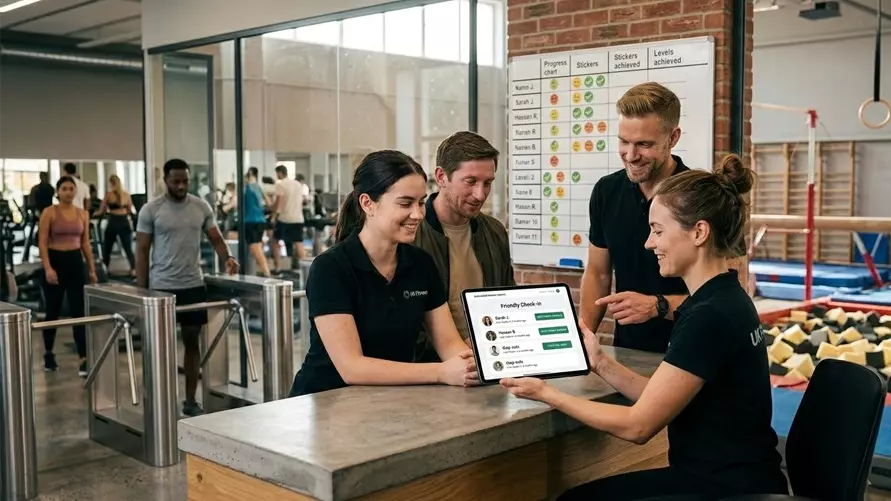
When people ask, “What are the trends for gym and studio management software?” they are usually trying to understand how the best software is changing and what that means for their own fitness business.
In short, the main trends are: cloud and mobile-first technology, deeper automation, AI-powered insights, richer digital fitness experiences, and a stronger focus on member engagement and retention.
At a practical level, this means the tools you use to run your gym, health club, or fitness center are moving from simple admin systems to full management platforms that shape the entire member journey.
Key trends include:
- Cloud-based, mobile-first gym management software.
- All-in-one management software instead of multiple point tools.
- Automated billing and revenue protection.
- Advanced analytics to track attendance and performance.
- AI-driven personalization and member engagement.
- Hybrid (in-person + digital) fitness experience.
- Member self-service through a branded mobile app.
- Deep integrations, security, and industry-specific workflows.
Let’s look at how these trends fit together and what they mean for gym owners and fitness studios evaluating new software solutions.
Why gym and studio software keeps evolving
Before moving on to the key trends, let’s see why fitness businesses have changed dramatically in the last few years.
Members now expect a seamless digital experience: online joining, instant bookings, flexible memberships, and consistent communication across channels. At the same time, competition has increased, from budget gyms to boutique fitness studios and hybrid “fit-tech” players.
Market data reflects this shift. In North America, for example, gym and studio management software is projected to roughly double between 2024 and 2032, with cloud-based deployment already taking close to half of the market, driven by demand for scalability and multi-location management.
On top of that, AI in the fitness industry is booming. Analysts estimate the AI in the fitness market at several billion dollars today, with expectations it will grow many times over by 2034 as businesses use data to personalize workouts, automate communication, and predict member behavior.
All of this pushes gyms, health clubs, and fitness studios to move away from spreadsheets or basic scheduling tools and toward modern management systems that connect operations, finance, and member engagement in one environment.
Key trends reshaping gym and studio management software
Gym software trends include cloud-based, mobile-first platforms, all-in-one systems, automated billing, AI personalization, and simpler experiences. Here are the top trends to look for:
- Cloud-based, mobile-first management systems
The shift from on-premises installs to cloud-based management systems is well underway. Cloud software is easier to deploy, update, and scale, especially for multi-site fitness businesses. Recent market data shows cloud deployments leading the segment thanks to cost-effectiveness and flexibility for multi-location fitness centers.
At the same time, mobile-first design has become standard. Members expect a gym mobile app where they can book classes, manage payments, and access digital content. Staff need tablet or phone access for front-desk operations and floor management. Software like Wellyx leans heavily into branded mobile apps to connect the entire ecosystem.
- All-in-one management software replacing patchwork tools
Fitness businesses used to stack multiple software solutions: one system for class scheduling, another for billing, a third for email marketing, and a separate spreadsheet for reporting. This created data silos and manual work.
Now, all-in-one management software aims to bring these functions into a single interface, reducing integration headaches and giving gym owners one source of truth for operations, finance, and member engagement. Reviews from software comparison sites highlight the value of consolidating tools into one gym and studio management software that supports the full member journey, from lead capture to retention.
- Automated billing and revenue protection
One of the most visible trends is the move toward highly automated billing. Fitness businesses rely heavily on recurring revenue, so the ability to run automated billing, handle failed payments with smart retries, and keep card details up to date has become critical.
Platforms now bundle automated billing with rules-based communication and revenue protection tools: automatic reminders before payment dates, follow-ups for expired cards, and a workflow to pause or downgrade memberships instead of immediately cancelling.
- Advanced analytics to track attendance and performance
Reporting has shifted from static exports to dynamic dashboards that help gym owners track attendance, revenue trends, andmember behavior in near-real time. Different platforms provide reports on gym membership growth, retention, class popularity, and revenue by source, allowing managers to spot patterns quickly.
The ability to track attendance by member segment, time of day, or instructor makes it easier to optimize class scheduling and staffing. Over time, these analytics become a strategic tool for deciding which programs to grow, which to adjust, and which to phase out.
- AI-driven personalization and retention
AI is moving from buzzword to real capability. In the fitness sector, AI is increasingly used to analyze behavioral data and generate insights that humans can act on. Market research points out AI-powered personalization, cloud-based platforms, and mobile-first interfaces as defining trends in gym and studio management software.
Examples include churn prediction scores, recommendations for next best offers, and intelligent segmentation for campaigns. AI can also support staff with smart prompts: which members to contact this week, which classes need extra promotion, or which memberships are most at risk.
- Hybrid and digital fitness experiences
Hybrid fitness, combining in-club visits with digital workouts, has moved from a temporary fix to a long-term expectation. Analysts expect hybrid models and digital-physical integration to remain central trends in the health and fitness industry.
Gym and studio management software is adapting accordingly. Platforms are adding support for live-streamed classes, on-demand video libraries, and online-only membership tiers. Member data from in-club and digital activity can then be unified to give a fuller view of engagement and performance.
- Member self-service via branded mobile app and portals
Another strong trend is shifting more admin tasks from staff to members. Through a branded mobile app or web portal, members can:
- Join and sign waivers.
- Manage payment details and renewals.
- Book and cancel classes.
- Purchase add-ons and upgrades.
For example, Wellyx lets members edit their profiles, view memberships and packages, see booking history, and complete outstanding forms, all without calling the front desk.
This self-service approach improves member experience and reduces operational friction for gym owners and fitness studios.
- Deep integration and open APIs
No software can realistically do everything. That’s why deeper integrations and open APIs are an important trend. Leading management platforms can work with payment gateways, accounting systems, marketing automation tools, and access control systems to create a unified tech stack.
For example, a gym might not use its management software for email marketing, digital ad platforms, or specialized performance-tracking tools. Open APIs allow developers and partners to build custom workflows and reports, turning the core system into a true platform rather than a closed box.
- Enhanced access control, security, and compliance
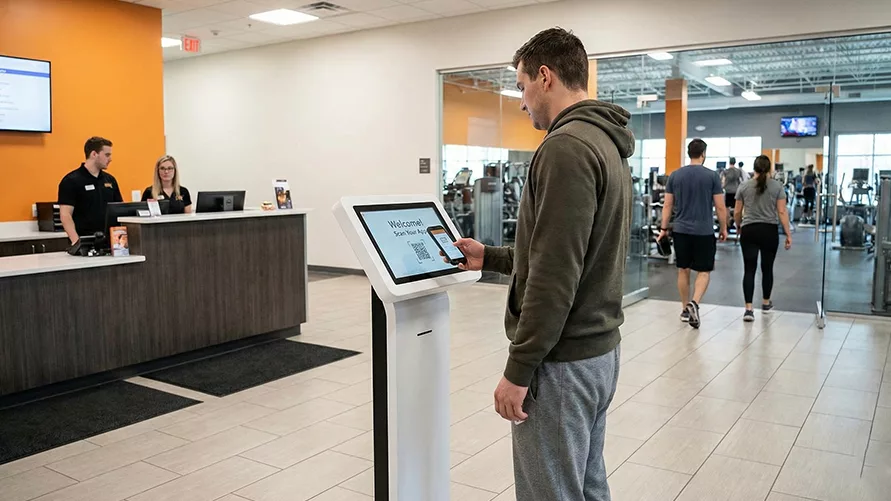
Access control has become a key part of the software conversation. Management platforms increasingly integrate with door systems, turnstiles, or smart locks, allowing access based on membership status and time of day. Some solutions also support biometrics or QR-based check-ins, tied directly to membership records.
Data security and privacy are equally important. With payment details, contact information, and sometimes health-related data stored in these systems, vendors must invest in robust security, role-based permissions, and regulatory compliance.
- Vertical solutions for different types of fitness studios
The “one-size-fits-all” approach is fading. Many vendors now specialize in sub-segments: CrossFit boxes, yoga studios, martial arts schools, boutique cycling, or large health clubs all have different needs. Software like Wellyx, Wodify, Zen Planner and others position themselves around specific fitness studio types or programming models.
This verticalization lets platforms design more relevant workflows, from belt tracking for martial arts to multi-location passes for urban studio networks. For gym owners, it means evaluating not only feature lists but also how well the product matches their format and audience.
- Member engagement and community-building tools
Beyond transactions, many management platforms now emphasize member engagement. Those include automated campaigns across email, SMS, WhatsApp, in-app alerts, and push notifications, often triggered by behavior such as first visit, missed visit, or membership anniversary.
These tools help fitness businesses keep their communities active and informed by celebrating milestones, promoting challenges, and re-engaging members who haven’t visited in a while. The goal is to build a stronger gym community, not just manage bookings.
- Simpler UX and lower admin burden
Finally, there is a clear trend toward simpler user experiences. Gym owners and managers often switch gym platforms because the old system is clunky, hard to learn, or requires too much manual work. Reviews and vendor messaging increasingly highlight ease of use, clean dashboards, and guided setup as major differentiators.
In practice, this means intuitive navigation, fewer clicks to complete common tasks, and templates for things like membership plans or automation workflows. The best management software allows staff to spend more time with members and less time in the back office.
From basic admin to full management software
The first generation of gym management software focused mainly on admin: a database of members, basic membership management, and simple billing. Today, leading management software goes much further.
Modern gym management software typically includes:
- Centralized membership management and automated billing.
- Tools to track attendance at classes and open gym sessions.
- Class scheduling, staff calendars, and resource management.
- Integrated POS for products, services, and add-ons.
- Reporting dashboards for revenue, churn, and utilization.
- Branded mobile app experience for members and staff.
How gym owners can use these trends to choose the right software
If you are wondering what the trends for gym and studio management software are, the next question is how to turn those trends into concrete buying criteria. Here is a practical checklist for gym owners, fitness studios, and health clubs:
- Core operations: Does the platform provide robust membership management, automated billing, and the ability to track attendance without manual work?
- Scheduling and staffing: How strong are the class scheduling tools, staff calendars, and resource allocation features?
- Analytics: Can you easily see key metrics, revenue, churn, utilization, and class performance without exporting spreadsheets?
- Member experience: Is there a modern mobile app or portal that lets members manage bookings, payments, and profiles themselves?
- Integrations: Does it connect cleanly with your payment processor, accounting system, marketing tools, or access control hardware?
- Automation: How much of your communication, billing, and follow-up can be automated with rules and templates?
- Fit for your model: Is the product designed for your type of fitness center: boutique studio, general gym, or multi-site health club?
- Scalability and support: Will the software support future growth, and does the vendor offer reliable onboarding and ongoing support?
By evaluating vendors against these criteria, you turn broad industry trends into specific, practical demands you can bring to demos and proposals.
Where Wellyx fits into these gym and studio software trends
Wellyx positions itself as an all-in-one gym management software designed to automate, reduce admin work, and grow fitness businesses. Its feature set is clearly aligned with the trends described above.
- As a cloud-based management platform, Wellyx centralizes membership management, automated billing, class scheduling, and staff management.
- A custom-branded mobile app gives members the power to manage profiles, bookings, and purchases, while staff can oversee daily operations from anywhere.
- Built-in automation helps drive member engagement with targeted campaigns and reminders across multiple channels, reducing manual follow-up.
- Analytics and reporting tools help gym owners and fitness studios understand performance and make better decisions about pricing, programming, and capacity.
For fitness businesses that want to operationalize these trends without stitching together multiple tools, Wellyx offers a single environment where management systems, communication, and member experience come together.
Staying ahead of gym and studio software trends
The fitness industry will keep changing. New formats, new competitors, and new technologies will appear every year. But the direction of travel for gym and studio management software is clear: more automation, more intelligence, deeper digital experiences, and stronger focus on member engagement.
Understanding what the trends are for gym and studio management software helps you avoid short-term fixes and choose management platforms that can grow with you. If your current tools make it hard to automate billing, track attendance, or give members a smooth mobile experience, it may be time to review your options.
By focusing on cloud-based, mobile-first software solutions with strong analytics, integrations, and engagement tools, gym owners and fitness studios can build management systems that support better fitness experiences today and keep them competitive tomorrow.