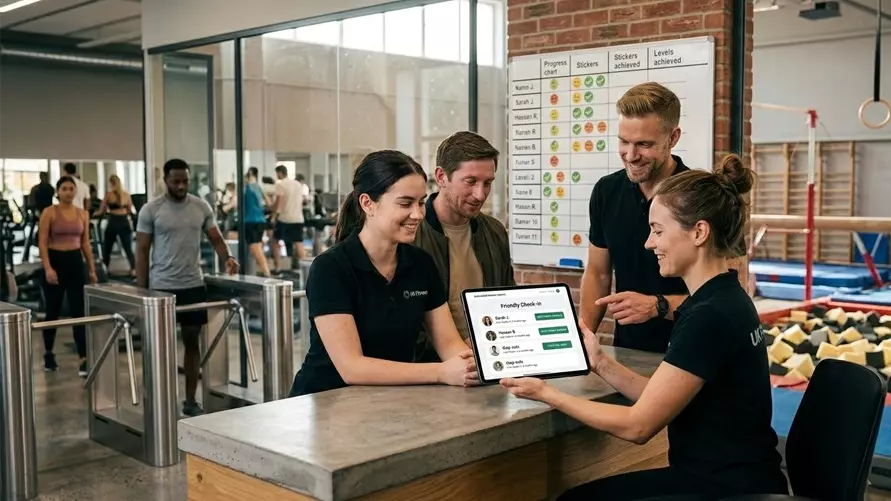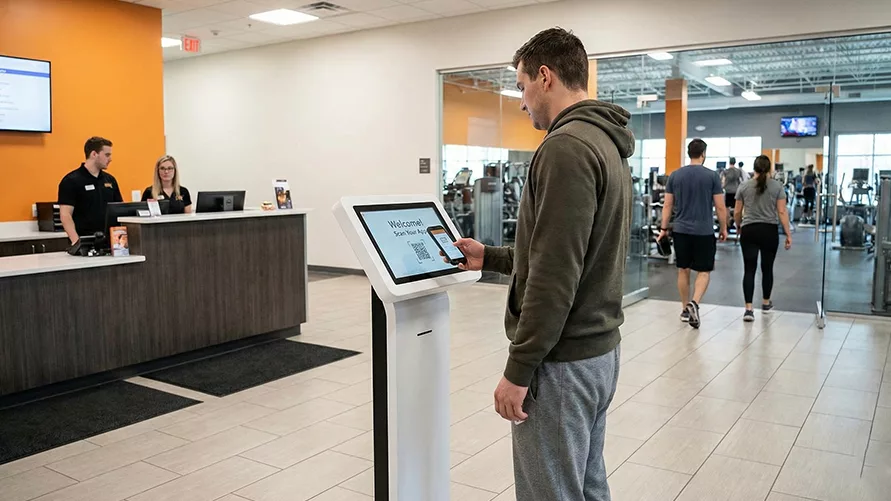
Scheduling systems for gyms can make space a controllable asset instead of a limitation. When time, rooms, and capacity are managed together, gyms can fit more sessions into the same footprint, reduce bottlenecks, and improve member experience without going the extra mile.
Undoubtedly, space is one of the most expensive assets a gym owns. Every square foot costs money, and every hour that space sits unused is wasted revenue. But most gyms struggle not because they lack space; the problem is managing it properly. Here is how gym owners can maximize gym space efficiency using scheduling software.

How gym space is lost without structured scheduling
Space loss is rarely visible in real time. It shows up in patterns that become normal. A studio may sit empty for 20-30 minutes between classes. Peak hours become crowded, while off-peak hours stay unused. Classes stay in the same rooms because that’s how it’s always been done, even when attendance drops. Equipment gets double-booked, and staff keep fixing conflicts manually.
Manual scheduling and spreadsheets don’t show these patterns. As a result, the schedule looks fine on paper, but messy in real. When scheduling is handled without structure, gym space becomes inefficient by default. It is not because the gym is too small or big, but a schedule that is not handled the right way.
However, a scheduling system for gyms makes these issues visible and fixable. When you see which rooms are underused, which slots are overcrowded, and which classes cause equipment conflicts, you can make changes that improve utilization without the facility being a problem.
How scheduling software aligns time, rooms, and capacity
The value of gym scheduling software is that it aligns three things that should never be separate:
- Time slots.
- Rooms.
- Capacity.
In a manual system, these are treated independently, which is why conflicts happen and space is wasted. A smart scheduling system forces alignment so that every class is scheduled with the correct room and capacity.
The system should assign rooms with defined capacity, prevent conflicts automatically, and provide real-time visibility to staff. When every class is tied to a specific room, and every room has a capacity limit, overcrowding becomes harder to happen and easier to prevent.
This alignment is the core of maximizing gym space efficiency. When you control time, rooms, and capacity in one system, the schedule becomes a tool for optimizing space rather than a source of confusion.
Rebalancing peak and off-peak hours without adding classes
Most gym owners try to fix peak-hour overcrowding by adding more classes. That often makes the problem worse. More classes increase staffing costs, add chaos to the schedule, and force rooms to be used inefficiently. A smarter approach is redistribution. And scheduling software helps you with that. It allows you to see:
- Where demand is concentrated.
- Where capacity is unused.
- Data to shift demand.
- Manage facility rental.
For example, if a 6 PM class is overcrowded, moving it to 5:30 or 6:30 can reduce congestion without losing attendance. Splitting popular classes into two smaller sessions can improve utilization and reduce waitlists. Using off-peak slots intentionally and rotating formats can also spread demand across the day.
Redistribution increases capacity without expanding square footage. It uses the time you already have. When peak hours are balanced with off-peak hours, your gym runs smoother and members have a better experience. It also reduces staff stress because the schedule is predictable and manageable.
Matching room size to actual attendance, not class popularity
Room assignment based on class popularity is a common mistake. A class can be popular and still have an average of 12 members. Another class may pull 25 people each week. Without data, both get scheduled the same way.
But a comprehensive scheduling system simplifies the entire process by tracking attendance and aligning it with room capacity.
- Move small classes to smaller rooms: if a class averages 10-12 members, it does not need a 40-person studio. Moving it to a smaller room frees up the larger studio for bigger sessions.
- Upsize classes that consistently fill: If a class hits capacity repeatedly, moving it to a larger room improves the experience and increases attendance without adding more sessions.
- Use attendance data to decide room allocation: Attendance history reveals patterns that are invisible in manual scheduling, it shows which classes should be prioritized for bigger rooms and which ones should be moved.
This is one of the fastest ways to improve gym space efficiency without disturbing the workflow.
Preventing equipment bottlenecks through smarter scheduling
Space efficiency is not limited to rooms, but also about equipment management. If two classes use the same equipment at the same time, it creates bottlenecks that affect smooth classes and member experience.
Using a digital scheduling system, you can treat equipment as resources, not a tool.
- Stagger equipment-heavy classes: If you have limited squat racks, bikes, or kettlebells, schedule those classes at different times to prevent overlap.
- Avoid resource conflicts: The system prevents double-booking of equipment-heavy sessions. This reduces frustration for members and staff.
- Reduce the need for additional equipment: Often, the solution to overcrowding is to buy more equipment. But smarter scheduling can reduce or eliminate that need.
By managing equipment resources, the gym can increase utilization without spending more on gear.
Using scheduling data to redesign weekly and monthly layouts
The long-term value of scheduling software becomes clear over time. As data accumulates, patterns emerge that inform strategic decisions.
Over weeks and months, gym owners can identify:
- Rooms that are consistently underused.
- Time slots that rarely perform well.
- Classes that regularly reach or exceed capacity.
This data becomes a planning tool rather than just operational information.
When a room consistently underperforms, it can be repurposed into a personal training area, small-group studio, open gym zone, or workshop space. When certain time slots fail to attract attendance, classes can be moved to higher-performing windows. When sessions consistently fill up, they can be moved to larger rooms or duplicated strategically.
Adjusting the schedule based on real data allows gyms to improve efficiency without renovations. Space is used according to actual demand rather than assumptions, leading to better utilization, higher member satisfaction, and more consistent revenue.
Turning space efficiency into revenue, not just order
Efficient use of space does more than make operations feel organized. It has a direct impact on revenue.
Better scheduling increases booking density. More sessions can run within the same footprint without overlapping rooms, staff, or equipment. High-demand time slots become productive rather than chaotic, while underused hours start contributing to overall performance.
Structured scheduling also creates room for higher-margin services. Personal training, small-group sessions, and premium programs depend on reliable access to space. When availability is predictable and visible, these offerings become easier to sell and scale.
Operational efficiency translates into financial stability when space is no longer the limiting factor.
Scheduling features that actually impact space efficiency
Not all scheduling features help with gym space optimization. Some are cosmetic and cover basic scheduling. Others are essential and offer features like facility rental to let you generate more revenue out of your gym space.
However, features that directly impact gym space efficiency include:
- Room-level scheduling with defined locations.
- Capacity limits to prevent overbooking and underuse.
- Attendance tracking to replace assumptions with data.
- Conflict prevention that stops double-booking before it happens.
- Reporting tools that highlight long-term usage patterns.
If a feature does not affect how time, rooms, capacity, or resources are managed, it will not improve space and scheduling efficiency. The goal is not more features, but it’s control over your gym.
Wrap up
Gyms rarely fail because they run out of space. They struggle because their space is not used effectively. Scheduling software allows gyms to coordinate time, rooms, capacity, and equipment in one system. When used correctly, it increases utilization, reduces bottlenecks, improves the member experience, and boosts revenue without expanding or downsizing the facility. The gyms that scale are not necessarily the ones with more square foot. They are the ones who schedule better and use their facilities the right way.