



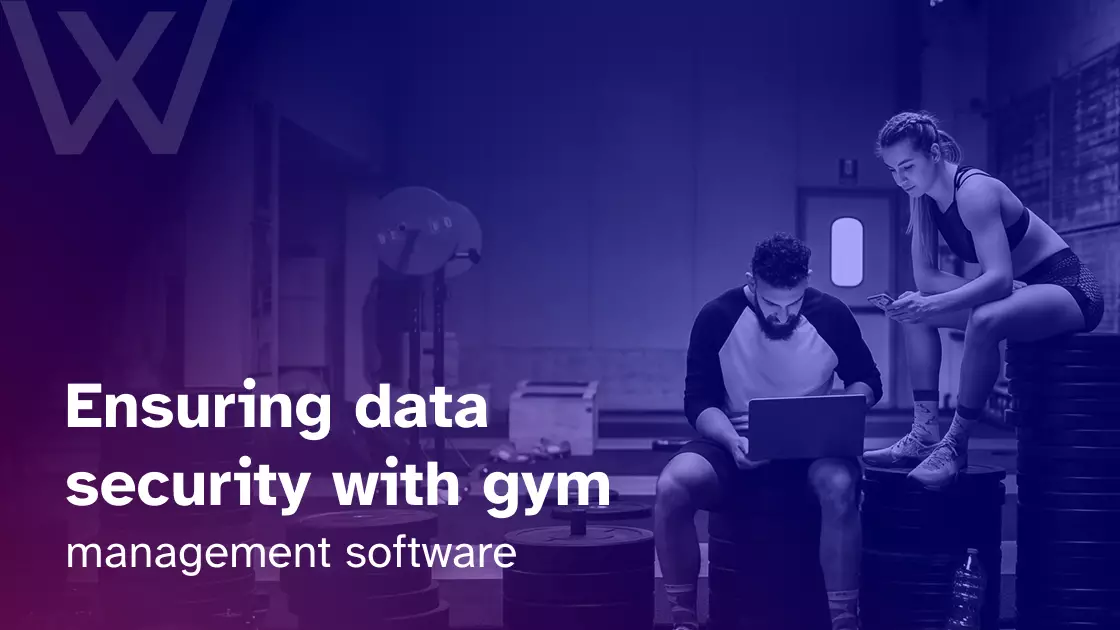
Gym management software handles sensitive personal and financial data every day, from membership sign-ups and recurring payments to access control and staff management. This entire membership lifecycle involves sensitive member information, including personal and financial data.
If that data is not protected properly, the consequences for gym businesses can go beyond technical inconvenience. Any data privacy breach weakens member trust, and brand reputation suffers. A secure system protects your revenue, your members, and the future of your gym.
Why is data security important for gyms?
Gyms manage a unique mix of data, including fingerprints, card details, and personal information, that makes gyms prone to cyber threats. Member profiles contain personal information, billing systems handle ongoing payments, and access control tools track physical entry into facilities. Unlike businesses that process one-time transactions, gyms rely heavily on subscriptions, which means payment systems remain active and connected at all times.
A single security lapse can lead to unauthorized charges, data exposure, or service disruptions. When this happens, members do not just lose confidence in the software you run on; they lose trust in the gym itself. As a result, security is not an optional feature; it is a core part of running a professional, trustworthy fitness business.
What types of data do gyms need to protect?
Your gym software is responsible for safeguarding several categories of sensitive information.
- Member data includes names, contact details, account credentials, photos, and activity history.
- Financial data covers card payments, invoices, refunds, and subscription records.
- Access data logs when and where members enter your facility.
- Staff data includes schedules, payroll, and internal performance information.
Each type of data carries different risks, but all of it needs careful protection. Secure software treats this information as a business-critical asset, not a routine record.
What are the biggest data security threats gyms face?
Understanding the threats helps you know what you are protecting against. Gyms face the same attack categories as any subscription business, plus a few unique to their setup.
- Phishing targets your staff. A carefully worded email that looks like it comes from a vendor can trick an employee into sharing login credentials. Once an attacker has one set of staff credentials, they can move through your member and payment records.
- Ransomware locks your systems and demands payment to restore access. For a gym, that means frozen bookings, unusable access control, and lost member confidence, all at once. Because gyms rely on daily operations, the pressure to pay quickly is high.
- Credential stuffing reuses passwords stolen from other sites. If a member or staff member reuses a password across accounts, attackers can try those credentials against your software. But strong authentication and breach checks help stop this.
- Insider misuse is often overlooked. It is not always malicious; staff members may simply leave a session open, share a login, or download member data to a personal device. Role-based access limits how much any one person can access in the first place.
What security features should gym management software have?
A secure gym management platform uses multiple layers of protection to safeguard sensitive information.
End-to-end data encryption
Strong security starts with encryption. Whenever information moves between a member’s phone, a payment gateway, or your internal systems, it must be protected in transit. Secure software keeps data encrypted in transit and at rest, so even if unauthorized access occurs, the information stays unreadable.
Secure cloud infrastructure
Where data is stored matters just as much. Reliable platforms like Wellyx provide professionally managed cloud infrastructure built for sensitive data, with restricted access, continuous monitoring, and regular backups. If a system fails, data can be restored without loss or exposure.
Role-based access control
Not every staff member needs access to every system. Role-based permissions mean employees only see what they need to do their jobs, which limits internal exposure and reduces the risk of accidental misuse, one of the most common causes of data issues.
Authentication
Modern software monitors login activity, limits repeated failed attempts, and supports additional verification for administrative users, reducing the risk of unauthorized access without slowing down daily workflows.
How is payment data protected?
Payment data is the most sensitive asset you manage, and because fitness businesses depend on recurring billing, payment systems must stay secure at all times.
Wellyx gym management software does not store raw card details. Instead, it works with PCI-DSS-compliant payment processors that use tokenization, replacing sensitive card information with secure identifiers so recurring charges can be processed without exposing actual payment data. For you, this reduces fraud, chargebacks, and disputes. If a platform cannot clearly explain how it protects payment data, that uncertainty alone should be taken seriously.
What compliance standards should gym software meet?
Data protection regulations are not optional, especially for gyms operating across regions. Secure software should provide features that help gyms meet applicable requirements under GDPR, CCPA, and PCI DSS.
This includes managing member consent properly, controlling how long data is retained, and maintaining clear audit logs that show when data is accessed or modified. When compliance is built into everyday workflows, you reduce legal risk without adding operational complexity.
How should gyms handle data retention and privacy?
Good security also means knowing how long you keep data and why. Every category of data you hold has a lifecycle: members join, use your services, and eventually leave. Retaining everything forever increases your risk for no benefit.
A privacy-conscious platform lets you define how long to retain member, payment, and access records, then purges what is no longer needed. It also supports clear member consent, recording when a member agreed to how their data is used, rather than leaving that agreement unmanaged.
When a member cancels, their personal data must be handled according to your policy, and payment details should not be retained beyond what the processor requires. These practices reduce both your legal exposure and the amount of sensitive data an attacker could reach if a breach ever happened.
How do integrations affect security?
Modern gyms rarely run on a single system, and even when they do, integrations make that happen. This means payment gateways, access control hardware, marketing platforms, accounting tools, and mobile apps are all connected behind the scenes. Each connection introduces potential risk.
Secure software limits how much data is shared, protects integrations through proper authentication, and allows access to be revoked quickly if a connected system becomes unreliable. Without these controls, integrations often become the weakest point in an otherwise secure setup.
How do staff habits affect gym data security?
Even the most sophisticated encryption cannot help if someone hands over a password. Because your staff interacts with the software every day, their habits are a security layer of their own.
Simple practices make a difference. Each employee should have their own login rather than shared credentials, so every action is traceable to a person. Passwords should be strong and unique, and staff should recognize phishing attempts instead of clicking through. When a team member leaves, their access should be removed promptly.
A platform that enforces role-based access and lets you manage staff accounts from one place makes these habits easier to keep. Security is not the software’s job; it is a shared responsibility between the tool and the people using it.
How does strong security build member trust?
Most members may never ask about encryption standards or compliance frameworks, but they do notice when systems fail. Missed payments, unauthorized charges, or account access issues quickly undermine confidence.
When your software handles data securely, operations feel more dependable. Payments work as expected, access systems remain reliable, and personal information stays private. Over time, this consistency builds trust, loyalty and the long-term retention every gym depends on.
What should you do if your gym data is exposed?
Even with strong protections, it pays to know your first steps if an incident happens. Acting quickly limits damage and shows members you take their data seriously.
First, disconnect the affected system or accounts to stop further access. Next, review your audit logs to understand what was exposed, whether it was member, payment, or staff data. Notify any affected members and, where required by law, the relevant authority.
Finally, correct the cause before restoring normal operation, whether that means resetting credentials, tightening permissions, or patching an integration. A platform with clear audit logs and responsive support makes this process far less stressful than discovering the data loss with no record of what happened.
What to look for when choosing secure gym software?
Security claims can sound similar, so you need to ask the right questions before you commit to any gym software. Here are the specifics worth checking with any software provider:
- Ask how payment data is handled. The vendor must use PCI-DSS-compliant payment processing with tokenization and never store raw card details. Wellyx works with compliant payment processors, so payment details are processed through secure third-party providers without exposing raw card information.
- Ask about backups and recovery. You should know what happens if a system fails. A reliable platform keeps your data backed up and restorable.
- Ask about access controls and authentication. Role-based permissions and strong login protections limit who sees what. Wellyx connects access control with memberships, bookings, and payments from the same platform, so entry rules update automatically and staff only see what their role requires.
- Ask about compliance and data privacy. The platform must follow GDPR, CCPA, and PCI-DSS in its core design.
- Ask about vendor reliability. Security is only as good as the system running it. Wellyx offers transparent pricing starting at $99 per month, unlimited members on every plan, and 24/7 human support, so the people operating your security are available when you need them, not a chatbot. Free data migration also means your records transfer to a secure system without a gap.
Wrap up
Ensuring data security with gym management software should not wait for a rare security disaster to happen. It should be a priority from day one when choosing software. You need to pay close attention in order to choose systems that are dependable, resilient, and designed to support your business growth.
For gym owners, secure gym management software protects revenue and member relationships. Remember, in the fitness industry, strong data security is not simply a technical nice-to-have. It is a foundation for sustainable growth, and it belongs among the factors you consider when choosing gym management software.
Frequently Asked Questions
What are the 4 factors of data security?
The four core factors are physical security, digital security, operational security, and administrative security. Together, they cover the physical systems, the software, the day-to-day processes, and the policies that govern how data is handled. Your chosen gym management software must support each of these layers.
Is gym management software safe to use?
Gym management software like Wellyx is safe to use as it encrypts data, uses PCI-DSS-compliant payment processing, controls access by role, and keeps regular backups. The platform you choose should be able to explain each of these protections clearly.
What happens to member data when a member cancels?
This depends on your retention policy and the software’s settings. Gym platforms usually let you set how long to keep member and payment records, then purge data you no longer need. Payment details should not be retained beyond what the payment processor requires.
Can gym management software prevent credit card fraud?
It reduces the risk substantially. By not storing raw card details and using tokenization through compliant processors, secure software ensures actual card numbers never sit on your systems, which lowers the chance of card data being stolen.